{"title":"腰椎PEEK棒与钛棒固定后螺钉松动的生物力学效应:有限元分析。","authors":"Guozheng Jiang, Shuyang Wang, Luchun Xu, Zeyu Li, Ningning Feng, Ziye Qiu, Yongdong Yang, Xing Yu","doi":"10.3389/fbioe.2025.1533088","DOIUrl":null,"url":null,"abstract":"<p><strong>Objective: </strong>Screw loosening is a common complication following lumbar spine fixation surgery, yet the biomechanical outcomes after screw loosening remain rarely reported. This study aims to utilize finite element (FE) models to compare the biomechanical performance of PEEK rod dynamic fixation and titanium rod rigid fixation in the postoperative lumbar spine, exploring potential biomechanical mechanisms for re-stabilization of loosened screws.</p><p><strong>Methods: </strong>A FE model of the lumbar spine from L3 to the sacrum was developed using CT image segmentation. Four L4-S1 fixation models were constructed: PEEK rod dynamic fixation (PEEK model), titanium rod rigid fixation (titanium model), PEEK rod with pedicle screw loosening (PEEK-PSL model), and titanium rod with pedicle screw loosening (titanium -PSL model). A preload of 300 N was applied to the superior surface of L3. Stress distributions in the intervertebral discs, facet joints, pedicle screws, and rods were calculated to evaluate the biomechanical effects of different fixation methods.</p><p><strong>Results: </strong>Across four physiological loading conditions, the stress differences in intervertebral discs, facet joints, and nucleus pulposus between the PEEK model and titanium model were minimal. However, vertebral body stress was significantly higher in the PEEK model, whereas screw and rod stresses were greater in the titanium model. Screw loosening further increased stress in all models. The S1 screw in the PEEK-PSL model exhibited lower and more uniform stress, while stress was concentrated at the screw-rod junction in the titanium-PSL model.</p><p><strong>Conclusion: </strong>The PEEK rod fixation system demonstrated superior stress distribution, reducing stress concentration risks and improving stability while minimizing screw loosening rates. In contrast, the titanium rod system offers advantages in scenarios requiring high rigidity, potentially making it more suitable for patients with greater stability needs.</p>","PeriodicalId":12444,"journal":{"name":"Frontiers in Bioengineering and Biotechnology","volume":"13 ","pages":"1533088"},"PeriodicalIF":5.8000,"publicationDate":"2025-03-17","publicationTypes":"Journal Article","fieldsOfStudy":null,"isOpenAccess":false,"openAccessPdf":"https://www.ncbi.nlm.nih.gov/pmc/articles/PMC11955707/pdf/","citationCount":"0","resultStr":"{\"title\":\"Biomechanical effects of screw loosening after lumbar PEEK rod and titanium rod fixation: a finite element analysis.\",\"authors\":\"Guozheng Jiang, Shuyang Wang, Luchun Xu, Zeyu Li, Ningning Feng, Ziye Qiu, Yongdong Yang, Xing Yu\",\"doi\":\"10.3389/fbioe.2025.1533088\",\"DOIUrl\":null,\"url\":null,\"abstract\":\"<p><strong>Objective: </strong>Screw loosening is a common complication following lumbar spine fixation surgery, yet the biomechanical outcomes after screw loosening remain rarely reported. This study aims to utilize finite element (FE) models to compare the biomechanical performance of PEEK rod dynamic fixation and titanium rod rigid fixation in the postoperative lumbar spine, exploring potential biomechanical mechanisms for re-stabilization of loosened screws.</p><p><strong>Methods: </strong>A FE model of the lumbar spine from L3 to the sacrum was developed using CT image segmentation. Four L4-S1 fixation models were constructed: PEEK rod dynamic fixation (PEEK model), titanium rod rigid fixation (titanium model), PEEK rod with pedicle screw loosening (PEEK-PSL model), and titanium rod with pedicle screw loosening (titanium -PSL model). A preload of 300 N was applied to the superior surface of L3. Stress distributions in the intervertebral discs, facet joints, pedicle screws, and rods were calculated to evaluate the biomechanical effects of different fixation methods.</p><p><strong>Results: </strong>Across four physiological loading conditions, the stress differences in intervertebral discs, facet joints, and nucleus pulposus between the PEEK model and titanium model were minimal. However, vertebral body stress was significantly higher in the PEEK model, whereas screw and rod stresses were greater in the titanium model. Screw loosening further increased stress in all models. The S1 screw in the PEEK-PSL model exhibited lower and more uniform stress, while stress was concentrated at the screw-rod junction in the titanium-PSL model.</p><p><strong>Conclusion: </strong>The PEEK rod fixation system demonstrated superior stress distribution, reducing stress concentration risks and improving stability while minimizing screw loosening rates. In contrast, the titanium rod system offers advantages in scenarios requiring high rigidity, potentially making it more suitable for patients with greater stability needs.</p>\",\"PeriodicalId\":12444,\"journal\":{\"name\":\"Frontiers in Bioengineering and Biotechnology\",\"volume\":\"13 \",\"pages\":\"1533088\"},\"PeriodicalIF\":5.8000,\"publicationDate\":\"2025-03-17\",\"publicationTypes\":\"Journal Article\",\"fieldsOfStudy\":null,\"isOpenAccess\":false,\"openAccessPdf\":\"https://www.ncbi.nlm.nih.gov/pmc/articles/PMC11955707/pdf/\",\"citationCount\":\"0\",\"resultStr\":null,\"platform\":\"Semanticscholar\",\"paperid\":null,\"PeriodicalName\":\"Frontiers in Bioengineering and Biotechnology\",\"FirstCategoryId\":\"5\",\"ListUrlMain\":\"https://doi.org/10.3389/fbioe.2025.1533088\",\"RegionNum\":3,\"RegionCategory\":\"工程技术\",\"ArticlePicture\":[],\"TitleCN\":null,\"AbstractTextCN\":null,\"PMCID\":null,\"EPubDate\":\"2025/1/1 0:00:00\",\"PubModel\":\"eCollection\",\"JCR\":\"Q1\",\"JCRName\":\"BIOTECHNOLOGY & APPLIED MICROBIOLOGY\",\"Score\":null,\"Total\":0}","platform":"Semanticscholar","paperid":null,"PeriodicalName":"Frontiers in Bioengineering and Biotechnology","FirstCategoryId":"5","ListUrlMain":"https://doi.org/10.3389/fbioe.2025.1533088","RegionNum":3,"RegionCategory":"工程技术","ArticlePicture":[],"TitleCN":null,"AbstractTextCN":null,"PMCID":null,"EPubDate":"2025/1/1 0:00:00","PubModel":"eCollection","JCR":"Q1","JCRName":"BIOTECHNOLOGY & APPLIED MICROBIOLOGY","Score":null,"Total":0}
Biomechanical effects of screw loosening after lumbar PEEK rod and titanium rod fixation: a finite element analysis.
Objective: Screw loosening is a common complication following lumbar spine fixation surgery, yet the biomechanical outcomes after screw loosening remain rarely reported. This study aims to utilize finite element (FE) models to compare the biomechanical performance of PEEK rod dynamic fixation and titanium rod rigid fixation in the postoperative lumbar spine, exploring potential biomechanical mechanisms for re-stabilization of loosened screws.
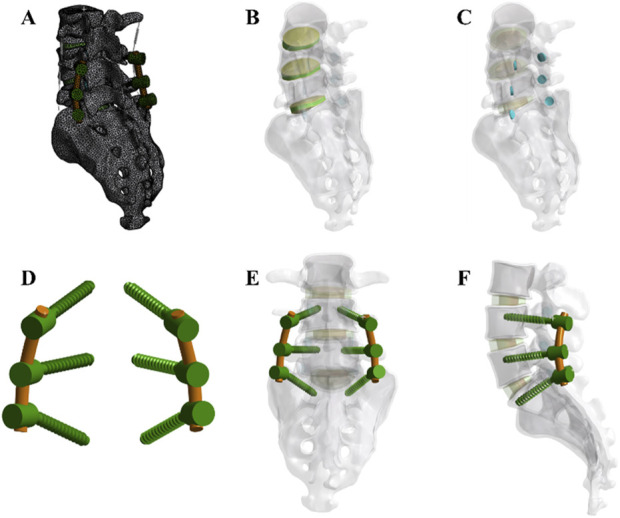
Methods: A FE model of the lumbar spine from L3 to the sacrum was developed using CT image segmentation. Four L4-S1 fixation models were constructed: PEEK rod dynamic fixation (PEEK model), titanium rod rigid fixation (titanium model), PEEK rod with pedicle screw loosening (PEEK-PSL model), and titanium rod with pedicle screw loosening (titanium -PSL model). A preload of 300 N was applied to the superior surface of L3. Stress distributions in the intervertebral discs, facet joints, pedicle screws, and rods were calculated to evaluate the biomechanical effects of different fixation methods.
Results: Across four physiological loading conditions, the stress differences in intervertebral discs, facet joints, and nucleus pulposus between the PEEK model and titanium model were minimal. However, vertebral body stress was significantly higher in the PEEK model, whereas screw and rod stresses were greater in the titanium model. Screw loosening further increased stress in all models. The S1 screw in the PEEK-PSL model exhibited lower and more uniform stress, while stress was concentrated at the screw-rod junction in the titanium-PSL model.
Conclusion: The PEEK rod fixation system demonstrated superior stress distribution, reducing stress concentration risks and improving stability while minimizing screw loosening rates. In contrast, the titanium rod system offers advantages in scenarios requiring high rigidity, potentially making it more suitable for patients with greater stability needs.
期刊介绍:
The translation of new discoveries in medicine to clinical routine has never been easy. During the second half of the last century, thanks to the progress in chemistry, biochemistry and pharmacology, we have seen the development and the application of a large number of drugs and devices aimed at the treatment of symptoms, blocking unwanted pathways and, in the case of infectious diseases, fighting the micro-organisms responsible. However, we are facing, today, a dramatic change in the therapeutic approach to pathologies and diseases. Indeed, the challenge of the present and the next decade is to fully restore the physiological status of the diseased organism and to completely regenerate tissue and organs when they are so seriously affected that treatments cannot be limited to the repression of symptoms or to the repair of damage. This is being made possible thanks to the major developments made in basic cell and molecular biology, including stem cell science, growth factor delivery, gene isolation and transfection, the advances in bioengineering and nanotechnology, including development of new biomaterials, biofabrication technologies and use of bioreactors, and the big improvements in diagnostic tools and imaging of cells, tissues and organs.
In today`s world, an enhancement of communication between multidisciplinary experts, together with the promotion of joint projects and close collaborations among scientists, engineers, industry people, regulatory agencies and physicians are absolute requirements for the success of any attempt to develop and clinically apply a new biological therapy or an innovative device involving the collective use of biomaterials, cells and/or bioactive molecules. “Frontiers in Bioengineering and Biotechnology” aspires to be a forum for all people involved in the process by bridging the gap too often existing between a discovery in the basic sciences and its clinical application.







 京公网安备 11010802042870号
京ICP备2023020795号-1
京公网安备 11010802042870号
京ICP备2023020795号-1

 分享
分享
 求助内容:
求助内容: 应助结果提醒方式:
 扫码关注我们
