Cong He, Yuanqiao Liao, Xinyang He, Zhenwei Ye, Shaosheng Su, Yanli Zhang
{"title":"新生儿白中心视网膜出血的危险因素:预防的临床意义。","authors":"Cong He, Yuanqiao Liao, Xinyang He, Zhenwei Ye, Shaosheng Su, Yanli Zhang","doi":"10.2147/IJGM.S505664","DOIUrl":null,"url":null,"abstract":"<p><strong>Background: </strong>Neonatal white-centered retinal hemorrhage (NWCRH) is characterized by white or yellowish-white central spots within retinal hemorrhages, resembling Roth spots. Elucidating the etiological factors may enhance preventive strategies and deepen understanding of NWCRH. This study examined correlations between NWCRH and perinatal maternal conditions, delivery factors, and neonatal characteristics.</p><p><strong>Methods: </strong>From January 2013 to December 2015, neonates delivered at the Department of Obstetrics at Zhongshan People's Hospital underwent RetCam III fundus screening within four days postpartum were enrolled. Demographic and clinical information of neonates and mothers were collected, and univariate and multivariate logistics regression analyses were used to explore the influencing factors of NWCRH and its severity.</p><p><strong>Findings: </strong>WCRH was identified in 574 out of 3606 neonates (15.92%), with retinal hemorrhage detected in 868 cases (24.07%). For Grade I retinal hemorrhage, 441 cases were documented, with WCRH present in 169 cases (38.32%). For Grade II retinal hemorrhage, 239 cases were recorded, with 223 (93.31%) exhibiting WCRH. In Grade III retinal hemorrhage, 182 out of 188 cases (96.81%) displayed WCRH. In the multivariate analysis of Groups II and III, neonatal blood type B was found to be statistically significant for Roth spot formation. In the univariate analysis of maternal factors, gestational diabetes and hypertension were associated with an increased risk of Roth spots.</p><p><strong>Conclusion: </strong>This study identified key risk factors for the formation of neonatal Roth spots, including mode of delivery, umbilical cord around the neck, and blood group B. Given its potential long-term effects on vision, early screening and preventive measures are recommended. For neonates with a history of umbilical cord around the neck and rapid delivery, fundus screening can facilitate timely intervention and improve neonatal eye health.</p>","PeriodicalId":14131,"journal":{"name":"International Journal of General Medicine","volume":"18 ","pages":"1747-1756"},"PeriodicalIF":2.3000,"publicationDate":"2025-03-27","publicationTypes":"Journal Article","fieldsOfStudy":null,"isOpenAccess":false,"openAccessPdf":"https://www.ncbi.nlm.nih.gov/pmc/articles/PMC11956698/pdf/","citationCount":"0","resultStr":"{\"title\":\"Risk Factors for Neonatal White-Centered Retinal Hemorrhages: Clinical Implications for Prevention.\",\"authors\":\"Cong He, Yuanqiao Liao, Xinyang He, Zhenwei Ye, Shaosheng Su, Yanli Zhang\",\"doi\":\"10.2147/IJGM.S505664\",\"DOIUrl\":null,\"url\":null,\"abstract\":\"<p><strong>Background: </strong>Neonatal white-centered retinal hemorrhage (NWCRH) is characterized by white or yellowish-white central spots within retinal hemorrhages, resembling Roth spots. Elucidating the etiological factors may enhance preventive strategies and deepen understanding of NWCRH. This study examined correlations between NWCRH and perinatal maternal conditions, delivery factors, and neonatal characteristics.</p><p><strong>Methods: </strong>From January 2013 to December 2015, neonates delivered at the Department of Obstetrics at Zhongshan People's Hospital underwent RetCam III fundus screening within four days postpartum were enrolled. Demographic and clinical information of neonates and mothers were collected, and univariate and multivariate logistics regression analyses were used to explore the influencing factors of NWCRH and its severity.</p><p><strong>Findings: </strong>WCRH was identified in 574 out of 3606 neonates (15.92%), with retinal hemorrhage detected in 868 cases (24.07%). For Grade I retinal hemorrhage, 441 cases were documented, with WCRH present in 169 cases (38.32%). For Grade II retinal hemorrhage, 239 cases were recorded, with 223 (93.31%) exhibiting WCRH. In Grade III retinal hemorrhage, 182 out of 188 cases (96.81%) displayed WCRH. In the multivariate analysis of Groups II and III, neonatal blood type B was found to be statistically significant for Roth spot formation. In the univariate analysis of maternal factors, gestational diabetes and hypertension were associated with an increased risk of Roth spots.</p><p><strong>Conclusion: </strong>This study identified key risk factors for the formation of neonatal Roth spots, including mode of delivery, umbilical cord around the neck, and blood group B. Given its potential long-term effects on vision, early screening and preventive measures are recommended. For neonates with a history of umbilical cord around the neck and rapid delivery, fundus screening can facilitate timely intervention and improve neonatal eye health.</p>\",\"PeriodicalId\":14131,\"journal\":{\"name\":\"International Journal of General Medicine\",\"volume\":\"18 \",\"pages\":\"1747-1756\"},\"PeriodicalIF\":2.3000,\"publicationDate\":\"2025-03-27\",\"publicationTypes\":\"Journal Article\",\"fieldsOfStudy\":null,\"isOpenAccess\":false,\"openAccessPdf\":\"https://www.ncbi.nlm.nih.gov/pmc/articles/PMC11956698/pdf/\",\"citationCount\":\"0\",\"resultStr\":null,\"platform\":\"Semanticscholar\",\"paperid\":null,\"PeriodicalName\":\"International Journal of General Medicine\",\"FirstCategoryId\":\"3\",\"ListUrlMain\":\"https://doi.org/10.2147/IJGM.S505664\",\"RegionNum\":4,\"RegionCategory\":\"医学\",\"ArticlePicture\":[],\"TitleCN\":null,\"AbstractTextCN\":null,\"PMCID\":null,\"EPubDate\":\"2025/1/1 0:00:00\",\"PubModel\":\"eCollection\",\"JCR\":\"Q2\",\"JCRName\":\"MEDICINE, GENERAL & INTERNAL\",\"Score\":null,\"Total\":0}","platform":"Semanticscholar","paperid":null,"PeriodicalName":"International Journal of General Medicine","FirstCategoryId":"3","ListUrlMain":"https://doi.org/10.2147/IJGM.S505664","RegionNum":4,"RegionCategory":"医学","ArticlePicture":[],"TitleCN":null,"AbstractTextCN":null,"PMCID":null,"EPubDate":"2025/1/1 0:00:00","PubModel":"eCollection","JCR":"Q2","JCRName":"MEDICINE, GENERAL & INTERNAL","Score":null,"Total":0}
Risk Factors for Neonatal White-Centered Retinal Hemorrhages: Clinical Implications for Prevention.
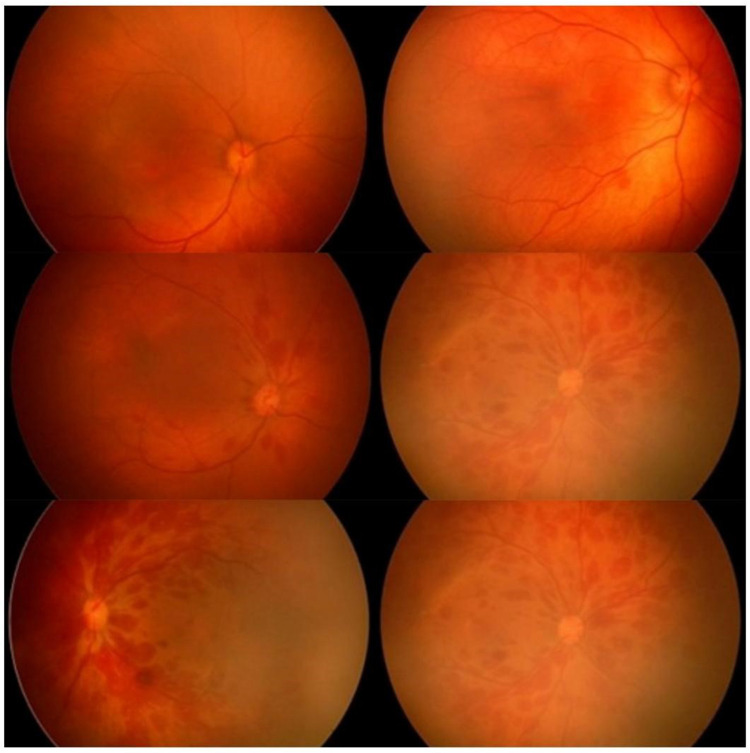
Background: Neonatal white-centered retinal hemorrhage (NWCRH) is characterized by white or yellowish-white central spots within retinal hemorrhages, resembling Roth spots. Elucidating the etiological factors may enhance preventive strategies and deepen understanding of NWCRH. This study examined correlations between NWCRH and perinatal maternal conditions, delivery factors, and neonatal characteristics.
Methods: From January 2013 to December 2015, neonates delivered at the Department of Obstetrics at Zhongshan People's Hospital underwent RetCam III fundus screening within four days postpartum were enrolled. Demographic and clinical information of neonates and mothers were collected, and univariate and multivariate logistics regression analyses were used to explore the influencing factors of NWCRH and its severity.
Findings: WCRH was identified in 574 out of 3606 neonates (15.92%), with retinal hemorrhage detected in 868 cases (24.07%). For Grade I retinal hemorrhage, 441 cases were documented, with WCRH present in 169 cases (38.32%). For Grade II retinal hemorrhage, 239 cases were recorded, with 223 (93.31%) exhibiting WCRH. In Grade III retinal hemorrhage, 182 out of 188 cases (96.81%) displayed WCRH. In the multivariate analysis of Groups II and III, neonatal blood type B was found to be statistically significant for Roth spot formation. In the univariate analysis of maternal factors, gestational diabetes and hypertension were associated with an increased risk of Roth spots.
Conclusion: This study identified key risk factors for the formation of neonatal Roth spots, including mode of delivery, umbilical cord around the neck, and blood group B. Given its potential long-term effects on vision, early screening and preventive measures are recommended. For neonates with a history of umbilical cord around the neck and rapid delivery, fundus screening can facilitate timely intervention and improve neonatal eye health.
期刊介绍:
The International Journal of General Medicine is an international, peer-reviewed, open access journal that focuses on general and internal medicine, pathogenesis, epidemiology, diagnosis, monitoring and treatment protocols. The journal is characterized by the rapid reporting of reviews, original research and clinical studies across all disease areas.
A key focus of the journal is the elucidation of disease processes and management protocols resulting in improved outcomes for the patient. Patient perspectives such as satisfaction, quality of life, health literacy and communication and their role in developing new healthcare programs and optimizing clinical outcomes are major areas of interest for the journal.
As of 1st April 2019, the International Journal of General Medicine will no longer consider meta-analyses for publication.





 京公网安备 11010802042870号
京ICP备2023020795号-1
京公网安备 11010802042870号
京ICP备2023020795号-1

 分享
分享
 求助内容:
求助内容: 应助结果提醒方式:
 扫码关注我们
