{"title":"美国成年人对饮食质量的误解:对促进心脏代谢健康的影响","authors":"Eileen Lee, Nurgül Fitzgerald, Shauna Downs, Nathaniel Kuhrt, Aayush Visaria, Aparna Kalbag, Soko Setoguchi","doi":"10.1038/s41430-025-01605-1","DOIUrl":null,"url":null,"abstract":"Diet is pivotal in preventing and managing cardiometabolic diseases. Our study aimed to describe the prevalence of poor diet quality and perceiving a poor diet as healthy and to determine individual-level factors associated with these groups. This cross-sectional study analyzed seven 2-year cycles of National Health and Nutrition Examination Survey (NHANES) data from 2005 to 2018, which included non-pregnant adults between 20 and 85 years old, who completed a one-day 24-h dietary recall and dietary interview. Diet quality was measured using the American Heart Association (AHA) primary diet score, and perceived diet quality was based on NHANES questionnaire response. Among 31,644 adults, the prevalence of poor diet quality was 47%. Male sex and smoking were associated with a higher risk of poor diet quality, while older age, higher levels of education, increased income, diabetes mellitus diagnosis, and increased vigorous activity levels were associated with a lower risk of poor diet quality. Among adults with poor diet quality (n = 14,952), 23% perceived their diet as healthy. In multivariable analysis, older age, higher education, and vigorous activity level were associated with a higher risk of perceiving a poor diet as healthy. Nearly half of US adults had poor diet quality based on AHA guidelines for cardiovascular health, yet nearly a quarter of them perceived their diet as healthy. This gap underscores the need for focused educational efforts and interventions in both healthcare and public health settings to dispel diet-related misperceptions and motivate the adoption of a healthier diet to address cardiometabolic health.","PeriodicalId":11927,"journal":{"name":"European Journal of Clinical Nutrition","volume":"79 8","pages":"762-769"},"PeriodicalIF":3.2000,"publicationDate":"2025-04-02","publicationTypes":"Journal Article","fieldsOfStudy":null,"isOpenAccess":false,"openAccessPdf":"https://www.nature.comhttps://www.nature.com/articles/s41430-025-01605-1.pdf","citationCount":"0","resultStr":"{\"title\":\"Misperception of diet quality among US adults: implications for cardiometabolic health promotion\",\"authors\":\"Eileen Lee, Nurgül Fitzgerald, Shauna Downs, Nathaniel Kuhrt, Aayush Visaria, Aparna Kalbag, Soko Setoguchi\",\"doi\":\"10.1038/s41430-025-01605-1\",\"DOIUrl\":null,\"url\":null,\"abstract\":\"Diet is pivotal in preventing and managing cardiometabolic diseases. Our study aimed to describe the prevalence of poor diet quality and perceiving a poor diet as healthy and to determine individual-level factors associated with these groups. This cross-sectional study analyzed seven 2-year cycles of National Health and Nutrition Examination Survey (NHANES) data from 2005 to 2018, which included non-pregnant adults between 20 and 85 years old, who completed a one-day 24-h dietary recall and dietary interview. Diet quality was measured using the American Heart Association (AHA) primary diet score, and perceived diet quality was based on NHANES questionnaire response. Among 31,644 adults, the prevalence of poor diet quality was 47%. Male sex and smoking were associated with a higher risk of poor diet quality, while older age, higher levels of education, increased income, diabetes mellitus diagnosis, and increased vigorous activity levels were associated with a lower risk of poor diet quality. Among adults with poor diet quality (n = 14,952), 23% perceived their diet as healthy. In multivariable analysis, older age, higher education, and vigorous activity level were associated with a higher risk of perceiving a poor diet as healthy. Nearly half of US adults had poor diet quality based on AHA guidelines for cardiovascular health, yet nearly a quarter of them perceived their diet as healthy. This gap underscores the need for focused educational efforts and interventions in both healthcare and public health settings to dispel diet-related misperceptions and motivate the adoption of a healthier diet to address cardiometabolic health.\",\"PeriodicalId\":11927,\"journal\":{\"name\":\"European Journal of Clinical Nutrition\",\"volume\":\"79 8\",\"pages\":\"762-769\"},\"PeriodicalIF\":3.2000,\"publicationDate\":\"2025-04-02\",\"publicationTypes\":\"Journal Article\",\"fieldsOfStudy\":null,\"isOpenAccess\":false,\"openAccessPdf\":\"https://www.nature.comhttps://www.nature.com/articles/s41430-025-01605-1.pdf\",\"citationCount\":\"0\",\"resultStr\":null,\"platform\":\"Semanticscholar\",\"paperid\":null,\"PeriodicalName\":\"European Journal of Clinical Nutrition\",\"FirstCategoryId\":\"3\",\"ListUrlMain\":\"https://www.nature.com/articles/s41430-025-01605-1\",\"RegionNum\":3,\"RegionCategory\":\"医学\",\"ArticlePicture\":[],\"TitleCN\":null,\"AbstractTextCN\":null,\"PMCID\":null,\"EPubDate\":\"\",\"PubModel\":\"\",\"JCR\":\"Q2\",\"JCRName\":\"NUTRITION & DIETETICS\",\"Score\":null,\"Total\":0}","platform":"Semanticscholar","paperid":null,"PeriodicalName":"European Journal of Clinical Nutrition","FirstCategoryId":"3","ListUrlMain":"https://www.nature.com/articles/s41430-025-01605-1","RegionNum":3,"RegionCategory":"医学","ArticlePicture":[],"TitleCN":null,"AbstractTextCN":null,"PMCID":null,"EPubDate":"","PubModel":"","JCR":"Q2","JCRName":"NUTRITION & DIETETICS","Score":null,"Total":0}
Misperception of diet quality among US adults: implications for cardiometabolic health promotion
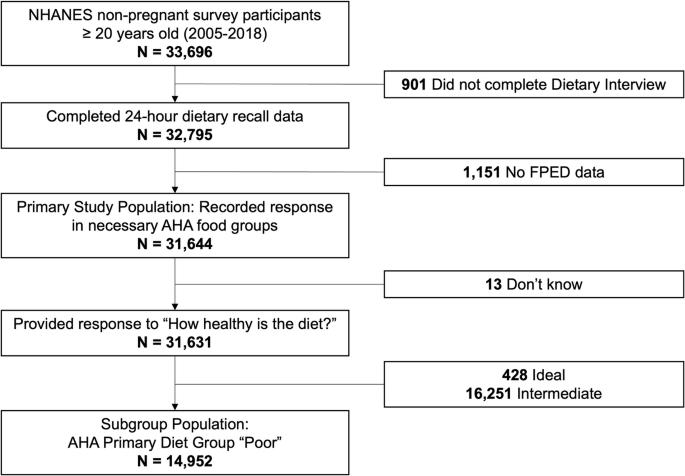
Diet is pivotal in preventing and managing cardiometabolic diseases. Our study aimed to describe the prevalence of poor diet quality and perceiving a poor diet as healthy and to determine individual-level factors associated with these groups. This cross-sectional study analyzed seven 2-year cycles of National Health and Nutrition Examination Survey (NHANES) data from 2005 to 2018, which included non-pregnant adults between 20 and 85 years old, who completed a one-day 24-h dietary recall and dietary interview. Diet quality was measured using the American Heart Association (AHA) primary diet score, and perceived diet quality was based on NHANES questionnaire response. Among 31,644 adults, the prevalence of poor diet quality was 47%. Male sex and smoking were associated with a higher risk of poor diet quality, while older age, higher levels of education, increased income, diabetes mellitus diagnosis, and increased vigorous activity levels were associated with a lower risk of poor diet quality. Among adults with poor diet quality (n = 14,952), 23% perceived their diet as healthy. In multivariable analysis, older age, higher education, and vigorous activity level were associated with a higher risk of perceiving a poor diet as healthy. Nearly half of US adults had poor diet quality based on AHA guidelines for cardiovascular health, yet nearly a quarter of them perceived their diet as healthy. This gap underscores the need for focused educational efforts and interventions in both healthcare and public health settings to dispel diet-related misperceptions and motivate the adoption of a healthier diet to address cardiometabolic health.
期刊介绍:
The European Journal of Clinical Nutrition (EJCN) is an international, peer-reviewed journal covering all aspects of human and clinical nutrition. The journal welcomes original research, reviews, case reports and brief communications based on clinical, metabolic and epidemiological studies that describe methodologies, mechanisms, associations and benefits of nutritional interventions for clinical disease and health promotion.
Topics of interest include but are not limited to:
Nutrition and Health (including climate and ecological aspects)
Metabolism & Metabolomics
Genomics and personalized strategies in nutrition
Nutrition during the early life cycle
Health issues and nutrition in the elderly
Phenotyping in clinical nutrition
Nutrition in acute and chronic diseases
The double burden of ''malnutrition'': Under-nutrition and Obesity
Prevention of Non Communicable Diseases (NCD)




 京公网安备 11010802042870号
京ICP备2023020795号-1
京公网安备 11010802042870号
京ICP备2023020795号-1

 分享
分享
 求助内容:
求助内容: 应助结果提醒方式:
 扫码关注我们
