Cassandra Campbell, Kristin Wyckoff, Ronak Naik, Nithya Swaminathan, Salima Ahmed Bhimani, Jason Johnson, Vijaya Joshi, Ranjit Philip
{"title":"大流行效应:对有临床意义的先天性心脏病诊断的二次影响及贫困指数的作用。","authors":"Cassandra Campbell, Kristin Wyckoff, Ronak Naik, Nithya Swaminathan, Salima Ahmed Bhimani, Jason Johnson, Vijaya Joshi, Ranjit Philip","doi":"10.1007/s00246-025-03844-2","DOIUrl":null,"url":null,"abstract":"<p><p>We sought to determine the impact of the COVID-19 on prenatal diagnosis (PND) of clinically significant congenital heart disease (CHD) and the role of socioeconomic status (SES), complexity of diagnosis, and proximity to advance testing. This single-center retrospective study evaluated 2 eras of infants (COVID (born July 1, 2020-July 31, 2023) and pre-COVID (born June 1, 2017-July 1, 2020) who had cardiac surgery in the first year of life. 512 infants, 292 in pre-COVID era and 220 in COVID era with no significant difference in the rate of prenatal care (PNC) or PND in the COVID era (88%/42%) versus pre-COVID era (93%/48%) (χ<sup>2</sup> = 3.22, p = 0.07, χ<sup>2</sup> = 1.9, p = 0.17). Distance from advanced testing had no influence on PND in the COVID era [55% close versus 53% further away (χ<sup>2</sup> = 2, p = 0.65)]. When evaluating SES with income per zip code, the higher SES group had increased PND during the pandemic compared to both pre-COVID era and low SES group. However, social deprivation index (SDI) based on zip code showed the higher SES group had a decrease in PND rates. Both metrics showed no change in PND in the lower SES group during COVID. COVID-19 had no significant change in the PND of clinically significant CHD during the pandemic. The differing SES results using income versus SDI of patient zip codes suggest that barriers to PND is multifactorial. The discrepancy in PND reflects poor referral rates to advanced testing, highlighting the importance of educating frontline healthcare professionals to improve outcomes.</p>","PeriodicalId":19814,"journal":{"name":"Pediatric Cardiology","volume":" ","pages":"803-811"},"PeriodicalIF":1.3000,"publicationDate":"2026-02-01","publicationTypes":"Journal Article","fieldsOfStudy":null,"isOpenAccess":false,"openAccessPdf":"https://www.ncbi.nlm.nih.gov/pmc/articles/PMC12855217/pdf/","citationCount":"0","resultStr":"{\"title\":\"The Pandemic Effect: Secondary Impact on the Diagnosis of Clinically Significant Congenital Heart Disease and Role of Deprivation Index.\",\"authors\":\"Cassandra Campbell, Kristin Wyckoff, Ronak Naik, Nithya Swaminathan, Salima Ahmed Bhimani, Jason Johnson, Vijaya Joshi, Ranjit Philip\",\"doi\":\"10.1007/s00246-025-03844-2\",\"DOIUrl\":null,\"url\":null,\"abstract\":\"<p><p>We sought to determine the impact of the COVID-19 on prenatal diagnosis (PND) of clinically significant congenital heart disease (CHD) and the role of socioeconomic status (SES), complexity of diagnosis, and proximity to advance testing. This single-center retrospective study evaluated 2 eras of infants (COVID (born July 1, 2020-July 31, 2023) and pre-COVID (born June 1, 2017-July 1, 2020) who had cardiac surgery in the first year of life. 512 infants, 292 in pre-COVID era and 220 in COVID era with no significant difference in the rate of prenatal care (PNC) or PND in the COVID era (88%/42%) versus pre-COVID era (93%/48%) (χ<sup>2</sup> = 3.22, p = 0.07, χ<sup>2</sup> = 1.9, p = 0.17). Distance from advanced testing had no influence on PND in the COVID era [55% close versus 53% further away (χ<sup>2</sup> = 2, p = 0.65)]. When evaluating SES with income per zip code, the higher SES group had increased PND during the pandemic compared to both pre-COVID era and low SES group. However, social deprivation index (SDI) based on zip code showed the higher SES group had a decrease in PND rates. Both metrics showed no change in PND in the lower SES group during COVID. COVID-19 had no significant change in the PND of clinically significant CHD during the pandemic. The differing SES results using income versus SDI of patient zip codes suggest that barriers to PND is multifactorial. The discrepancy in PND reflects poor referral rates to advanced testing, highlighting the importance of educating frontline healthcare professionals to improve outcomes.</p>\",\"PeriodicalId\":19814,\"journal\":{\"name\":\"Pediatric Cardiology\",\"volume\":\" \",\"pages\":\"803-811\"},\"PeriodicalIF\":1.3000,\"publicationDate\":\"2026-02-01\",\"publicationTypes\":\"Journal Article\",\"fieldsOfStudy\":null,\"isOpenAccess\":false,\"openAccessPdf\":\"https://www.ncbi.nlm.nih.gov/pmc/articles/PMC12855217/pdf/\",\"citationCount\":\"0\",\"resultStr\":null,\"platform\":\"Semanticscholar\",\"paperid\":null,\"PeriodicalName\":\"Pediatric Cardiology\",\"FirstCategoryId\":\"3\",\"ListUrlMain\":\"https://doi.org/10.1007/s00246-025-03844-2\",\"RegionNum\":4,\"RegionCategory\":\"医学\",\"ArticlePicture\":[],\"TitleCN\":null,\"AbstractTextCN\":null,\"PMCID\":null,\"EPubDate\":\"2025/4/3 0:00:00\",\"PubModel\":\"Epub\",\"JCR\":\"Q3\",\"JCRName\":\"CARDIAC & CARDIOVASCULAR SYSTEMS\",\"Score\":null,\"Total\":0}","platform":"Semanticscholar","paperid":null,"PeriodicalName":"Pediatric Cardiology","FirstCategoryId":"3","ListUrlMain":"https://doi.org/10.1007/s00246-025-03844-2","RegionNum":4,"RegionCategory":"医学","ArticlePicture":[],"TitleCN":null,"AbstractTextCN":null,"PMCID":null,"EPubDate":"2025/4/3 0:00:00","PubModel":"Epub","JCR":"Q3","JCRName":"CARDIAC & CARDIOVASCULAR SYSTEMS","Score":null,"Total":0}
引用次数: 0
摘要
我们试图确定COVID-19对临床显著性先天性心脏病(CHD)产前诊断(PND)的影响,以及社会经济地位(SES)、诊断复杂性和是否接近提前检测的作用。这项单中心回顾性研究评估了在出生后第一年接受心脏手术的婴儿(COVID(出生于2020年7月1日- 2023年7月31日)和前COVID(出生于2017年6月1日- 2020年7月1日)两个时期。产前护理(PNC)率(88%/42%)和产前护理(PND)率(93%/48%)与产前护理(χ2 = 3.22, p = 0.07, χ2 = 1.9, p = 0.17)差异均无统计学意义。提前检测距离对PND无影响[近55%,远53% (χ2 = 2, p = 0.65)]。当以每个邮政编码的收入评估SES时,与前covid时代和低SES组相比,高SES组在大流行期间的PND增加了。然而,基于邮政编码的社会剥夺指数(SDI)显示,社会地位越高的群体的PND发生率越低。两项指标均显示,在COVID期间,低SES组的PND没有变化。在大流行期间,COVID-19对临床显著性冠心病的PND没有显著变化。使用收入和患者邮政编码的SDI的不同SES结果表明,PND的障碍是多因素的。PND的差异反映了高级检测的转诊率较低,突出了教育一线医疗保健专业人员以改善结果的重要性。
The Pandemic Effect: Secondary Impact on the Diagnosis of Clinically Significant Congenital Heart Disease and Role of Deprivation Index.
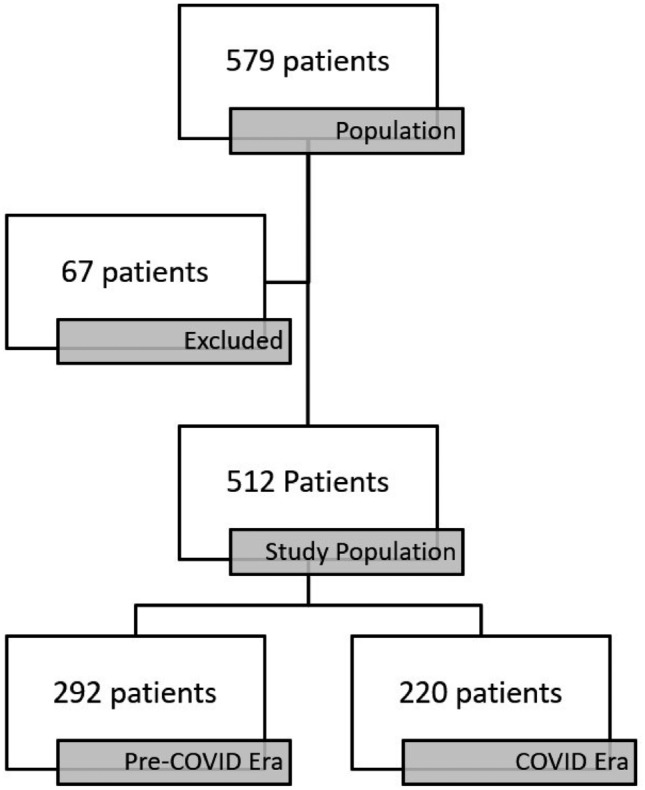
We sought to determine the impact of the COVID-19 on prenatal diagnosis (PND) of clinically significant congenital heart disease (CHD) and the role of socioeconomic status (SES), complexity of diagnosis, and proximity to advance testing. This single-center retrospective study evaluated 2 eras of infants (COVID (born July 1, 2020-July 31, 2023) and pre-COVID (born June 1, 2017-July 1, 2020) who had cardiac surgery in the first year of life. 512 infants, 292 in pre-COVID era and 220 in COVID era with no significant difference in the rate of prenatal care (PNC) or PND in the COVID era (88%/42%) versus pre-COVID era (93%/48%) (χ2 = 3.22, p = 0.07, χ2 = 1.9, p = 0.17). Distance from advanced testing had no influence on PND in the COVID era [55% close versus 53% further away (χ2 = 2, p = 0.65)]. When evaluating SES with income per zip code, the higher SES group had increased PND during the pandemic compared to both pre-COVID era and low SES group. However, social deprivation index (SDI) based on zip code showed the higher SES group had a decrease in PND rates. Both metrics showed no change in PND in the lower SES group during COVID. COVID-19 had no significant change in the PND of clinically significant CHD during the pandemic. The differing SES results using income versus SDI of patient zip codes suggest that barriers to PND is multifactorial. The discrepancy in PND reflects poor referral rates to advanced testing, highlighting the importance of educating frontline healthcare professionals to improve outcomes.
期刊介绍:
The editor of Pediatric Cardiology welcomes original manuscripts concerning all aspects of heart disease in infants, children, and adolescents, including embryology and anatomy, physiology and pharmacology, biochemistry, pathology, genetics, radiology, clinical aspects, investigative cardiology, electrophysiology and echocardiography, and cardiac surgery. Articles which may include original articles, review articles, letters to the editor etc., must be written in English and must be submitted solely to Pediatric Cardiology.






 京公网安备 11010802042870号
京ICP备2023020795号-1
京公网安备 11010802042870号
京ICP备2023020795号-1

 分享
分享
 求助内容:
求助内容: 应助结果提醒方式:
 扫码关注我们
