Pakawat Kongpreecha, Arnon Buntha, Pattama Tongdee, Pinwen Peter Chiou and Sineenat Siri
{"title":"一种基于多环配体的荧光配体传感器,用于增强检测17β-雌二醇。","authors":"Pakawat Kongpreecha, Arnon Buntha, Pattama Tongdee, Pinwen Peter Chiou and Sineenat Siri","doi":"10.1039/D5AY00154D","DOIUrl":null,"url":null,"abstract":"<p >The modulation of 17β-estradiol (E2) level, even in trace amounts outside the normal range, plays a critical role in diagnosing and treating various diseases in females. This work presents a novel, simple, and highly sensitive method for E2 detection based on the designed repetitive-loop aptamer. The method is based on the different fluorescence intensities of SYBR Green I (SGI) to intercalate the DNA aptamer structures, which are changed upon interacting with E2. Among the designed aptamers containing 1–5 loop structures (designated as O1–O5), the O5-aptamer exhibited the highest E2 interaction and was employed to construct the O5-aptasensor. Under optimal conditions, the aptasensor displayed excellent sensitivity, with a linear detection range of 1–200 pM, a limit of detection (LOD) of 1.34 pM, and a limit of quantification (LOQ) of 4.48 pM. Its LOD is 13.5 folds lower than that of the L1-aptasensor. The O5-aptasensor specifically detected E2, distinguishing it from structurally similar compounds such as progesterone, genistein, diethylstilbestrol, bisphenol A, and chloramphenicol. Furthermore, the O5-aptasensor accurately detects E2 spiked in artificial urine and human serum samples, with recovery rates ranging from 98.73% to 109.00%, and relative standard deviations below 8%. The O5-aptasensor was tested on blood serum samples from seven hospital patients, and its performance was comparable to that of the hospital analysis for E2 measurement. These findings highlight the potential of the O5-aptasensor as a highly sensitive platform for clinical E2 detection, offering a viable alternative to existing methods.</p>","PeriodicalId":64,"journal":{"name":"Analytical Methods","volume":" 16","pages":" 3220-3228"},"PeriodicalIF":3.0000,"publicationDate":"2025-04-04","publicationTypes":"Journal Article","fieldsOfStudy":null,"isOpenAccess":false,"openAccessPdf":"","citationCount":"0","resultStr":"{\"title\":\"A multi-loop aptamer-based fluorescent aptasensor for enhanced detection of 17β-estradiol†\",\"authors\":\"Pakawat Kongpreecha, Arnon Buntha, Pattama Tongdee, Pinwen Peter Chiou and Sineenat Siri\",\"doi\":\"10.1039/D5AY00154D\",\"DOIUrl\":null,\"url\":null,\"abstract\":\"<p >The modulation of 17β-estradiol (E2) level, even in trace amounts outside the normal range, plays a critical role in diagnosing and treating various diseases in females. This work presents a novel, simple, and highly sensitive method for E2 detection based on the designed repetitive-loop aptamer. The method is based on the different fluorescence intensities of SYBR Green I (SGI) to intercalate the DNA aptamer structures, which are changed upon interacting with E2. Among the designed aptamers containing 1–5 loop structures (designated as O1–O5), the O5-aptamer exhibited the highest E2 interaction and was employed to construct the O5-aptasensor. Under optimal conditions, the aptasensor displayed excellent sensitivity, with a linear detection range of 1–200 pM, a limit of detection (LOD) of 1.34 pM, and a limit of quantification (LOQ) of 4.48 pM. Its LOD is 13.5 folds lower than that of the L1-aptasensor. The O5-aptasensor specifically detected E2, distinguishing it from structurally similar compounds such as progesterone, genistein, diethylstilbestrol, bisphenol A, and chloramphenicol. Furthermore, the O5-aptasensor accurately detects E2 spiked in artificial urine and human serum samples, with recovery rates ranging from 98.73% to 109.00%, and relative standard deviations below 8%. The O5-aptasensor was tested on blood serum samples from seven hospital patients, and its performance was comparable to that of the hospital analysis for E2 measurement. These findings highlight the potential of the O5-aptasensor as a highly sensitive platform for clinical E2 detection, offering a viable alternative to existing methods.</p>\",\"PeriodicalId\":64,\"journal\":{\"name\":\"Analytical Methods\",\"volume\":\" 16\",\"pages\":\" 3220-3228\"},\"PeriodicalIF\":3.0000,\"publicationDate\":\"2025-04-04\",\"publicationTypes\":\"Journal Article\",\"fieldsOfStudy\":null,\"isOpenAccess\":false,\"openAccessPdf\":\"\",\"citationCount\":\"0\",\"resultStr\":null,\"platform\":\"Semanticscholar\",\"paperid\":null,\"PeriodicalName\":\"Analytical Methods\",\"FirstCategoryId\":\"92\",\"ListUrlMain\":\"https://pubs.rsc.org/en/content/articlelanding/2025/ay/d5ay00154d\",\"RegionNum\":3,\"RegionCategory\":\"化学\",\"ArticlePicture\":[],\"TitleCN\":null,\"AbstractTextCN\":null,\"PMCID\":null,\"EPubDate\":\"\",\"PubModel\":\"\",\"JCR\":\"Q2\",\"JCRName\":\"CHEMISTRY, ANALYTICAL\",\"Score\":null,\"Total\":0}","platform":"Semanticscholar","paperid":null,"PeriodicalName":"Analytical Methods","FirstCategoryId":"92","ListUrlMain":"https://pubs.rsc.org/en/content/articlelanding/2025/ay/d5ay00154d","RegionNum":3,"RegionCategory":"化学","ArticlePicture":[],"TitleCN":null,"AbstractTextCN":null,"PMCID":null,"EPubDate":"","PubModel":"","JCR":"Q2","JCRName":"CHEMISTRY, ANALYTICAL","Score":null,"Total":0}
引用次数: 0
摘要
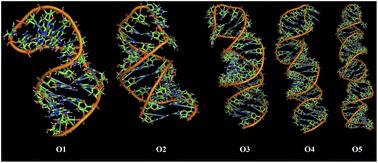
17β-雌二醇(E2)水平的调节,即使是在正常范围之外的微量,在女性各种疾病的诊断和治疗中起着至关重要的作用。本文提出了一种新颖、简单、高灵敏度的E2检测方法,该方法基于所设计的重复环适体。该方法是基于SYBR Green I (SGI)的不同荧光强度插入DNA适体结构,这些结构在与E2相互作用时发生变化。在含有1-5个环结构的适体中,o5 -适体表现出最高的E2相互作用,并被用来构建o5 -适体传感器。在最佳条件下,该传感器具有良好的灵敏度,线性检测范围为1 ~ 200 pM,检出限为1.34 pM,定量限为4.48 pM。其LOD比l1 -适体传感器低13.5倍。o5 -适体传感器专门检测E2,将其与结构类似的化合物(如黄体酮、染料木素、己烯雌酚、双酚A和氯霉素)区分开来。此外,o5 - aptassensor能准确检测人工尿液和人血清中E2,回收率为98.73% ~ 109.00%,相对标准偏差小于8%。对7例医院患者的血清样本进行了o5 -适配体传感器测试,其性能与医院分析E2测量相当。这些发现突出了o5 -受体传感器作为临床E2检测的高灵敏度平台的潜力,为现有方法提供了可行的替代方案。
A multi-loop aptamer-based fluorescent aptasensor for enhanced detection of 17β-estradiol†
The modulation of 17β-estradiol (E2) level, even in trace amounts outside the normal range, plays a critical role in diagnosing and treating various diseases in females. This work presents a novel, simple, and highly sensitive method for E2 detection based on the designed repetitive-loop aptamer. The method is based on the different fluorescence intensities of SYBR Green I (SGI) to intercalate the DNA aptamer structures, which are changed upon interacting with E2. Among the designed aptamers containing 1–5 loop structures (designated as O1–O5), the O5-aptamer exhibited the highest E2 interaction and was employed to construct the O5-aptasensor. Under optimal conditions, the aptasensor displayed excellent sensitivity, with a linear detection range of 1–200 pM, a limit of detection (LOD) of 1.34 pM, and a limit of quantification (LOQ) of 4.48 pM. Its LOD is 13.5 folds lower than that of the L1-aptasensor. The O5-aptasensor specifically detected E2, distinguishing it from structurally similar compounds such as progesterone, genistein, diethylstilbestrol, bisphenol A, and chloramphenicol. Furthermore, the O5-aptasensor accurately detects E2 spiked in artificial urine and human serum samples, with recovery rates ranging from 98.73% to 109.00%, and relative standard deviations below 8%. The O5-aptasensor was tested on blood serum samples from seven hospital patients, and its performance was comparable to that of the hospital analysis for E2 measurement. These findings highlight the potential of the O5-aptasensor as a highly sensitive platform for clinical E2 detection, offering a viable alternative to existing methods.




 京公网安备 11010802042870号
京ICP备2023020795号-1
京公网安备 11010802042870号
京ICP备2023020795号-1

 分享
分享
 求助内容:
求助内容: 应助结果提醒方式:
 扫码关注我们
