{"title":"机器人胰腺远端切除术中内脏脂肪面积对手术难度的影响(TAKUMI-2)。","authors":"Kosei Takagi, Motohiko Yamada, Tomokazu Fuji, Kazuya Yasui, Takeyoshi Nishiyama, Yasuo Nagai, Noriyuki Kanehira, Toshiyoshi Fujiwara","doi":"10.1007/s00464-025-11696-3","DOIUrl":null,"url":null,"abstract":"<p><strong>Background: </strong>Difficulty scoring systems (DSS) have been developed to quantify the surgical complexity of laparoscopic distal pancreatectomy (LDP). However, few studies have validated these systems in the context of robotic distal pancreatectomy (RDP). Moreover, the impact of body composition on RDP outcomes remains unexplored. This study aimed to investigate the risk factors of surgical difficulty in RDP, including body composition.</p><p><strong>Methods: </strong>This retrospective study included 72 consecutive patients who underwent RDP at our institution between April 2021 and October 2024. Using a modified DSS for LDP, patients were divided into three difficulty index groups. The association between the difficulty index and outcomes was investigated. Multivariate analyses were performed to identify risk factors associated with surgical difficulty (prolonged operative time) in RDP.</p><p><strong>Results: </strong>Patients were classified into three difficulty index groups: low (n = 28), intermediate (n = 25), and high (n = 19). Operative time was significantly associated with the surgical index (P = 0.01). Moreover, visceral fat area (VFA) was significantly correlated with operative time (r<sup>2</sup> = 0.10, P = 0.008). The multivariate analyses found that VFA (≥ 100 cm<sup>2</sup>) (odds ratio [OR] 5.03, 95% confidence interval [CI] 1.32-22.4, P = 0.02), malignancy (OR 4.92, 95% CI 1.50-18.9, P = 0.01), and pancreatic resection on the portal vein (OR 4.14, 95% CI 1.24-15.9, P = 0.02) were significant risk factors associated with surgical difficulty.</p><p><strong>Conclusion: </strong>VFA could be a novel and useful factor for assessing the surgical difficulty associated with RDP.</p>","PeriodicalId":22174,"journal":{"name":"Surgical Endoscopy And Other Interventional Techniques","volume":" ","pages":"3137-3145"},"PeriodicalIF":3.3000,"publicationDate":"2025-05-01","publicationTypes":"Journal Article","fieldsOfStudy":null,"isOpenAccess":false,"openAccessPdf":"https://www.ncbi.nlm.nih.gov/pmc/articles/PMC12041091/pdf/","citationCount":"0","resultStr":"{\"title\":\"Impact of visceral fat area on surgical difficulty during robotic distal pancreatectomy (TAKUMI-2).\",\"authors\":\"Kosei Takagi, Motohiko Yamada, Tomokazu Fuji, Kazuya Yasui, Takeyoshi Nishiyama, Yasuo Nagai, Noriyuki Kanehira, Toshiyoshi Fujiwara\",\"doi\":\"10.1007/s00464-025-11696-3\",\"DOIUrl\":null,\"url\":null,\"abstract\":\"<p><strong>Background: </strong>Difficulty scoring systems (DSS) have been developed to quantify the surgical complexity of laparoscopic distal pancreatectomy (LDP). However, few studies have validated these systems in the context of robotic distal pancreatectomy (RDP). Moreover, the impact of body composition on RDP outcomes remains unexplored. This study aimed to investigate the risk factors of surgical difficulty in RDP, including body composition.</p><p><strong>Methods: </strong>This retrospective study included 72 consecutive patients who underwent RDP at our institution between April 2021 and October 2024. Using a modified DSS for LDP, patients were divided into three difficulty index groups. The association between the difficulty index and outcomes was investigated. Multivariate analyses were performed to identify risk factors associated with surgical difficulty (prolonged operative time) in RDP.</p><p><strong>Results: </strong>Patients were classified into three difficulty index groups: low (n = 28), intermediate (n = 25), and high (n = 19). Operative time was significantly associated with the surgical index (P = 0.01). Moreover, visceral fat area (VFA) was significantly correlated with operative time (r<sup>2</sup> = 0.10, P = 0.008). The multivariate analyses found that VFA (≥ 100 cm<sup>2</sup>) (odds ratio [OR] 5.03, 95% confidence interval [CI] 1.32-22.4, P = 0.02), malignancy (OR 4.92, 95% CI 1.50-18.9, P = 0.01), and pancreatic resection on the portal vein (OR 4.14, 95% CI 1.24-15.9, P = 0.02) were significant risk factors associated with surgical difficulty.</p><p><strong>Conclusion: </strong>VFA could be a novel and useful factor for assessing the surgical difficulty associated with RDP.</p>\",\"PeriodicalId\":22174,\"journal\":{\"name\":\"Surgical Endoscopy And Other Interventional Techniques\",\"volume\":\" \",\"pages\":\"3137-3145\"},\"PeriodicalIF\":3.3000,\"publicationDate\":\"2025-05-01\",\"publicationTypes\":\"Journal Article\",\"fieldsOfStudy\":null,\"isOpenAccess\":false,\"openAccessPdf\":\"https://www.ncbi.nlm.nih.gov/pmc/articles/PMC12041091/pdf/\",\"citationCount\":\"0\",\"resultStr\":null,\"platform\":\"Semanticscholar\",\"paperid\":null,\"PeriodicalName\":\"Surgical Endoscopy And Other Interventional Techniques\",\"FirstCategoryId\":\"3\",\"ListUrlMain\":\"https://doi.org/10.1007/s00464-025-11696-3\",\"RegionNum\":2,\"RegionCategory\":\"医学\",\"ArticlePicture\":[],\"TitleCN\":null,\"AbstractTextCN\":null,\"PMCID\":null,\"EPubDate\":\"2025/4/4 0:00:00\",\"PubModel\":\"Epub\",\"JCR\":\"Q2\",\"JCRName\":\"SURGERY\",\"Score\":null,\"Total\":0}","platform":"Semanticscholar","paperid":null,"PeriodicalName":"Surgical Endoscopy And Other Interventional Techniques","FirstCategoryId":"3","ListUrlMain":"https://doi.org/10.1007/s00464-025-11696-3","RegionNum":2,"RegionCategory":"医学","ArticlePicture":[],"TitleCN":null,"AbstractTextCN":null,"PMCID":null,"EPubDate":"2025/4/4 0:00:00","PubModel":"Epub","JCR":"Q2","JCRName":"SURGERY","Score":null,"Total":0}
引用次数: 0
摘要
背景:难度评分系统(DSS)已被开发用于量化腹腔镜远端胰腺切除术(LDP)的手术复杂性。然而,很少有研究在机器人远端胰腺切除术(RDP)的背景下验证这些系统。此外,身体成分对RDP结果的影响尚不清楚。本研究旨在探讨RDP手术困难的危险因素,包括身体成分。方法:本回顾性研究纳入了2021年4月至2024年10月期间在我院接受RDP治疗的72例连续患者。使用改进的DSS对LDP进行评分,将患者分为三个困难指数组。研究了难度指数与结果之间的关系。进行多变量分析以确定与RDP手术困难(延长手术时间)相关的危险因素。结果:将患者分为低(n = 28)、中(n = 25)、高(n = 19)三个难度指数组。手术时间与手术指数有显著相关性(P = 0.01)。内脏脂肪面积(VFA)与手术时间显著相关(r2 = 0.10, P = 0.008)。多因素分析发现,VFA(≥100 cm2)(比值比[OR] 5.03, 95%可信区间[CI] 1.32 ~ 22.4, P = 0.02)、恶性肿瘤(比值比[OR] 4.92, 95% CI 1.50 ~ 18.9, P = 0.01)和门静脉胰切除术(比值比[OR] 4.14, 95% CI 1.24 ~ 15.9, P = 0.02)是与手术难度相关的重要危险因素。结论:VFA可作为评估RDP手术难度的一种新颖有效的指标。
Impact of visceral fat area on surgical difficulty during robotic distal pancreatectomy (TAKUMI-2).
Background: Difficulty scoring systems (DSS) have been developed to quantify the surgical complexity of laparoscopic distal pancreatectomy (LDP). However, few studies have validated these systems in the context of robotic distal pancreatectomy (RDP). Moreover, the impact of body composition on RDP outcomes remains unexplored. This study aimed to investigate the risk factors of surgical difficulty in RDP, including body composition.
Methods: This retrospective study included 72 consecutive patients who underwent RDP at our institution between April 2021 and October 2024. Using a modified DSS for LDP, patients were divided into three difficulty index groups. The association between the difficulty index and outcomes was investigated. Multivariate analyses were performed to identify risk factors associated with surgical difficulty (prolonged operative time) in RDP.
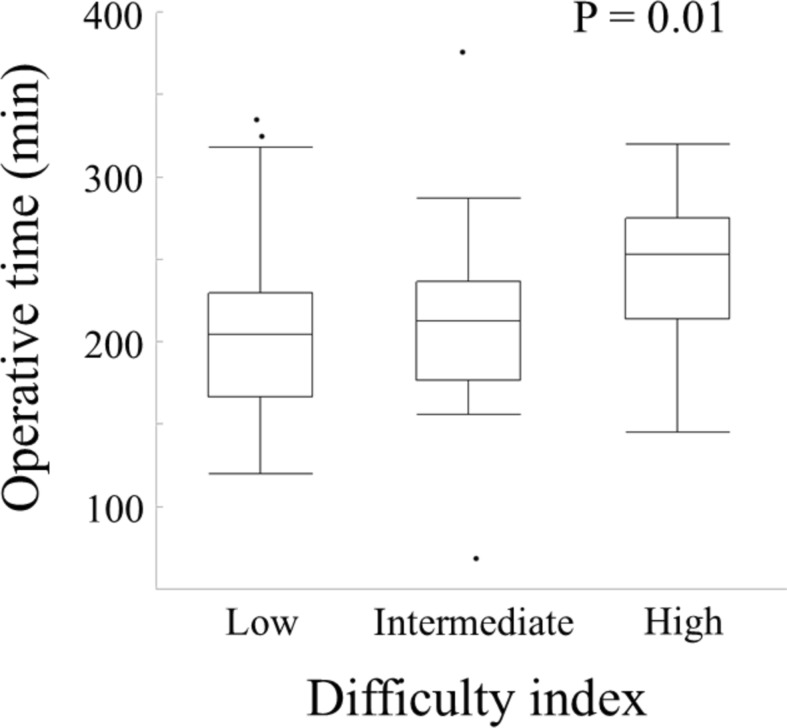
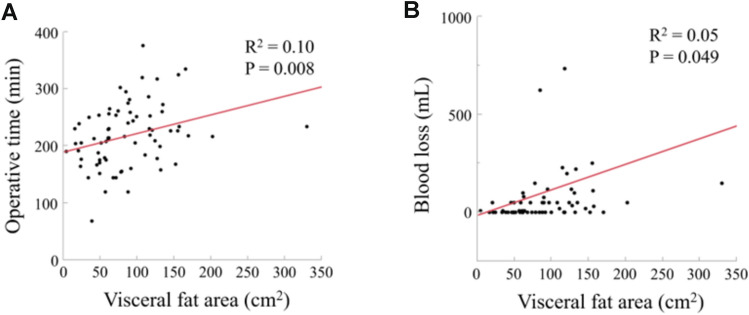
Results: Patients were classified into three difficulty index groups: low (n = 28), intermediate (n = 25), and high (n = 19). Operative time was significantly associated with the surgical index (P = 0.01). Moreover, visceral fat area (VFA) was significantly correlated with operative time (r2 = 0.10, P = 0.008). The multivariate analyses found that VFA (≥ 100 cm2) (odds ratio [OR] 5.03, 95% confidence interval [CI] 1.32-22.4, P = 0.02), malignancy (OR 4.92, 95% CI 1.50-18.9, P = 0.01), and pancreatic resection on the portal vein (OR 4.14, 95% CI 1.24-15.9, P = 0.02) were significant risk factors associated with surgical difficulty.
Conclusion: VFA could be a novel and useful factor for assessing the surgical difficulty associated with RDP.
期刊介绍:
Uniquely positioned at the interface between various medical and surgical disciplines, Surgical Endoscopy serves as a focal point for the international surgical community to exchange information on practice, theory, and research.
Topics covered in the journal include:
-Surgical aspects of:
Interventional endoscopy,
Ultrasound,
Other techniques in the fields of gastroenterology, obstetrics, gynecology, and urology,
-Gastroenterologic surgery
-Thoracic surgery
-Traumatic surgery
-Orthopedic surgery
-Pediatric surgery





 京公网安备 11010802042870号
京ICP备2023020795号-1
京公网安备 11010802042870号
京ICP备2023020795号-1

 分享
分享
 求助内容:
求助内容: 应助结果提醒方式:
 扫码关注我们
