Markus Kemper, Florian Denk, Hendrik Husstedt, Jonas Obleser
{"title":"声学透明助听器增加听力努力的生理指标。","authors":"Markus Kemper, Florian Denk, Hendrik Husstedt, Jonas Obleser","doi":"10.1177/23312165251333225","DOIUrl":null,"url":null,"abstract":"<p><p>While hearing aids are beneficial in compensating for hearing loss and suppressing ambient noise, they may also introduce an unwanted processing burden to the listener's sensory and cognitive system. To investigate such adverse side effects, hearing aids may be set to a 'transparent mode', aiming to replicate natural hearing through the open ear as best as possible. Such transparent hearing aids have previously been demonstrated to exhibit a small but significant disadvantage in speech intelligibility, with less conclusive effects on self-rated listening effort. Here we aimed to reproduce these findings and expand them with neurophysiological measures of invested listening effort, including parietal alpha power and pupil size. Invested listening effort was measured across five task difficulties, ranging from nearly impossible to easy, with normal-hearing participants in both aided and unaided conditions. Results well reproduced a hearing aid disadvantage for speech intelligibility and subjective listening effort ratings. As to be expected, pupil size and parietal alpha power followed an inverted u-shape, peaking at moderate task difficulties (around SRT50). However, the transparent hearing aid increased pupil size and parietal alpha power at medium task demand (between SRT20 and SRT80). These neurophysiological effects were larger than those observed in speech intelligibility and subjective listening effort, respectively. The results gain plausibility by yielding a substantial association of individual pupil size and individual parietal alpha power. In sum, our findings suggest that key neurophysiological measures of invested listening effort are sensitive to the individual additional burden on speech intelligibility that hearing aid processing can introduce.</p>","PeriodicalId":48678,"journal":{"name":"Trends in Hearing","volume":"29 ","pages":"23312165251333225"},"PeriodicalIF":3.0000,"publicationDate":"2025-01-01","publicationTypes":"Journal Article","fieldsOfStudy":null,"isOpenAccess":false,"openAccessPdf":"https://www.ncbi.nlm.nih.gov/pmc/articles/PMC11970058/pdf/","citationCount":"0","resultStr":"{\"title\":\"Acoustically Transparent Hearing Aids Increase Physiological Markers of Listening Effort.\",\"authors\":\"Markus Kemper, Florian Denk, Hendrik Husstedt, Jonas Obleser\",\"doi\":\"10.1177/23312165251333225\",\"DOIUrl\":null,\"url\":null,\"abstract\":\"<p><p>While hearing aids are beneficial in compensating for hearing loss and suppressing ambient noise, they may also introduce an unwanted processing burden to the listener's sensory and cognitive system. To investigate such adverse side effects, hearing aids may be set to a 'transparent mode', aiming to replicate natural hearing through the open ear as best as possible. Such transparent hearing aids have previously been demonstrated to exhibit a small but significant disadvantage in speech intelligibility, with less conclusive effects on self-rated listening effort. Here we aimed to reproduce these findings and expand them with neurophysiological measures of invested listening effort, including parietal alpha power and pupil size. Invested listening effort was measured across five task difficulties, ranging from nearly impossible to easy, with normal-hearing participants in both aided and unaided conditions. Results well reproduced a hearing aid disadvantage for speech intelligibility and subjective listening effort ratings. As to be expected, pupil size and parietal alpha power followed an inverted u-shape, peaking at moderate task difficulties (around SRT50). However, the transparent hearing aid increased pupil size and parietal alpha power at medium task demand (between SRT20 and SRT80). These neurophysiological effects were larger than those observed in speech intelligibility and subjective listening effort, respectively. The results gain plausibility by yielding a substantial association of individual pupil size and individual parietal alpha power. In sum, our findings suggest that key neurophysiological measures of invested listening effort are sensitive to the individual additional burden on speech intelligibility that hearing aid processing can introduce.</p>\",\"PeriodicalId\":48678,\"journal\":{\"name\":\"Trends in Hearing\",\"volume\":\"29 \",\"pages\":\"23312165251333225\"},\"PeriodicalIF\":3.0000,\"publicationDate\":\"2025-01-01\",\"publicationTypes\":\"Journal Article\",\"fieldsOfStudy\":null,\"isOpenAccess\":false,\"openAccessPdf\":\"https://www.ncbi.nlm.nih.gov/pmc/articles/PMC11970058/pdf/\",\"citationCount\":\"0\",\"resultStr\":null,\"platform\":\"Semanticscholar\",\"paperid\":null,\"PeriodicalName\":\"Trends in Hearing\",\"FirstCategoryId\":\"3\",\"ListUrlMain\":\"https://doi.org/10.1177/23312165251333225\",\"RegionNum\":2,\"RegionCategory\":\"医学\",\"ArticlePicture\":[],\"TitleCN\":null,\"AbstractTextCN\":null,\"PMCID\":null,\"EPubDate\":\"2025/4/3 0:00:00\",\"PubModel\":\"Epub\",\"JCR\":\"Q1\",\"JCRName\":\"AUDIOLOGY & SPEECH-LANGUAGE PATHOLOGY\",\"Score\":null,\"Total\":0}","platform":"Semanticscholar","paperid":null,"PeriodicalName":"Trends in Hearing","FirstCategoryId":"3","ListUrlMain":"https://doi.org/10.1177/23312165251333225","RegionNum":2,"RegionCategory":"医学","ArticlePicture":[],"TitleCN":null,"AbstractTextCN":null,"PMCID":null,"EPubDate":"2025/4/3 0:00:00","PubModel":"Epub","JCR":"Q1","JCRName":"AUDIOLOGY & SPEECH-LANGUAGE PATHOLOGY","Score":null,"Total":0}
Acoustically Transparent Hearing Aids Increase Physiological Markers of Listening Effort.
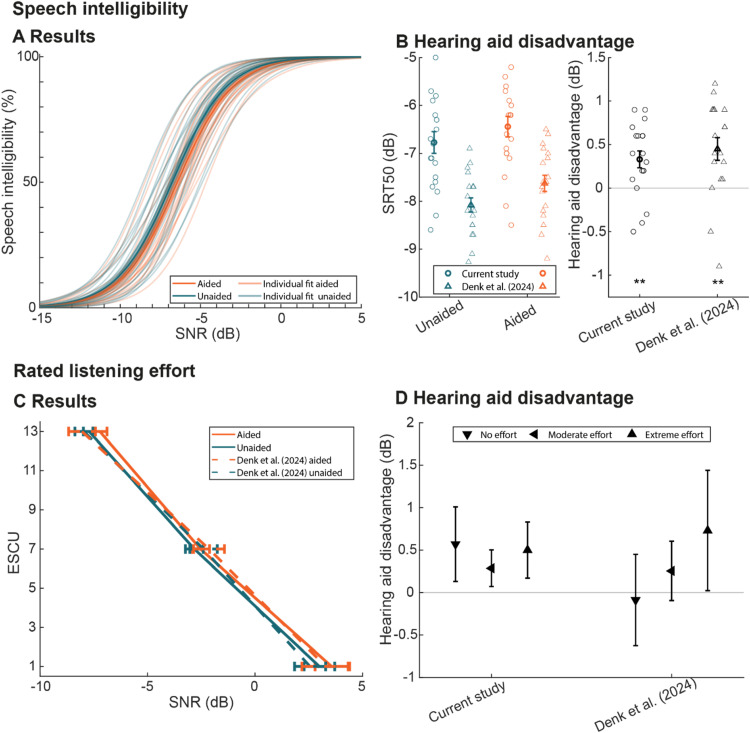
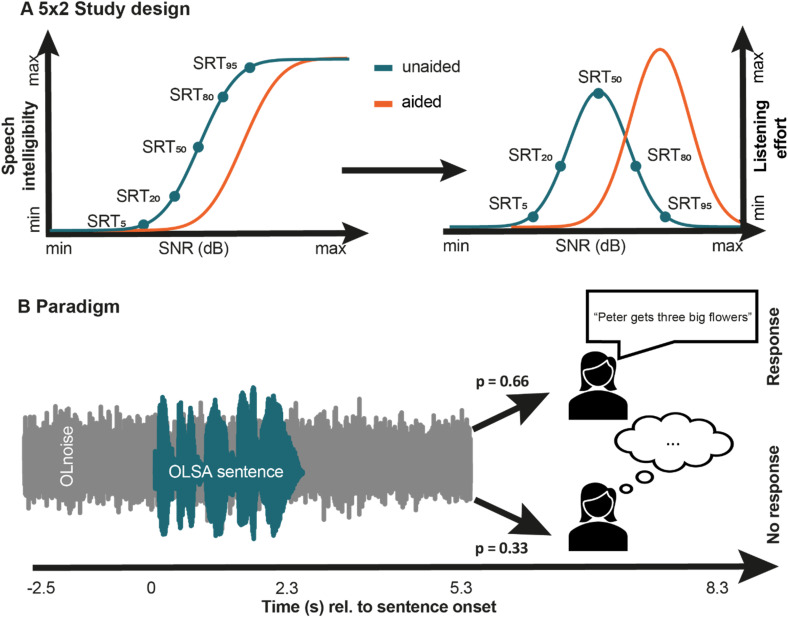
While hearing aids are beneficial in compensating for hearing loss and suppressing ambient noise, they may also introduce an unwanted processing burden to the listener's sensory and cognitive system. To investigate such adverse side effects, hearing aids may be set to a 'transparent mode', aiming to replicate natural hearing through the open ear as best as possible. Such transparent hearing aids have previously been demonstrated to exhibit a small but significant disadvantage in speech intelligibility, with less conclusive effects on self-rated listening effort. Here we aimed to reproduce these findings and expand them with neurophysiological measures of invested listening effort, including parietal alpha power and pupil size. Invested listening effort was measured across five task difficulties, ranging from nearly impossible to easy, with normal-hearing participants in both aided and unaided conditions. Results well reproduced a hearing aid disadvantage for speech intelligibility and subjective listening effort ratings. As to be expected, pupil size and parietal alpha power followed an inverted u-shape, peaking at moderate task difficulties (around SRT50). However, the transparent hearing aid increased pupil size and parietal alpha power at medium task demand (between SRT20 and SRT80). These neurophysiological effects were larger than those observed in speech intelligibility and subjective listening effort, respectively. The results gain plausibility by yielding a substantial association of individual pupil size and individual parietal alpha power. In sum, our findings suggest that key neurophysiological measures of invested listening effort are sensitive to the individual additional burden on speech intelligibility that hearing aid processing can introduce.
Trends in HearingAUDIOLOGY & SPEECH-LANGUAGE PATHOLOGYOTORH-OTORHINOLARYNGOLOGY
CiteScore
4.50
自引率
11.10%
发文量
44
审稿时长
12 weeks
期刊介绍:
Trends in Hearing is an open access journal completely dedicated to publishing original research and reviews focusing on human hearing, hearing loss, hearing aids, auditory implants, and aural rehabilitation. Under its former name, Trends in Amplification, the journal established itself as a forum for concise explorations of all areas of translational hearing research by leaders in the field. Trends in Hearing has now expanded its focus to include original research articles, with the goal of becoming the premier venue for research related to human hearing and hearing loss.





 京公网安备 11010802042870号
京ICP备2023020795号-1
京公网安备 11010802042870号
京ICP备2023020795号-1

 分享
分享
 求助内容:
求助内容: 应助结果提醒方式:
 扫码关注我们
