{"title":"乳酸菌抗菌肽的分离与鉴定:作用机制的探讨","authors":"Mahsa Niknam, Leila Sadeghi, Gholamreza Zarrini","doi":"10.1016/j.micpath.2025.107537","DOIUrl":null,"url":null,"abstract":"<div><div>The rise of antibiotic-resistant bacteria necessitates the development of novel antimicrobial agents. In this study, antimicrobial peptides (AMPs) were isolated from <em>Lactobacillus</em> sp., yielding Bioactive Peptide I (BAP I) and Bioactive Peptide III (BAP III). Purified via gel filtration chromatography (GFC), these peptides were characterized by MALDI-TOF MS and SDS-PAGE, which confirmed their molecular masses as 4168.14 Da and 8076.45 Da, respectively, and verified their high purity. Both peptides demonstrated potent antibacterial activity against <em>Pseudomonas aeruginosa</em>, <em>Streptococcus sanguinis</em>, <em>Bacillus cereus</em>, and <em>Staphylococcus aureus</em>, with BAP I exhibiting superior efficacy. This enhanced activity is likely due to its amphipathic structure and hydrophobic C-terminal region, which promote effective bacterial membrane disruption as evidenced by FE-SEM imaging. In addition to compromising membrane integrity, both BAP I and BAP III inhibited bacterial DNA polymerase activity, as shown by reduced PCR product formation. Complementary Circular Dichroism (CD) spectroscopy analysis indicated that peptide binding induced conformational changes in Taq polymerase, reducing its α-helical and β-sheet content while increasing the proportion of random coil structures—thus enhancing the enzyme's flexibility. Molecular docking and dynamics studies further revealed stable interactions between the peptides and the enzyme, suggesting a dual mechanism of action that targets both the bacterial membrane and DNA replication processes. Collectively, these findings highlight the significant potential of BAP I and BAP III as novel antimicrobial agents against multidrug-resistant infections. Future research should focus on evaluating their safety and clinical efficacy, as well as exploring their synergistic potential with existing antibiotics to advance these peptides as therapeutic alternatives.</div></div>","PeriodicalId":18599,"journal":{"name":"Microbial pathogenesis","volume":"204 ","pages":"Article 107537"},"PeriodicalIF":3.5000,"publicationDate":"2025-07-01","publicationTypes":"Journal Article","fieldsOfStudy":null,"isOpenAccess":false,"openAccessPdf":"","citationCount":"0","resultStr":"{\"title\":\"Isolation and characterization of antimicrobial peptides from Lactobacillus: Exploring mechanisms of action\",\"authors\":\"Mahsa Niknam, Leila Sadeghi, Gholamreza Zarrini\",\"doi\":\"10.1016/j.micpath.2025.107537\",\"DOIUrl\":null,\"url\":null,\"abstract\":\"<div><div>The rise of antibiotic-resistant bacteria necessitates the development of novel antimicrobial agents. In this study, antimicrobial peptides (AMPs) were isolated from <em>Lactobacillus</em> sp., yielding Bioactive Peptide I (BAP I) and Bioactive Peptide III (BAP III). Purified via gel filtration chromatography (GFC), these peptides were characterized by MALDI-TOF MS and SDS-PAGE, which confirmed their molecular masses as 4168.14 Da and 8076.45 Da, respectively, and verified their high purity. Both peptides demonstrated potent antibacterial activity against <em>Pseudomonas aeruginosa</em>, <em>Streptococcus sanguinis</em>, <em>Bacillus cereus</em>, and <em>Staphylococcus aureus</em>, with BAP I exhibiting superior efficacy. This enhanced activity is likely due to its amphipathic structure and hydrophobic C-terminal region, which promote effective bacterial membrane disruption as evidenced by FE-SEM imaging. In addition to compromising membrane integrity, both BAP I and BAP III inhibited bacterial DNA polymerase activity, as shown by reduced PCR product formation. Complementary Circular Dichroism (CD) spectroscopy analysis indicated that peptide binding induced conformational changes in Taq polymerase, reducing its α-helical and β-sheet content while increasing the proportion of random coil structures—thus enhancing the enzyme's flexibility. Molecular docking and dynamics studies further revealed stable interactions between the peptides and the enzyme, suggesting a dual mechanism of action that targets both the bacterial membrane and DNA replication processes. Collectively, these findings highlight the significant potential of BAP I and BAP III as novel antimicrobial agents against multidrug-resistant infections. Future research should focus on evaluating their safety and clinical efficacy, as well as exploring their synergistic potential with existing antibiotics to advance these peptides as therapeutic alternatives.</div></div>\",\"PeriodicalId\":18599,\"journal\":{\"name\":\"Microbial pathogenesis\",\"volume\":\"204 \",\"pages\":\"Article 107537\"},\"PeriodicalIF\":3.5000,\"publicationDate\":\"2025-07-01\",\"publicationTypes\":\"Journal Article\",\"fieldsOfStudy\":null,\"isOpenAccess\":false,\"openAccessPdf\":\"\",\"citationCount\":\"0\",\"resultStr\":null,\"platform\":\"Semanticscholar\",\"paperid\":null,\"PeriodicalName\":\"Microbial pathogenesis\",\"FirstCategoryId\":\"3\",\"ListUrlMain\":\"https://www.sciencedirect.com/science/article/pii/S0882401025002621\",\"RegionNum\":3,\"RegionCategory\":\"医学\",\"ArticlePicture\":[],\"TitleCN\":null,\"AbstractTextCN\":null,\"PMCID\":null,\"EPubDate\":\"2025/4/3 0:00:00\",\"PubModel\":\"Epub\",\"JCR\":\"Q3\",\"JCRName\":\"IMMUNOLOGY\",\"Score\":null,\"Total\":0}","platform":"Semanticscholar","paperid":null,"PeriodicalName":"Microbial pathogenesis","FirstCategoryId":"3","ListUrlMain":"https://www.sciencedirect.com/science/article/pii/S0882401025002621","RegionNum":3,"RegionCategory":"医学","ArticlePicture":[],"TitleCN":null,"AbstractTextCN":null,"PMCID":null,"EPubDate":"2025/4/3 0:00:00","PubModel":"Epub","JCR":"Q3","JCRName":"IMMUNOLOGY","Score":null,"Total":0}
Isolation and characterization of antimicrobial peptides from Lactobacillus: Exploring mechanisms of action
The rise of antibiotic-resistant bacteria necessitates the development of novel antimicrobial agents. In this study, antimicrobial peptides (AMPs) were isolated from Lactobacillus sp., yielding Bioactive Peptide I (BAP I) and Bioactive Peptide III (BAP III). Purified via gel filtration chromatography (GFC), these peptides were characterized by MALDI-TOF MS and SDS-PAGE, which confirmed their molecular masses as 4168.14 Da and 8076.45 Da, respectively, and verified their high purity. Both peptides demonstrated potent antibacterial activity against Pseudomonas aeruginosa, Streptococcus sanguinis, Bacillus cereus, and Staphylococcus aureus, with BAP I exhibiting superior efficacy. This enhanced activity is likely due to its amphipathic structure and hydrophobic C-terminal region, which promote effective bacterial membrane disruption as evidenced by FE-SEM imaging. In addition to compromising membrane integrity, both BAP I and BAP III inhibited bacterial DNA polymerase activity, as shown by reduced PCR product formation. Complementary Circular Dichroism (CD) spectroscopy analysis indicated that peptide binding induced conformational changes in Taq polymerase, reducing its α-helical and β-sheet content while increasing the proportion of random coil structures—thus enhancing the enzyme's flexibility. Molecular docking and dynamics studies further revealed stable interactions between the peptides and the enzyme, suggesting a dual mechanism of action that targets both the bacterial membrane and DNA replication processes. Collectively, these findings highlight the significant potential of BAP I and BAP III as novel antimicrobial agents against multidrug-resistant infections. Future research should focus on evaluating their safety and clinical efficacy, as well as exploring their synergistic potential with existing antibiotics to advance these peptides as therapeutic alternatives.
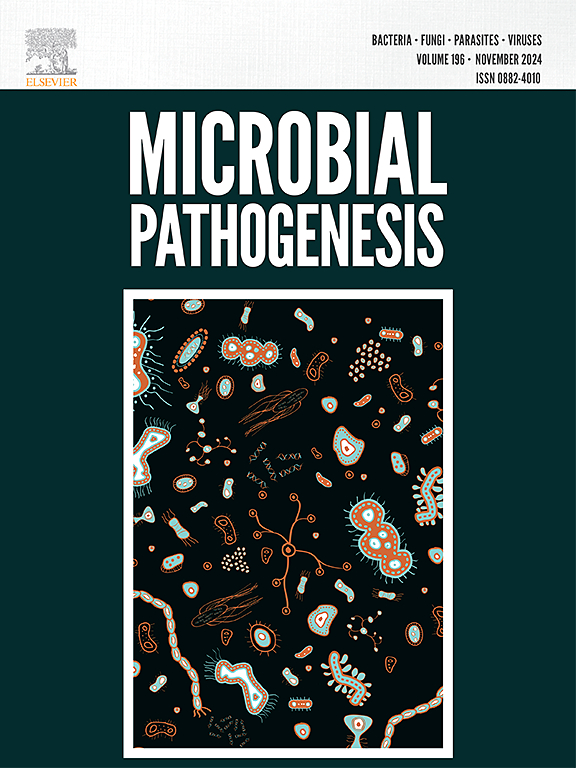
期刊介绍:
Microbial Pathogenesis publishes original contributions and reviews about the molecular and cellular mechanisms of infectious diseases. It covers microbiology, host-pathogen interaction and immunology related to infectious agents, including bacteria, fungi, viruses and protozoa. It also accepts papers in the field of clinical microbiology, with the exception of case reports.
Research Areas Include:
-Pathogenesis
-Virulence factors
-Host susceptibility or resistance
-Immune mechanisms
-Identification, cloning and sequencing of relevant genes
-Genetic studies
-Viruses, prokaryotic organisms and protozoa
-Microbiota
-Systems biology related to infectious diseases
-Targets for vaccine design (pre-clinical studies)





 京公网安备 11010802042870号
京ICP备2023020795号-1
京公网安备 11010802042870号
京ICP备2023020795号-1

 分享
分享
 求助内容:
求助内容: 应助结果提醒方式:
 扫码关注我们
