Jiajia Yang, Weiyuan Bao, Hongmei Wang, Jie Zhou, Qiang Hu, Ying Wang, Yuancheng Li
{"title":"应用循环炎症指标诊断ICU患者呼吸机相关性肺炎的Nomogram分析。","authors":"Jiajia Yang, Weiyuan Bao, Hongmei Wang, Jie Zhou, Qiang Hu, Ying Wang, Yuancheng Li","doi":"10.2147/JIR.S512083","DOIUrl":null,"url":null,"abstract":"<p><strong>Purpose: </strong>To construct a risk nomogram model of ventilator-associated pneumonia (VAP) patients with mechanical ventilation in the intensive care unit (ICU) based on peripheral blood inflammatory indicators and to evaluate its diagnostic value.</p><p><strong>Patients and methods: </strong>A matched 1:2 case: control study was conducted. Fifty-five mechanically ventilated patients with VAP and 113 patients without VAP were admitted to the ICU of Suzhou City Hospital with mechanical ventilation from January 2022 to June 2023 and were retrospectively included as study subjects. Clinical data and laboratory indicators of all patients were collected; the neutrophil to lymphocyte ratio (NLR), platelet to lymphocyte ratio (PLR), lymphocyte to monocyte ratio (LMR), systemic immunoinflammatory index (SII), and systemic inflammatory response index (SIRI) were calculated, and endotracheal aspirate (ETA) culture results of VAP patients were recorded.</p><p><strong>Results: </strong>There were 61 pathogenic bacteria cultured in the ETA samples of 55 VAP patients, including 56 gram-negative bacilli, 4 gram-positive cocci, and 1 fungus. The proportions of hypoproteinemia, procalcitonin (PCT), NLR, PLR, SII, and SIRI in VAP patients were significantly higher than those in non-VAP patients, with statistical significance (P < 0.05). Univariate and multivariate logistic regression analyses showed that hypoproteinemia, PCT, NLR, PLR, and SIRI were independent influencing factors for VAP in ICU patients (P < 0.05). The ROC curve analysis results showed that the area under the curve of the model for diagnosing VAP in ICU patients was 0.894 [(95% CI = 0.844-0.945), P < 0.001], and the sensitivity and specificity were 87.3% and 74.3%, respectively. The calibration curve shows that the model has good accuracy, and the clinical decision curve indicates that the clinical net benefit rate is higher when the model is used to diagnose VAP.</p><p><strong>Conclusion: </strong>Hypoproteinemia, PCT, NLR, PLR, and SIRI are the independent risk factors for VAP in ICU patients. The nomogram model constructed based on these easily accessible indicators may provide a promising tool for the early diagnosis of VAP in ICU patients, while requires further refinement for routine clinical use.</p>","PeriodicalId":16107,"journal":{"name":"Journal of Inflammation Research","volume":"18 ","pages":"4615-4625"},"PeriodicalIF":4.1000,"publicationDate":"2025-04-02","publicationTypes":"Journal Article","fieldsOfStudy":null,"isOpenAccess":false,"openAccessPdf":"https://www.ncbi.nlm.nih.gov/pmc/articles/PMC11972568/pdf/","citationCount":"0","resultStr":"{\"title\":\"A Nomogram for Diagnosing Ventilator-Associated Pneumonia Using Circulating Inflammation Indicators in ICU Patients.\",\"authors\":\"Jiajia Yang, Weiyuan Bao, Hongmei Wang, Jie Zhou, Qiang Hu, Ying Wang, Yuancheng Li\",\"doi\":\"10.2147/JIR.S512083\",\"DOIUrl\":null,\"url\":null,\"abstract\":\"<p><strong>Purpose: </strong>To construct a risk nomogram model of ventilator-associated pneumonia (VAP) patients with mechanical ventilation in the intensive care unit (ICU) based on peripheral blood inflammatory indicators and to evaluate its diagnostic value.</p><p><strong>Patients and methods: </strong>A matched 1:2 case: control study was conducted. Fifty-five mechanically ventilated patients with VAP and 113 patients without VAP were admitted to the ICU of Suzhou City Hospital with mechanical ventilation from January 2022 to June 2023 and were retrospectively included as study subjects. Clinical data and laboratory indicators of all patients were collected; the neutrophil to lymphocyte ratio (NLR), platelet to lymphocyte ratio (PLR), lymphocyte to monocyte ratio (LMR), systemic immunoinflammatory index (SII), and systemic inflammatory response index (SIRI) were calculated, and endotracheal aspirate (ETA) culture results of VAP patients were recorded.</p><p><strong>Results: </strong>There were 61 pathogenic bacteria cultured in the ETA samples of 55 VAP patients, including 56 gram-negative bacilli, 4 gram-positive cocci, and 1 fungus. The proportions of hypoproteinemia, procalcitonin (PCT), NLR, PLR, SII, and SIRI in VAP patients were significantly higher than those in non-VAP patients, with statistical significance (P < 0.05). Univariate and multivariate logistic regression analyses showed that hypoproteinemia, PCT, NLR, PLR, and SIRI were independent influencing factors for VAP in ICU patients (P < 0.05). The ROC curve analysis results showed that the area under the curve of the model for diagnosing VAP in ICU patients was 0.894 [(95% CI = 0.844-0.945), P < 0.001], and the sensitivity and specificity were 87.3% and 74.3%, respectively. The calibration curve shows that the model has good accuracy, and the clinical decision curve indicates that the clinical net benefit rate is higher when the model is used to diagnose VAP.</p><p><strong>Conclusion: </strong>Hypoproteinemia, PCT, NLR, PLR, and SIRI are the independent risk factors for VAP in ICU patients. The nomogram model constructed based on these easily accessible indicators may provide a promising tool for the early diagnosis of VAP in ICU patients, while requires further refinement for routine clinical use.</p>\",\"PeriodicalId\":16107,\"journal\":{\"name\":\"Journal of Inflammation Research\",\"volume\":\"18 \",\"pages\":\"4615-4625\"},\"PeriodicalIF\":4.1000,\"publicationDate\":\"2025-04-02\",\"publicationTypes\":\"Journal Article\",\"fieldsOfStudy\":null,\"isOpenAccess\":false,\"openAccessPdf\":\"https://www.ncbi.nlm.nih.gov/pmc/articles/PMC11972568/pdf/\",\"citationCount\":\"0\",\"resultStr\":null,\"platform\":\"Semanticscholar\",\"paperid\":null,\"PeriodicalName\":\"Journal of Inflammation Research\",\"FirstCategoryId\":\"3\",\"ListUrlMain\":\"https://doi.org/10.2147/JIR.S512083\",\"RegionNum\":2,\"RegionCategory\":\"医学\",\"ArticlePicture\":[],\"TitleCN\":null,\"AbstractTextCN\":null,\"PMCID\":null,\"EPubDate\":\"2025/1/1 0:00:00\",\"PubModel\":\"eCollection\",\"JCR\":\"Q2\",\"JCRName\":\"IMMUNOLOGY\",\"Score\":null,\"Total\":0}","platform":"Semanticscholar","paperid":null,"PeriodicalName":"Journal of Inflammation Research","FirstCategoryId":"3","ListUrlMain":"https://doi.org/10.2147/JIR.S512083","RegionNum":2,"RegionCategory":"医学","ArticlePicture":[],"TitleCN":null,"AbstractTextCN":null,"PMCID":null,"EPubDate":"2025/1/1 0:00:00","PubModel":"eCollection","JCR":"Q2","JCRName":"IMMUNOLOGY","Score":null,"Total":0}
引用次数: 0
摘要
目的:根据外周血炎症指标,构建重症监护病房(ICU)机械通气患者呼吸机相关肺炎(VAP)风险提名图模型,并评估其诊断价值:进行了一项 1:2 病例:对照的配对研究。回顾性纳入2022年1月至2023年6月期间苏州市立医院重症监护病房收治的55例VAP机械通气患者和113例无VAP患者作为研究对象。收集所有患者的临床资料和实验室指标,计算中性粒细胞与淋巴细胞比值(NLR)、血小板与淋巴细胞比值(PLR)、淋巴细胞与单核细胞比值(LMR)、全身免疫炎症指数(SII)和全身炎症反应指数(SIRI),并记录VAP患者的气管吸液(ETA)培养结果:结果:55 例 VAP 患者的 ETA 样本中共培养出 61 种病原菌,包括 56 种革兰阴性杆菌、4 种革兰阳性球菌和 1 种真菌。VAP 患者低蛋白血症、降钙素原(PCT)、NLR、PLR、SII 和 SIRI 的比例明显高于非 VAP 患者,差异有统计学意义(P < 0.05)。单变量和多变量逻辑回归分析显示,低蛋白血症、PCT、NLR、PLR 和 SIRI 是 ICU 患者 VAP 的独立影响因素(P < 0.05)。ROC曲线分析结果显示,该模型诊断ICU患者VAP的曲线下面积为0.894[(95% CI = 0.844-0.945),P < 0.001],灵敏度和特异度分别为87.3%和74.3%。校准曲线显示该模型具有良好的准确性,临床决策曲线显示,当使用该模型诊断 VAP 时,临床净获益率更高:结论:低蛋白血症、PCT、NLR、PLR 和 SIRI 是 ICU 患者发生 VAP 的独立危险因素。根据这些容易获得的指标构建的提名图模型可为 ICU 患者 VAP 的早期诊断提供一种有前途的工具,但还需要进一步完善才能用于常规临床应用。
A Nomogram for Diagnosing Ventilator-Associated Pneumonia Using Circulating Inflammation Indicators in ICU Patients.
Purpose: To construct a risk nomogram model of ventilator-associated pneumonia (VAP) patients with mechanical ventilation in the intensive care unit (ICU) based on peripheral blood inflammatory indicators and to evaluate its diagnostic value.
Patients and methods: A matched 1:2 case: control study was conducted. Fifty-five mechanically ventilated patients with VAP and 113 patients without VAP were admitted to the ICU of Suzhou City Hospital with mechanical ventilation from January 2022 to June 2023 and were retrospectively included as study subjects. Clinical data and laboratory indicators of all patients were collected; the neutrophil to lymphocyte ratio (NLR), platelet to lymphocyte ratio (PLR), lymphocyte to monocyte ratio (LMR), systemic immunoinflammatory index (SII), and systemic inflammatory response index (SIRI) were calculated, and endotracheal aspirate (ETA) culture results of VAP patients were recorded.
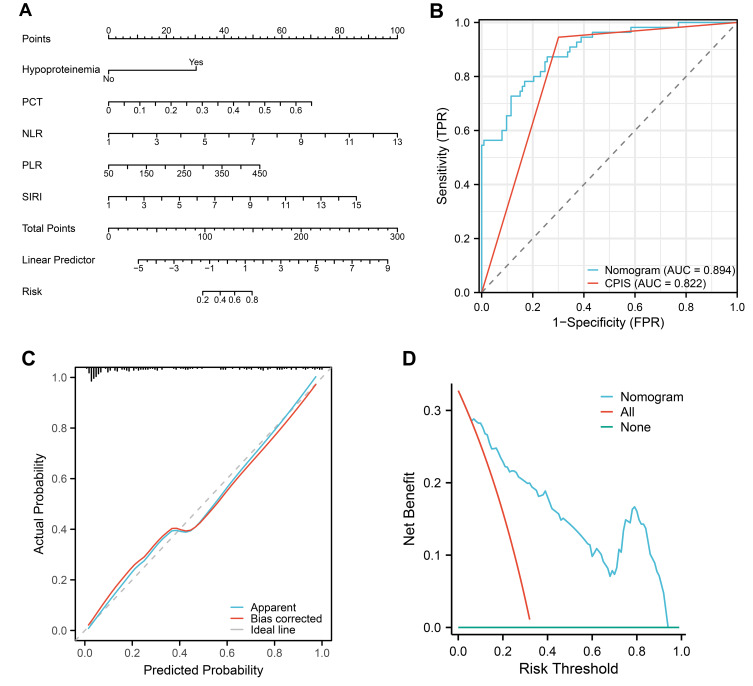
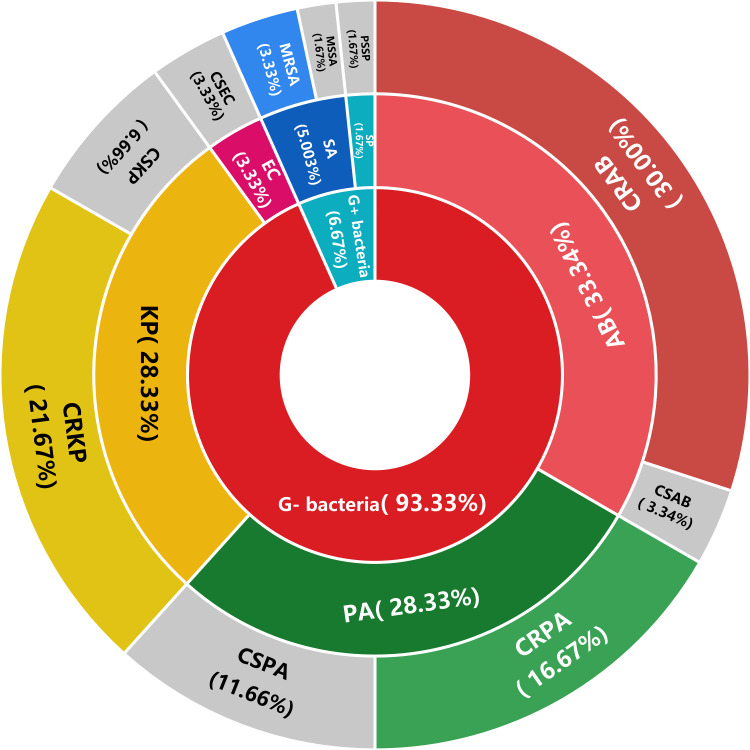
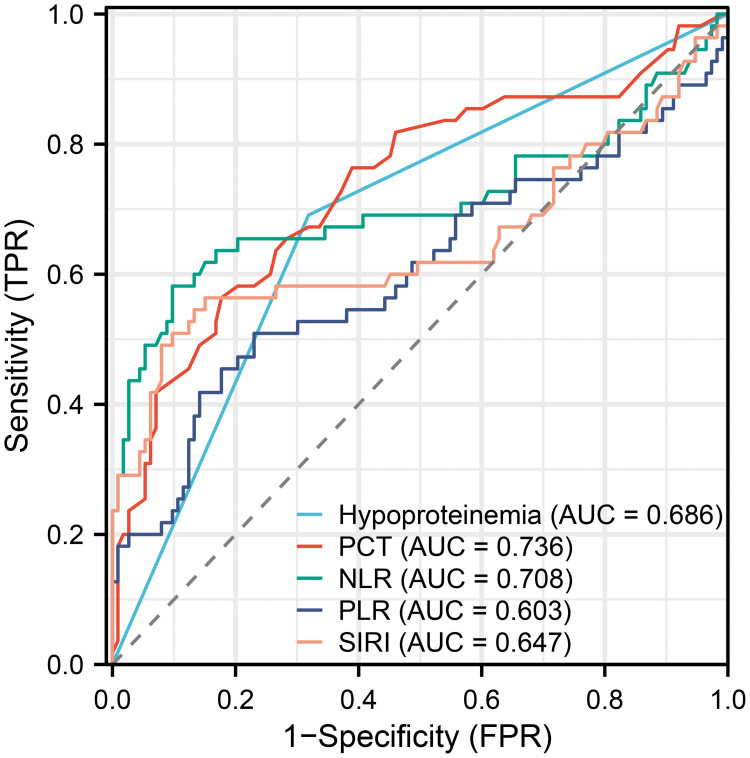
Results: There were 61 pathogenic bacteria cultured in the ETA samples of 55 VAP patients, including 56 gram-negative bacilli, 4 gram-positive cocci, and 1 fungus. The proportions of hypoproteinemia, procalcitonin (PCT), NLR, PLR, SII, and SIRI in VAP patients were significantly higher than those in non-VAP patients, with statistical significance (P < 0.05). Univariate and multivariate logistic regression analyses showed that hypoproteinemia, PCT, NLR, PLR, and SIRI were independent influencing factors for VAP in ICU patients (P < 0.05). The ROC curve analysis results showed that the area under the curve of the model for diagnosing VAP in ICU patients was 0.894 [(95% CI = 0.844-0.945), P < 0.001], and the sensitivity and specificity were 87.3% and 74.3%, respectively. The calibration curve shows that the model has good accuracy, and the clinical decision curve indicates that the clinical net benefit rate is higher when the model is used to diagnose VAP.
Conclusion: Hypoproteinemia, PCT, NLR, PLR, and SIRI are the independent risk factors for VAP in ICU patients. The nomogram model constructed based on these easily accessible indicators may provide a promising tool for the early diagnosis of VAP in ICU patients, while requires further refinement for routine clinical use.
期刊介绍:
An international, peer-reviewed, open access, online journal that welcomes laboratory and clinical findings on the molecular basis, cell biology and pharmacology of inflammation.





 京公网安备 11010802042870号
京ICP备2023020795号-1
京公网安备 11010802042870号
京ICP备2023020795号-1

 分享
分享
 求助内容:
求助内容: 应助结果提醒方式:
 扫码关注我们
