{"title":"饮食失调研究的五十年:对出版趋势、研究主题以及公众和学术关注之间关系的文献计量分析(1975-2024)。","authors":"Jane J. Lee, Gerald Chi","doi":"10.1002/eat.24436","DOIUrl":null,"url":null,"abstract":"<div>\n \n \n <section>\n \n <h3> Objective</h3>\n \n <p>This bibliometric study analyzed eating disorder research from 1975 to 2024, examining publication trends, research themes, and the relationship between public engagement and academic attention over five decades.</p>\n </section>\n \n <section>\n \n <h3> Methods</h3>\n \n <p>Data were collected from PubMed, Web of Science, APA PsycInfo, and CINAHL. Publication trends were analyzed, and leading journals were identified. Network analysis using VOSviewer identified thematic clusters, while a bump chart visualized changes in key research terms over time. Trends, associations, and influencing factors of public engagement and academic attention were assessed using Altmetric Attention Scores per Year (AASPY) and citations per year (CPY).</p>\n </section>\n \n <section>\n \n <h3> Results</h3>\n \n <p>A total of 101,993 publications were analyzed. Research output increased significantly, with the <i>International Journal of Eating Disorders</i> as the leading contributor. Six major research clusters were identified, and eight key terms (humans, female, anorexia nervosa, adult, adolescent, male, feeding and eating disorders, and child) remained dominant across all decades. AASPY and CPY increased over time but showed a weak correlation (<i>R</i>\n <sup>2</sup> = 9.09%), suggesting that digital engagement was not strongly associated with scholarly attention. Studies on young adults and those published in multidisciplinary journals had higher online engagement, while research on female and young adult populations, as well as neuroscience, received greater academic attention.</p>\n </section>\n \n <section>\n \n <h3> Conclusions</h3>\n \n <p>The findings highlight the sustained growth of research output, the persistence of core thematic areas, and the divergence between public engagement and academic attention. By examining trends from past to present, this study provides a basis for understanding research developments and their implications for future directions in eating disorder research.</p>\n </section>\n </div>","PeriodicalId":51067,"journal":{"name":"International Journal of Eating Disorders","volume":"58 7","pages":"1278-1295"},"PeriodicalIF":4.3000,"publicationDate":"2025-04-07","publicationTypes":"Journal Article","fieldsOfStudy":null,"isOpenAccess":false,"openAccessPdf":"https://onlinelibrary.wiley.com/doi/epdf/10.1002/eat.24436","citationCount":"0","resultStr":"{\"title\":\"Five Decades of Eating Disorder Research: A Bibliometric Analysis of Publication Trends, Research Themes, and the Relationship Between Public and Academic Attention (1975–2024)\",\"authors\":\"Jane J. Lee, Gerald Chi\",\"doi\":\"10.1002/eat.24436\",\"DOIUrl\":null,\"url\":null,\"abstract\":\"<div>\\n \\n \\n <section>\\n \\n <h3> Objective</h3>\\n \\n <p>This bibliometric study analyzed eating disorder research from 1975 to 2024, examining publication trends, research themes, and the relationship between public engagement and academic attention over five decades.</p>\\n </section>\\n \\n <section>\\n \\n <h3> Methods</h3>\\n \\n <p>Data were collected from PubMed, Web of Science, APA PsycInfo, and CINAHL. Publication trends were analyzed, and leading journals were identified. Network analysis using VOSviewer identified thematic clusters, while a bump chart visualized changes in key research terms over time. Trends, associations, and influencing factors of public engagement and academic attention were assessed using Altmetric Attention Scores per Year (AASPY) and citations per year (CPY).</p>\\n </section>\\n \\n <section>\\n \\n <h3> Results</h3>\\n \\n <p>A total of 101,993 publications were analyzed. Research output increased significantly, with the <i>International Journal of Eating Disorders</i> as the leading contributor. Six major research clusters were identified, and eight key terms (humans, female, anorexia nervosa, adult, adolescent, male, feeding and eating disorders, and child) remained dominant across all decades. AASPY and CPY increased over time but showed a weak correlation (<i>R</i>\\n <sup>2</sup> = 9.09%), suggesting that digital engagement was not strongly associated with scholarly attention. Studies on young adults and those published in multidisciplinary journals had higher online engagement, while research on female and young adult populations, as well as neuroscience, received greater academic attention.</p>\\n </section>\\n \\n <section>\\n \\n <h3> Conclusions</h3>\\n \\n <p>The findings highlight the sustained growth of research output, the persistence of core thematic areas, and the divergence between public engagement and academic attention. By examining trends from past to present, this study provides a basis for understanding research developments and their implications for future directions in eating disorder research.</p>\\n </section>\\n </div>\",\"PeriodicalId\":51067,\"journal\":{\"name\":\"International Journal of Eating Disorders\",\"volume\":\"58 7\",\"pages\":\"1278-1295\"},\"PeriodicalIF\":4.3000,\"publicationDate\":\"2025-04-07\",\"publicationTypes\":\"Journal Article\",\"fieldsOfStudy\":null,\"isOpenAccess\":false,\"openAccessPdf\":\"https://onlinelibrary.wiley.com/doi/epdf/10.1002/eat.24436\",\"citationCount\":\"0\",\"resultStr\":null,\"platform\":\"Semanticscholar\",\"paperid\":null,\"PeriodicalName\":\"International Journal of Eating Disorders\",\"FirstCategoryId\":\"3\",\"ListUrlMain\":\"https://onlinelibrary.wiley.com/doi/10.1002/eat.24436\",\"RegionNum\":2,\"RegionCategory\":\"医学\",\"ArticlePicture\":[],\"TitleCN\":null,\"AbstractTextCN\":null,\"PMCID\":null,\"EPubDate\":\"\",\"PubModel\":\"\",\"JCR\":\"Q1\",\"JCRName\":\"NUTRITION & DIETETICS\",\"Score\":null,\"Total\":0}","platform":"Semanticscholar","paperid":null,"PeriodicalName":"International Journal of Eating Disorders","FirstCategoryId":"3","ListUrlMain":"https://onlinelibrary.wiley.com/doi/10.1002/eat.24436","RegionNum":2,"RegionCategory":"医学","ArticlePicture":[],"TitleCN":null,"AbstractTextCN":null,"PMCID":null,"EPubDate":"","PubModel":"","JCR":"Q1","JCRName":"NUTRITION & DIETETICS","Score":null,"Total":0}
引用次数: 0
摘要
目的:本文献计量学研究分析了1975年至2024年的饮食失调研究,考察了50年来的出版趋势、研究主题以及公众参与与学术关注之间的关系。方法:数据来源于PubMed、Web of Science、APA PsycInfo和CINAHL。分析了出版趋势,确定了领先期刊。使用VOSviewer的网络分析确定了主题集群,而凹凸图显示了关键研究术语随时间的变化。使用Altmetric每年关注分数(AASPY)和每年引用数(CPY)评估公众参与和学术关注的趋势、关联和影响因素。结果:共分析101993篇文献。研究产出显著增加,《国际饮食失调杂志》(International Journal of Eating Disorders)是主要贡献者。确定了6个主要的研究集群,8个关键术语(人类、女性、神经性厌食症、成人、青少年、男性、喂养和饮食失调以及儿童)在过去几十年中一直占主导地位。AASPY和CPY随着时间的推移而增加,但呈弱相关(R2 = 9.09%),这表明数字参与与学术注意力没有很强的关联。针对年轻人和发表在多学科期刊上的研究在网上的参与度更高,而针对女性和年轻人以及神经科学的研究则获得了更多的学术关注。结论:研究结果突出了研究产出的持续增长,核心专题领域的持续存在,以及公众参与与学术关注之间的分歧。通过研究从过去到现在的趋势,本研究为理解研究进展及其对未来饮食失调研究方向的影响提供了基础。
Five Decades of Eating Disorder Research: A Bibliometric Analysis of Publication Trends, Research Themes, and the Relationship Between Public and Academic Attention (1975–2024)
Objective
This bibliometric study analyzed eating disorder research from 1975 to 2024, examining publication trends, research themes, and the relationship between public engagement and academic attention over five decades.
Methods
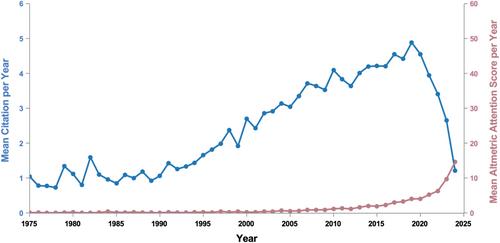
Data were collected from PubMed, Web of Science, APA PsycInfo, and CINAHL. Publication trends were analyzed, and leading journals were identified. Network analysis using VOSviewer identified thematic clusters, while a bump chart visualized changes in key research terms over time. Trends, associations, and influencing factors of public engagement and academic attention were assessed using Altmetric Attention Scores per Year (AASPY) and citations per year (CPY).
Results
A total of 101,993 publications were analyzed. Research output increased significantly, with the International Journal of Eating Disorders as the leading contributor. Six major research clusters were identified, and eight key terms (humans, female, anorexia nervosa, adult, adolescent, male, feeding and eating disorders, and child) remained dominant across all decades. AASPY and CPY increased over time but showed a weak correlation (R2 = 9.09%), suggesting that digital engagement was not strongly associated with scholarly attention. Studies on young adults and those published in multidisciplinary journals had higher online engagement, while research on female and young adult populations, as well as neuroscience, received greater academic attention.
Conclusions
The findings highlight the sustained growth of research output, the persistence of core thematic areas, and the divergence between public engagement and academic attention. By examining trends from past to present, this study provides a basis for understanding research developments and their implications for future directions in eating disorder research.
期刊介绍:
Articles featured in the journal describe state-of-the-art scientific research on theory, methodology, etiology, clinical practice, and policy related to eating disorders, as well as contributions that facilitate scholarly critique and discussion of science and practice in the field. Theoretical and empirical work on obesity or healthy eating falls within the journal’s scope inasmuch as it facilitates the advancement of efforts to describe and understand, prevent, or treat eating disorders. IJED welcomes submissions from all regions of the world and representing all levels of inquiry (including basic science, clinical trials, implementation research, and dissemination studies), and across a full range of scientific methods, disciplines, and approaches.




 京公网安备 11010802042870号
京ICP备2023020795号-1
京公网安备 11010802042870号
京ICP备2023020795号-1

 分享
分享
 求助内容:
求助内容: 应助结果提醒方式:
 扫码关注我们
