{"title":"新型微创腕管释放使用专门的手术工具:前瞻性多中心病例系列。","authors":"Hsuan-Fu Chen, Shun-Min Chang, Chih-Ming Kao, Yu-Lin Chen, Li-Ting Kao, Ya-Chuan Hsu, Yin-Chih Fu, Yan-Hsiung Wang, Wen-Chih Liu, Tien-Ching Lee","doi":"10.1186/s12891-025-08612-0","DOIUrl":null,"url":null,"abstract":"<p><strong>Background: </strong>Carpal tunnel syndrome (CTS) is the most common peripheral nerve compression neuropathy. While established surgical techniques have demonstrated reliable outcomes and safety profiles, innovations in minimally invasive approached continue to emerge. This study evaluates a novel minimally invasive surgical technique using a specialized instrument for carpal tunnel release.</p><p><strong>Methods: </strong>In this prospective multi-center case series, 41 patients underwent minimally invasive carpal tunnel release using a novel surgical kit. Outcomes were assessed through Visual Analog Scale (VAS), Boston Carpal Tunnel Questionnaire (BCTQ), grip and pinch strength measurements, and nerve conduction velocity (NCV) testing at regular intervals over 24 weeks post-surgery.</p><p><strong>Results: </strong>Mean surgical time was 7.02 min. Significant improvements were observed in VAS scores (LS-Mean - 0.57, P < 0.0001) and BCTQ scores (Symptom Severity: LS-Mean - 2.62, P < 0.0001; Functional Status: LS-Mean - 1.20, P < 0.0001) by 24 weeks. Grip and pinch strengths showed significant improvement from 2 weeks post-surgery. Mean time to return to work was 18.2 days. NCV testing demonstrated significant improvements in both latency (LS-Mean - 0.57, P < 0.0001) and velocity (LS-Mean 5.79, P < 0.0001). One superficial infection and two cases of temporary numbness were reported, with no recurrent CTS observed.</p><p><strong>Conclusions: </strong>This novel minimally invasive technique demonstrates promising clinical outcomes with shortened operative time, rapid symptom relief, and early functional recovery. While larger randomized studies are needed, these preliminary findings suggest this technique may be a valuable addition to current surgical options for CTS.</p><p><strong>Trial registration: </strong>Clinicaltrials.gov, NCT05067205. Prospectively registered, date of first registration: 05/10/2021 ( https://clinicaltrials.gov/study/NCT05067205 ).</p>","PeriodicalId":9189,"journal":{"name":"BMC Musculoskeletal Disorders","volume":"26 1","pages":"346"},"PeriodicalIF":2.4000,"publicationDate":"2025-04-08","publicationTypes":"Journal Article","fieldsOfStudy":null,"isOpenAccess":false,"openAccessPdf":"https://www.ncbi.nlm.nih.gov/pmc/articles/PMC11980155/pdf/","citationCount":"0","resultStr":"{\"title\":\"Novel minimally invasive carpal tunnel release using a specialized surgical kit: a prospective multi-center case series.\",\"authors\":\"Hsuan-Fu Chen, Shun-Min Chang, Chih-Ming Kao, Yu-Lin Chen, Li-Ting Kao, Ya-Chuan Hsu, Yin-Chih Fu, Yan-Hsiung Wang, Wen-Chih Liu, Tien-Ching Lee\",\"doi\":\"10.1186/s12891-025-08612-0\",\"DOIUrl\":null,\"url\":null,\"abstract\":\"<p><strong>Background: </strong>Carpal tunnel syndrome (CTS) is the most common peripheral nerve compression neuropathy. While established surgical techniques have demonstrated reliable outcomes and safety profiles, innovations in minimally invasive approached continue to emerge. This study evaluates a novel minimally invasive surgical technique using a specialized instrument for carpal tunnel release.</p><p><strong>Methods: </strong>In this prospective multi-center case series, 41 patients underwent minimally invasive carpal tunnel release using a novel surgical kit. Outcomes were assessed through Visual Analog Scale (VAS), Boston Carpal Tunnel Questionnaire (BCTQ), grip and pinch strength measurements, and nerve conduction velocity (NCV) testing at regular intervals over 24 weeks post-surgery.</p><p><strong>Results: </strong>Mean surgical time was 7.02 min. Significant improvements were observed in VAS scores (LS-Mean - 0.57, P < 0.0001) and BCTQ scores (Symptom Severity: LS-Mean - 2.62, P < 0.0001; Functional Status: LS-Mean - 1.20, P < 0.0001) by 24 weeks. Grip and pinch strengths showed significant improvement from 2 weeks post-surgery. Mean time to return to work was 18.2 days. NCV testing demonstrated significant improvements in both latency (LS-Mean - 0.57, P < 0.0001) and velocity (LS-Mean 5.79, P < 0.0001). One superficial infection and two cases of temporary numbness were reported, with no recurrent CTS observed.</p><p><strong>Conclusions: </strong>This novel minimally invasive technique demonstrates promising clinical outcomes with shortened operative time, rapid symptom relief, and early functional recovery. While larger randomized studies are needed, these preliminary findings suggest this technique may be a valuable addition to current surgical options for CTS.</p><p><strong>Trial registration: </strong>Clinicaltrials.gov, NCT05067205. Prospectively registered, date of first registration: 05/10/2021 ( https://clinicaltrials.gov/study/NCT05067205 ).</p>\",\"PeriodicalId\":9189,\"journal\":{\"name\":\"BMC Musculoskeletal Disorders\",\"volume\":\"26 1\",\"pages\":\"346\"},\"PeriodicalIF\":2.4000,\"publicationDate\":\"2025-04-08\",\"publicationTypes\":\"Journal Article\",\"fieldsOfStudy\":null,\"isOpenAccess\":false,\"openAccessPdf\":\"https://www.ncbi.nlm.nih.gov/pmc/articles/PMC11980155/pdf/\",\"citationCount\":\"0\",\"resultStr\":null,\"platform\":\"Semanticscholar\",\"paperid\":null,\"PeriodicalName\":\"BMC Musculoskeletal Disorders\",\"FirstCategoryId\":\"3\",\"ListUrlMain\":\"https://doi.org/10.1186/s12891-025-08612-0\",\"RegionNum\":3,\"RegionCategory\":\"医学\",\"ArticlePicture\":[],\"TitleCN\":null,\"AbstractTextCN\":null,\"PMCID\":null,\"EPubDate\":\"\",\"PubModel\":\"\",\"JCR\":\"Q2\",\"JCRName\":\"ORTHOPEDICS\",\"Score\":null,\"Total\":0}","platform":"Semanticscholar","paperid":null,"PeriodicalName":"BMC Musculoskeletal Disorders","FirstCategoryId":"3","ListUrlMain":"https://doi.org/10.1186/s12891-025-08612-0","RegionNum":3,"RegionCategory":"医学","ArticlePicture":[],"TitleCN":null,"AbstractTextCN":null,"PMCID":null,"EPubDate":"","PubModel":"","JCR":"Q2","JCRName":"ORTHOPEDICS","Score":null,"Total":0}
引用次数: 0
摘要
背景:腕管综合征(Carpal tunnel syndrome, CTS)是最常见的周围神经压迫性神经病。虽然现有的手术技术已经证明了可靠的结果和安全性,但微创方法的创新仍在不断涌现。本研究评估了一种新颖的微创手术技术,该技术使用专门的器械进行腕管释放。方法:在这个前瞻性的多中心病例系列中,41例患者使用一种新型手术工具进行了微创腕管松解术。术后24周定期通过视觉模拟量表(VAS)、波士顿腕管问卷(BCTQ)、握力和捏力测量以及神经传导速度(NCV)测试来评估结果。结果:平均手术时间为7.02 min。VAS评分(LS-Mean - 0.57, P < 0.0001)和BCTQ评分(症状严重程度:LS-Mean - 2.62, P < 0.0001;24周时功能状态:LS-Mean - 1.20, P < 0.0001)。术后2周握力和捏紧力有明显改善。平均返工时间为18.2天。NCV测试显示潜伏期(LS-Mean - 0.57, P < 0.0001)和速度(LS-Mean 5.79, P < 0.0001)均有显著改善。报告1例浅表感染,2例暂时性麻木,未见复发性CTS。结论:这种新颖的微创技术具有缩短手术时间、快速缓解症状和早期功能恢复的临床效果。虽然需要更大规模的随机研究,但这些初步发现表明,该技术可能是当前CTS手术选择的有价值的补充。试验注册:Clinicaltrials.gov, NCT05067205。预期注册,首次注册日期:2021年10月5日(https://clinicaltrials.gov/study/NCT05067205)。
Novel minimally invasive carpal tunnel release using a specialized surgical kit: a prospective multi-center case series.
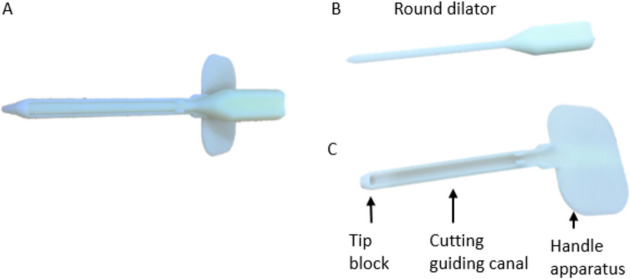
Background: Carpal tunnel syndrome (CTS) is the most common peripheral nerve compression neuropathy. While established surgical techniques have demonstrated reliable outcomes and safety profiles, innovations in minimally invasive approached continue to emerge. This study evaluates a novel minimally invasive surgical technique using a specialized instrument for carpal tunnel release.
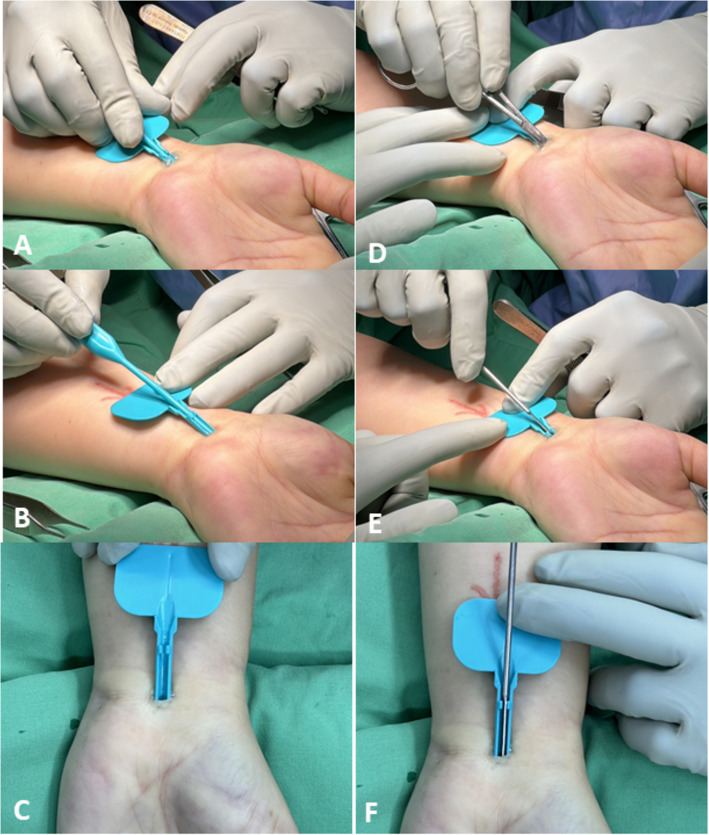
Methods: In this prospective multi-center case series, 41 patients underwent minimally invasive carpal tunnel release using a novel surgical kit. Outcomes were assessed through Visual Analog Scale (VAS), Boston Carpal Tunnel Questionnaire (BCTQ), grip and pinch strength measurements, and nerve conduction velocity (NCV) testing at regular intervals over 24 weeks post-surgery.
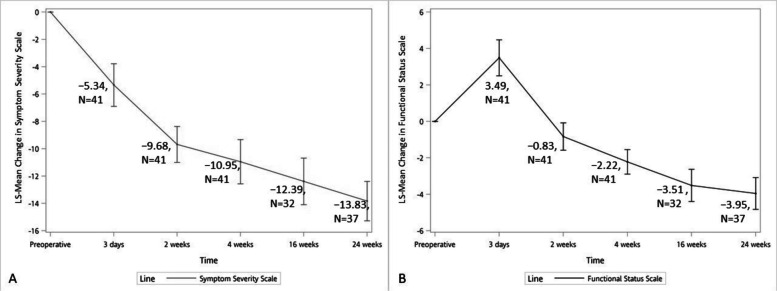
Results: Mean surgical time was 7.02 min. Significant improvements were observed in VAS scores (LS-Mean - 0.57, P < 0.0001) and BCTQ scores (Symptom Severity: LS-Mean - 2.62, P < 0.0001; Functional Status: LS-Mean - 1.20, P < 0.0001) by 24 weeks. Grip and pinch strengths showed significant improvement from 2 weeks post-surgery. Mean time to return to work was 18.2 days. NCV testing demonstrated significant improvements in both latency (LS-Mean - 0.57, P < 0.0001) and velocity (LS-Mean 5.79, P < 0.0001). One superficial infection and two cases of temporary numbness were reported, with no recurrent CTS observed.
Conclusions: This novel minimally invasive technique demonstrates promising clinical outcomes with shortened operative time, rapid symptom relief, and early functional recovery. While larger randomized studies are needed, these preliminary findings suggest this technique may be a valuable addition to current surgical options for CTS.
Trial registration: Clinicaltrials.gov, NCT05067205. Prospectively registered, date of first registration: 05/10/2021 ( https://clinicaltrials.gov/study/NCT05067205 ).
期刊介绍:
BMC Musculoskeletal Disorders is an open access, peer-reviewed journal that considers articles on all aspects of the prevention, diagnosis and management of musculoskeletal disorders, as well as related molecular genetics, pathophysiology, and epidemiology.
The scope of the Journal covers research into rheumatic diseases where the primary focus relates specifically to a component(s) of the musculoskeletal system.




 京公网安备 11010802042870号
京ICP备2023020795号-1
京公网安备 11010802042870号
京ICP备2023020795号-1

 分享
分享
 求助内容:
求助内容: 应助结果提醒方式:
 扫码关注我们
