{"title":"通过生活方式干预缓解Graves病。","authors":"Pranjali Sharma","doi":"10.7759/cureus.81900","DOIUrl":null,"url":null,"abstract":"<p><p>Graves' disease, caused by autoimmune thyrotropin receptor antibody-mediated activation of the thyroid, is characterized by hyperthyroidism, orbitopathy, dermopathy, and acropachy. Graves' disease is treated by anti-thyroid drug therapy, radioactive iodine ablation, or total thyroidectomy. We report the case of a 39-year-old female patient with hyperthyroidism secondary to Graves' disease that was managed through lifestyle interventions only. On presentation, she reported intermittent headaches and had an undetectable thyroid-stimulating hormone (TSH) level. Two weeks later, repeat testing showed an undetectable TSH, free thyroxine (free T4) 2.7 ng/dL (normal range: 0.70-1.48 ng/dL), total triiodothyronine (T3) 5.08 ng/mL (normal range: 0.40-1.93 ng/mL), thyrotropin receptor antibody (TRAb) 20.3 IU/L (reference range: ≤1.75 IU/L), thyroid stimulating immunoglobulin (TSI) 2.3 IU/L (reference range: ≤0.54 IU/L), thyroid peroxidase antibody (TPO) 7.66 IU/mL (reference range: <5.61 IU/mL), confirming hyperthyroidism due to Graves' disease. An iodine-123 (I-123) thyroid uptake and scan showed homogeneously increased iodine uptake (68%) at 4 hours (normal range: 3-16%) and (60%) 24 hours (normal range: 8-25%). The patient was prescribed anti-thyroid drug therapy through methimazole but elected not to take it due to concerns about side effects. She incorporated lifestyle interventions and, over a span of three months, was able to improve clinically and biochemically (TSH: 0.824 mcIU/mL, free T4: 0.77 ng/dL, total T3: 0.73 ng/mL, TRAb: 2.93 IU/L, TSI: 0.26 IU/L, and TPO antibody: undetectable). The lifestyle interventions she pursued included going dairy and gluten-free, ingestion of one to two Brazil nuts daily, regular exercise, mindfulness-based stress management, and cold-water immersion therapy. We review the evidence behind these interventions and discuss the utility of these measures in the management of Graves' disease.</p>","PeriodicalId":93960,"journal":{"name":"Cureus","volume":"17 4","pages":"e81900"},"PeriodicalIF":1.3000,"publicationDate":"2025-04-08","publicationTypes":"Journal Article","fieldsOfStudy":null,"isOpenAccess":false,"openAccessPdf":"https://www.ncbi.nlm.nih.gov/pmc/articles/PMC11978162/pdf/","citationCount":"0","resultStr":"{\"title\":\"Remission of Graves' Disease Through Lifestyle Interventions.\",\"authors\":\"Pranjali Sharma\",\"doi\":\"10.7759/cureus.81900\",\"DOIUrl\":null,\"url\":null,\"abstract\":\"<p><p>Graves' disease, caused by autoimmune thyrotropin receptor antibody-mediated activation of the thyroid, is characterized by hyperthyroidism, orbitopathy, dermopathy, and acropachy. Graves' disease is treated by anti-thyroid drug therapy, radioactive iodine ablation, or total thyroidectomy. We report the case of a 39-year-old female patient with hyperthyroidism secondary to Graves' disease that was managed through lifestyle interventions only. On presentation, she reported intermittent headaches and had an undetectable thyroid-stimulating hormone (TSH) level. Two weeks later, repeat testing showed an undetectable TSH, free thyroxine (free T4) 2.7 ng/dL (normal range: 0.70-1.48 ng/dL), total triiodothyronine (T3) 5.08 ng/mL (normal range: 0.40-1.93 ng/mL), thyrotropin receptor antibody (TRAb) 20.3 IU/L (reference range: ≤1.75 IU/L), thyroid stimulating immunoglobulin (TSI) 2.3 IU/L (reference range: ≤0.54 IU/L), thyroid peroxidase antibody (TPO) 7.66 IU/mL (reference range: <5.61 IU/mL), confirming hyperthyroidism due to Graves' disease. An iodine-123 (I-123) thyroid uptake and scan showed homogeneously increased iodine uptake (68%) at 4 hours (normal range: 3-16%) and (60%) 24 hours (normal range: 8-25%). The patient was prescribed anti-thyroid drug therapy through methimazole but elected not to take it due to concerns about side effects. She incorporated lifestyle interventions and, over a span of three months, was able to improve clinically and biochemically (TSH: 0.824 mcIU/mL, free T4: 0.77 ng/dL, total T3: 0.73 ng/mL, TRAb: 2.93 IU/L, TSI: 0.26 IU/L, and TPO antibody: undetectable). The lifestyle interventions she pursued included going dairy and gluten-free, ingestion of one to two Brazil nuts daily, regular exercise, mindfulness-based stress management, and cold-water immersion therapy. We review the evidence behind these interventions and discuss the utility of these measures in the management of Graves' disease.</p>\",\"PeriodicalId\":93960,\"journal\":{\"name\":\"Cureus\",\"volume\":\"17 4\",\"pages\":\"e81900\"},\"PeriodicalIF\":1.3000,\"publicationDate\":\"2025-04-08\",\"publicationTypes\":\"Journal Article\",\"fieldsOfStudy\":null,\"isOpenAccess\":false,\"openAccessPdf\":\"https://www.ncbi.nlm.nih.gov/pmc/articles/PMC11978162/pdf/\",\"citationCount\":\"0\",\"resultStr\":null,\"platform\":\"Semanticscholar\",\"paperid\":null,\"PeriodicalName\":\"Cureus\",\"FirstCategoryId\":\"1085\",\"ListUrlMain\":\"https://doi.org/10.7759/cureus.81900\",\"RegionNum\":0,\"RegionCategory\":null,\"ArticlePicture\":[],\"TitleCN\":null,\"AbstractTextCN\":null,\"PMCID\":null,\"EPubDate\":\"2025/4/1 0:00:00\",\"PubModel\":\"eCollection\",\"JCR\":\"Q3\",\"JCRName\":\"MEDICINE, GENERAL & INTERNAL\",\"Score\":null,\"Total\":0}","platform":"Semanticscholar","paperid":null,"PeriodicalName":"Cureus","FirstCategoryId":"1085","ListUrlMain":"https://doi.org/10.7759/cureus.81900","RegionNum":0,"RegionCategory":null,"ArticlePicture":[],"TitleCN":null,"AbstractTextCN":null,"PMCID":null,"EPubDate":"2025/4/1 0:00:00","PubModel":"eCollection","JCR":"Q3","JCRName":"MEDICINE, GENERAL & INTERNAL","Score":null,"Total":0}
Remission of Graves' Disease Through Lifestyle Interventions.
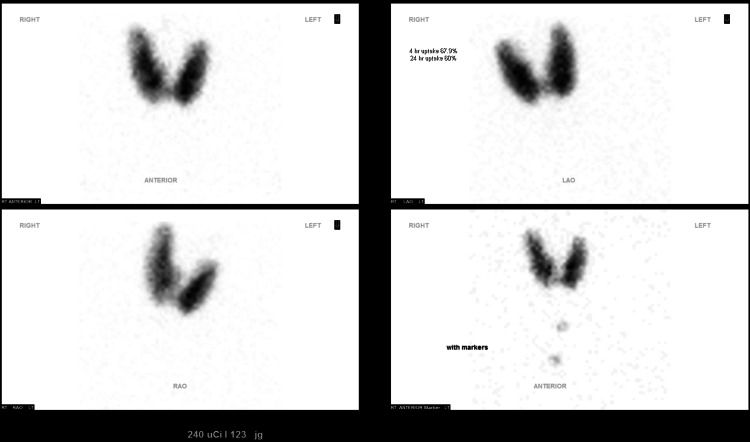
Graves' disease, caused by autoimmune thyrotropin receptor antibody-mediated activation of the thyroid, is characterized by hyperthyroidism, orbitopathy, dermopathy, and acropachy. Graves' disease is treated by anti-thyroid drug therapy, radioactive iodine ablation, or total thyroidectomy. We report the case of a 39-year-old female patient with hyperthyroidism secondary to Graves' disease that was managed through lifestyle interventions only. On presentation, she reported intermittent headaches and had an undetectable thyroid-stimulating hormone (TSH) level. Two weeks later, repeat testing showed an undetectable TSH, free thyroxine (free T4) 2.7 ng/dL (normal range: 0.70-1.48 ng/dL), total triiodothyronine (T3) 5.08 ng/mL (normal range: 0.40-1.93 ng/mL), thyrotropin receptor antibody (TRAb) 20.3 IU/L (reference range: ≤1.75 IU/L), thyroid stimulating immunoglobulin (TSI) 2.3 IU/L (reference range: ≤0.54 IU/L), thyroid peroxidase antibody (TPO) 7.66 IU/mL (reference range: <5.61 IU/mL), confirming hyperthyroidism due to Graves' disease. An iodine-123 (I-123) thyroid uptake and scan showed homogeneously increased iodine uptake (68%) at 4 hours (normal range: 3-16%) and (60%) 24 hours (normal range: 8-25%). The patient was prescribed anti-thyroid drug therapy through methimazole but elected not to take it due to concerns about side effects. She incorporated lifestyle interventions and, over a span of three months, was able to improve clinically and biochemically (TSH: 0.824 mcIU/mL, free T4: 0.77 ng/dL, total T3: 0.73 ng/mL, TRAb: 2.93 IU/L, TSI: 0.26 IU/L, and TPO antibody: undetectable). The lifestyle interventions she pursued included going dairy and gluten-free, ingestion of one to two Brazil nuts daily, regular exercise, mindfulness-based stress management, and cold-water immersion therapy. We review the evidence behind these interventions and discuss the utility of these measures in the management of Graves' disease.




 京公网安备 11010802042870号
京ICP备2023020795号-1
京公网安备 11010802042870号
京ICP备2023020795号-1

 分享
分享

 求助内容:
求助内容: 应助结果提醒方式:
 扫码关注我们
