Aditya M Kashyap, Delip Rao, Mary Regina Boland, Li Shen, Chris Callison-Burch
{"title":"用法学硕士辅助特征工程预测可解释的痴呆类型。","authors":"Aditya M Kashyap, Delip Rao, Mary Regina Boland, Li Shen, Chris Callison-Burch","doi":"10.1093/bioinformatics/btaf156","DOIUrl":null,"url":null,"abstract":"<p><strong>Motivation: </strong>The integration of Machine Learning and Artificial Intelligence (AI) into healthcare has immense potential due to the rapidly growing volume of clinical data. However, existing AI models, particularly Large Language Models (LLMs) like GPT-4, face significant challenges in terms of explainability and reliability, particularly in high-stakes domains like healthcare.</p><p><strong>Results: </strong>This paper proposes a novel LLM-aided feature engineering approach that enhances interpretability by extracting clinically relevant features from the Oxford Textbook of Medicine. By converting clinical notes into concept vector representations and employing a linear classifier, our method achieved an accuracy of 0.72, outperforming a traditional n-gram Logistic Regression baseline (0.64) and the GPT-4 baseline (0.48), while focusing on high-level clinical features. We also explore using Text Embeddings to reduce the overall time and cost of our approach by 97%.</p><p><strong>Availability and implementation: </strong>All code relevant to this paper is available at: https://github.com/AdityaKashyap423/Dementia_LLM_Feature_Engineering/tree/main.</p>","PeriodicalId":93899,"journal":{"name":"Bioinformatics (Oxford, England)","volume":" ","pages":""},"PeriodicalIF":5.4000,"publicationDate":"2025-03-29","publicationTypes":"Journal Article","fieldsOfStudy":null,"isOpenAccess":false,"openAccessPdf":"https://www.ncbi.nlm.nih.gov/pmc/articles/PMC12021793/pdf/","citationCount":"0","resultStr":"{\"title\":\"Predicting explainable dementia types with LLM-aided feature engineering.\",\"authors\":\"Aditya M Kashyap, Delip Rao, Mary Regina Boland, Li Shen, Chris Callison-Burch\",\"doi\":\"10.1093/bioinformatics/btaf156\",\"DOIUrl\":null,\"url\":null,\"abstract\":\"<p><strong>Motivation: </strong>The integration of Machine Learning and Artificial Intelligence (AI) into healthcare has immense potential due to the rapidly growing volume of clinical data. However, existing AI models, particularly Large Language Models (LLMs) like GPT-4, face significant challenges in terms of explainability and reliability, particularly in high-stakes domains like healthcare.</p><p><strong>Results: </strong>This paper proposes a novel LLM-aided feature engineering approach that enhances interpretability by extracting clinically relevant features from the Oxford Textbook of Medicine. By converting clinical notes into concept vector representations and employing a linear classifier, our method achieved an accuracy of 0.72, outperforming a traditional n-gram Logistic Regression baseline (0.64) and the GPT-4 baseline (0.48), while focusing on high-level clinical features. We also explore using Text Embeddings to reduce the overall time and cost of our approach by 97%.</p><p><strong>Availability and implementation: </strong>All code relevant to this paper is available at: https://github.com/AdityaKashyap423/Dementia_LLM_Feature_Engineering/tree/main.</p>\",\"PeriodicalId\":93899,\"journal\":{\"name\":\"Bioinformatics (Oxford, England)\",\"volume\":\" \",\"pages\":\"\"},\"PeriodicalIF\":5.4000,\"publicationDate\":\"2025-03-29\",\"publicationTypes\":\"Journal Article\",\"fieldsOfStudy\":null,\"isOpenAccess\":false,\"openAccessPdf\":\"https://www.ncbi.nlm.nih.gov/pmc/articles/PMC12021793/pdf/\",\"citationCount\":\"0\",\"resultStr\":null,\"platform\":\"Semanticscholar\",\"paperid\":null,\"PeriodicalName\":\"Bioinformatics (Oxford, England)\",\"FirstCategoryId\":\"1085\",\"ListUrlMain\":\"https://doi.org/10.1093/bioinformatics/btaf156\",\"RegionNum\":0,\"RegionCategory\":null,\"ArticlePicture\":[],\"TitleCN\":null,\"AbstractTextCN\":null,\"PMCID\":null,\"EPubDate\":\"\",\"PubModel\":\"\",\"JCR\":\"\",\"JCRName\":\"\",\"Score\":null,\"Total\":0}","platform":"Semanticscholar","paperid":null,"PeriodicalName":"Bioinformatics (Oxford, England)","FirstCategoryId":"1085","ListUrlMain":"https://doi.org/10.1093/bioinformatics/btaf156","RegionNum":0,"RegionCategory":null,"ArticlePicture":[],"TitleCN":null,"AbstractTextCN":null,"PMCID":null,"EPubDate":"","PubModel":"","JCR":"","JCRName":"","Score":null,"Total":0}
Predicting explainable dementia types with LLM-aided feature engineering.
Motivation: The integration of Machine Learning and Artificial Intelligence (AI) into healthcare has immense potential due to the rapidly growing volume of clinical data. However, existing AI models, particularly Large Language Models (LLMs) like GPT-4, face significant challenges in terms of explainability and reliability, particularly in high-stakes domains like healthcare.
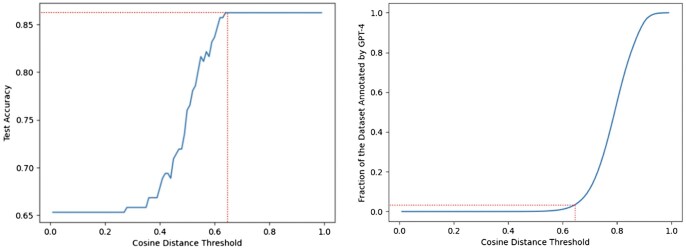
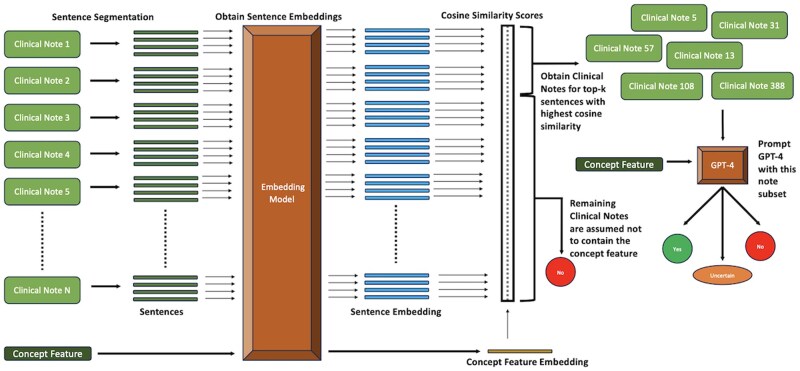
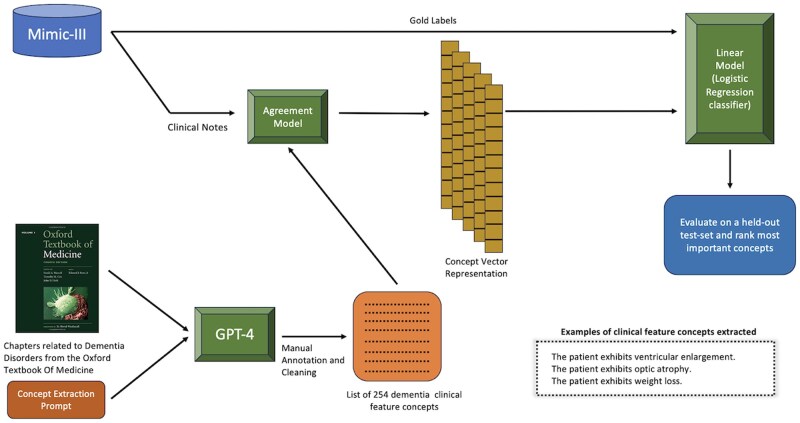
Results: This paper proposes a novel LLM-aided feature engineering approach that enhances interpretability by extracting clinically relevant features from the Oxford Textbook of Medicine. By converting clinical notes into concept vector representations and employing a linear classifier, our method achieved an accuracy of 0.72, outperforming a traditional n-gram Logistic Regression baseline (0.64) and the GPT-4 baseline (0.48), while focusing on high-level clinical features. We also explore using Text Embeddings to reduce the overall time and cost of our approach by 97%.
Availability and implementation: All code relevant to this paper is available at: https://github.com/AdityaKashyap423/Dementia_LLM_Feature_Engineering/tree/main.




 京公网安备 11010802042870号
京ICP备2023020795号-1
京公网安备 11010802042870号
京ICP备2023020795号-1

 分享
分享

 求助内容:
求助内容: 应助结果提醒方式:
 扫码关注我们
