蜘蛛螨生防剂的植螨种群特征和捕食性参数

IF 3.8 1区 农林科学 Q1 AGRONOMY Pest Management Science Pub Date : 2025-04-09 DOI:10.1002/ps.8811
Xiao-Tong Fu, Ke-Ke Zeng, Zhi-Jia Huo, Jing Chang, Rui-Xia Meng
{"title":"蜘蛛螨生防剂的植螨种群特征和捕食性参数","authors":"Xiao-Tong Fu,&nbsp;Ke-Ke Zeng,&nbsp;Zhi-Jia Huo,&nbsp;Jing Chang,&nbsp;Rui-Xia Meng","doi":"10.1002/ps.8811","DOIUrl":null,"url":null,"abstract":"<div>\n \n \n <section>\n \n <h3> BACKGROUND</h3>\n \n <p>The phytoseiid mite <i>Neoseiulus agrestis</i> (Karg) was recently collected from tetranychid-damaged maize plants in northwest China. The demographic parameters and functional response of <i>N. agrestis</i> were studied to evaluate its potential against spider mites.</p>\n </section>\n \n <section>\n \n <h3> RESULTS</h3>\n \n <p>Starting with the capture of a solitary female mite, a laboratory population of <i>N. agrestis</i> was successfully established over multiple generations without any males being found. The life table experiment confirmed that <i>N. agrestis</i> indeed reproduced through thelytokous parthenogenesis and exhibited high fitness levels in both development and reproduction on four different diets consisting of spider mites <i>Tetranychus urticae</i> Koch and <i>T</i>. <i>truncatus</i> Ehara, astigmatid mites <i>Aleuroglyphus ovatus</i> (Tropeau), and cattail pollen <i>Typha</i> sp. The predator that preyed on two natural prey species exhibited a higher intrinsic rate of increase (<i>T. urticae</i>: 0.2501 day<sup>−1</sup>; <i>T. truncatus</i>: 0.2464 day<sup>−1</sup>). The functional responses of <i>N. agrestis</i> to different immature stages of <i>T. urticae</i> showed significantly higher average consumption rates (24.56 prey day<sup>−1</sup>) for larvae compared to other stages. Logistic regression analysis revealed that <i>N. agrestis</i> displayed a type II functional response across all immature stages of <i>T. urticae</i>, with the consumption rate increasing as prey density increased, until reaching a peak and eventually stabilizing at the plateau.</p>\n </section>\n \n <section>\n \n <h3> CONCLUSION</h3>\n \n <p>The enhanced fitness of <i>N. agrestis</i> on both prey and pollen, along with its high consumption rate on tetranychid mites, highlights the potential of this thelytokous predator as a promising biocontrol agent and provides a novel approach for the management of spider mites in China. © 2025 Society of Chemical Industry.</p>\n </section>\n </div>","PeriodicalId":218,"journal":{"name":"Pest Management Science","volume":"81 8","pages":"4540-4547"},"PeriodicalIF":3.8000,"publicationDate":"2025-04-09","publicationTypes":"Journal Article","fieldsOfStudy":null,"isOpenAccess":false,"openAccessPdf":"","citationCount":"0","resultStr":"{\"title\":\"Demographic and predatory parameters of a thelytokous phytoseiid mite as a biocontrol agent for spider mites\",\"authors\":\"Xiao-Tong Fu,&nbsp;Ke-Ke Zeng,&nbsp;Zhi-Jia Huo,&nbsp;Jing Chang,&nbsp;Rui-Xia Meng\",\"doi\":\"10.1002/ps.8811\",\"DOIUrl\":null,\"url\":null,\"abstract\":\"<div>\\n \\n \\n <section>\\n \\n <h3> BACKGROUND</h3>\\n \\n <p>The phytoseiid mite <i>Neoseiulus agrestis</i> (Karg) was recently collected from tetranychid-damaged maize plants in northwest China. The demographic parameters and functional response of <i>N. agrestis</i> were studied to evaluate its potential against spider mites.</p>\\n </section>\\n \\n <section>\\n \\n <h3> RESULTS</h3>\\n \\n <p>Starting with the capture of a solitary female mite, a laboratory population of <i>N. agrestis</i> was successfully established over multiple generations without any males being found. The life table experiment confirmed that <i>N. agrestis</i> indeed reproduced through thelytokous parthenogenesis and exhibited high fitness levels in both development and reproduction on four different diets consisting of spider mites <i>Tetranychus urticae</i> Koch and <i>T</i>. <i>truncatus</i> Ehara, astigmatid mites <i>Aleuroglyphus ovatus</i> (Tropeau), and cattail pollen <i>Typha</i> sp. The predator that preyed on two natural prey species exhibited a higher intrinsic rate of increase (<i>T. urticae</i>: 0.2501 day<sup>−1</sup>; <i>T. truncatus</i>: 0.2464 day<sup>−1</sup>). The functional responses of <i>N. agrestis</i> to different immature stages of <i>T. urticae</i> showed significantly higher average consumption rates (24.56 prey day<sup>−1</sup>) for larvae compared to other stages. Logistic regression analysis revealed that <i>N. agrestis</i> displayed a type II functional response across all immature stages of <i>T. urticae</i>, with the consumption rate increasing as prey density increased, until reaching a peak and eventually stabilizing at the plateau.</p>\\n </section>\\n \\n <section>\\n \\n <h3> CONCLUSION</h3>\\n \\n <p>The enhanced fitness of <i>N. agrestis</i> on both prey and pollen, along with its high consumption rate on tetranychid mites, highlights the potential of this thelytokous predator as a promising biocontrol agent and provides a novel approach for the management of spider mites in China. © 2025 Society of Chemical Industry.</p>\\n </section>\\n </div>\",\"PeriodicalId\":218,\"journal\":{\"name\":\"Pest Management Science\",\"volume\":\"81 8\",\"pages\":\"4540-4547\"},\"PeriodicalIF\":3.8000,\"publicationDate\":\"2025-04-09\",\"publicationTypes\":\"Journal Article\",\"fieldsOfStudy\":null,\"isOpenAccess\":false,\"openAccessPdf\":\"\",\"citationCount\":\"0\",\"resultStr\":null,\"platform\":\"Semanticscholar\",\"paperid\":null,\"PeriodicalName\":\"Pest Management Science\",\"FirstCategoryId\":\"97\",\"ListUrlMain\":\"https://scijournals.onlinelibrary.wiley.com/doi/10.1002/ps.8811\",\"RegionNum\":1,\"RegionCategory\":\"农林科学\",\"ArticlePicture\":[],\"TitleCN\":null,\"AbstractTextCN\":null,\"PMCID\":null,\"EPubDate\":\"\",\"PubModel\":\"\",\"JCR\":\"Q1\",\"JCRName\":\"AGRONOMY\",\"Score\":null,\"Total\":0}","platform":"Semanticscholar","paperid":null,"PeriodicalName":"Pest Management Science","FirstCategoryId":"97","ListUrlMain":"https://scijournals.onlinelibrary.wiley.com/doi/10.1002/ps.8811","RegionNum":1,"RegionCategory":"农林科学","ArticlePicture":[],"TitleCN":null,"AbstractTextCN":null,"PMCID":null,"EPubDate":"","PubModel":"","JCR":"Q1","JCRName":"AGRONOMY","Score":null,"Total":0}
引用次数: 0

摘要

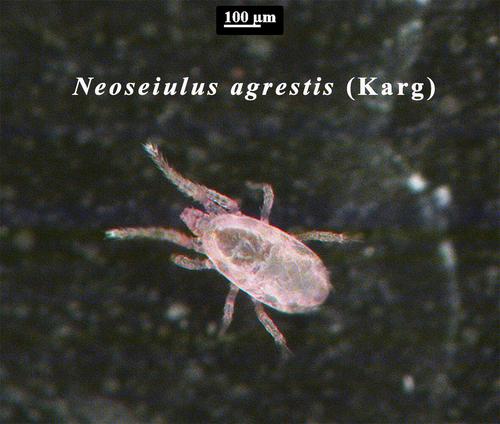
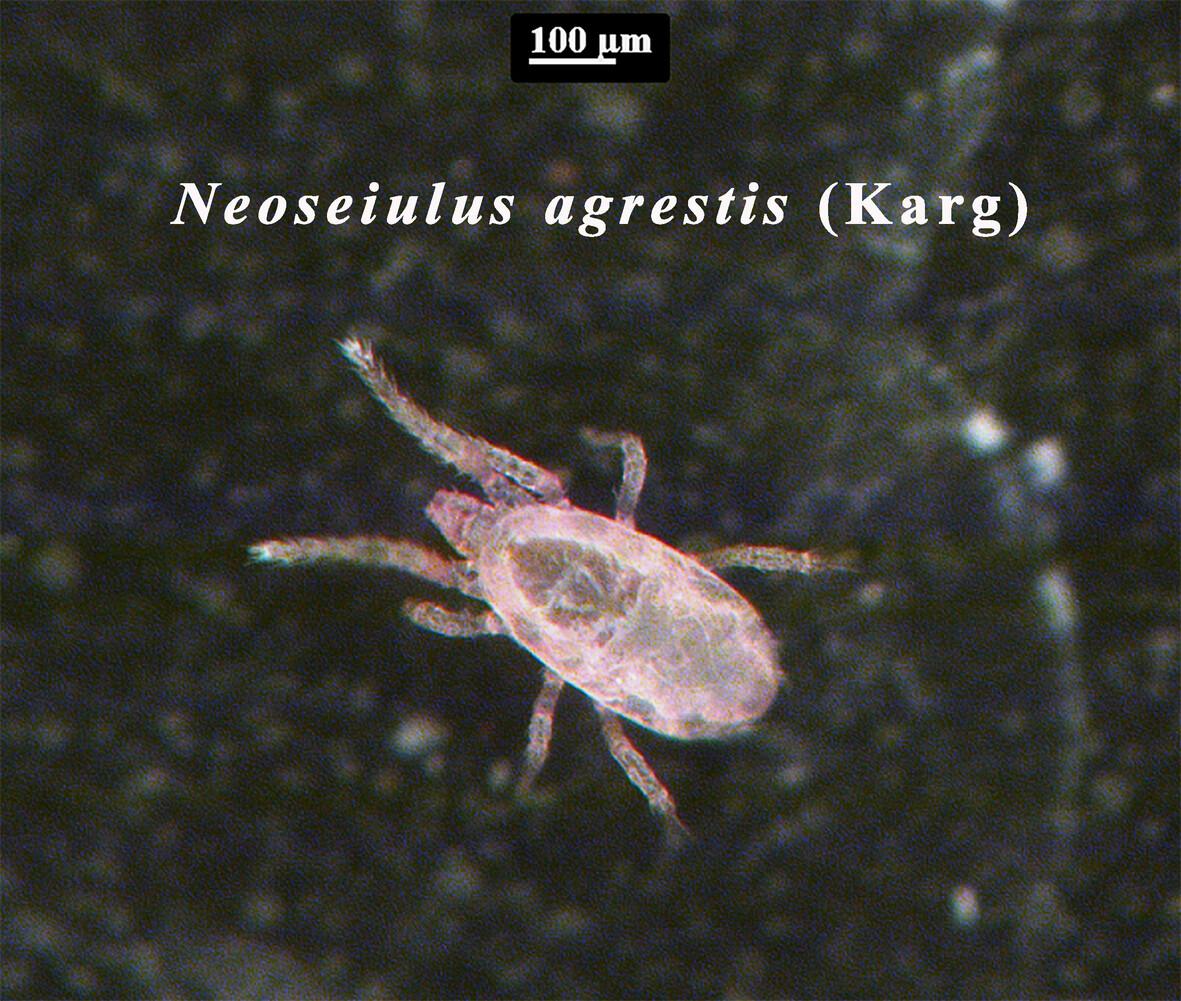
最近在中国西北部受四螨类危害的玉米植株上采集到了植螨Neoseiulus agrestis (Karg)。研究了N. agrestis的繁殖参数和功能反应,以评估其对抗蜘蛛螨的潜力。
本文章由计算机程序翻译,如有差异,请以英文原文为准。

摘要图片

摘要图片

摘要图片

摘要图片

摘要图片

查看原文
分享 分享
微信好友 朋友圈 QQ好友 复制链接
本刊更多论文
Demographic and predatory parameters of a thelytokous phytoseiid mite as a biocontrol agent for spider mites

BACKGROUND

The phytoseiid mite Neoseiulus agrestis (Karg) was recently collected from tetranychid-damaged maize plants in northwest China. The demographic parameters and functional response of N. agrestis were studied to evaluate its potential against spider mites.

RESULTS

Starting with the capture of a solitary female mite, a laboratory population of N. agrestis was successfully established over multiple generations without any males being found. The life table experiment confirmed that N. agrestis indeed reproduced through thelytokous parthenogenesis and exhibited high fitness levels in both development and reproduction on four different diets consisting of spider mites Tetranychus urticae Koch and T. truncatus Ehara, astigmatid mites Aleuroglyphus ovatus (Tropeau), and cattail pollen Typha sp. The predator that preyed on two natural prey species exhibited a higher intrinsic rate of increase (T. urticae: 0.2501 day−1; T. truncatus: 0.2464 day−1). The functional responses of N. agrestis to different immature stages of T. urticae showed significantly higher average consumption rates (24.56 prey day−1) for larvae compared to other stages. Logistic regression analysis revealed that N. agrestis displayed a type II functional response across all immature stages of T. urticae, with the consumption rate increasing as prey density increased, until reaching a peak and eventually stabilizing at the plateau.

CONCLUSION

The enhanced fitness of N. agrestis on both prey and pollen, along with its high consumption rate on tetranychid mites, highlights the potential of this thelytokous predator as a promising biocontrol agent and provides a novel approach for the management of spider mites in China. © 2025 Society of Chemical Industry.

求助全文
通过发布文献求助,成功后即可免费获取论文全文。 去求助
来源期刊
Pest Management Science
Pest Management Science 农林科学-昆虫学
CiteScore
7.90
自引率
9.80%
发文量
553
审稿时长
4.8 months
期刊介绍: Pest Management Science is the international journal of research and development in crop protection and pest control. Since its launch in 1970, the journal has become the premier forum for papers on the discovery, application, and impact on the environment of products and strategies designed for pest management. Published for SCI by John Wiley & Sons Ltd.
期刊最新文献
A predator-derived odor specifically triggers avoidance in gregarious mated female Locusta migratoria. Eastward one-way nocturnal migration of insects across the China-Kazakhstan border observed with radar. Xanthotoxin-triggered HR51 suppression derepresses detoxification genes to drive metabolic adaptation in Spodoptera litura. Relationship between food quality and body size of common vole in different habitats. Widespread high-level resistance to emamectin benzoate and chlorantraniliprole and associated resistance mutations in Spodoptera exigua across China.
×
引用
GB/T 7714-2015
复制
MLA
复制
APA
复制
导出至
BibTeX EndNote RefMan NoteFirst NoteExpress
×
×
提示
您的信息不完整,为了账户安全,请先补充。
现在去补充
×
提示
您因"违规操作"
具体请查看互助需知
我知道了
×
提示
现在去查看 取消
×
提示
确定
0
微信
客服QQ
Book学术公众号 扫码关注我们
反馈
×
意见反馈
请填写您的意见或建议
请填写您的手机或邮箱
已复制链接
已复制链接
快去分享给好友吧!
我知道了
×
扫码分享
扫码分享
Book学术官方微信
Book学术官方微信
Book学术文献互助
Book学术文献互助群
群 号:604180095
Book学术
文献互助 智能选刊 最新文献 互助须知 联系我们:info@booksci.cn
Book学术提供免费学术资源搜索服务,方便国内外学者检索中英文文献。致力于提供最便捷和优质的服务体验。
Copyright © 2023 Book学术 All rights reserved.
ghs 京公网安备 11010802042870号 京ICP备2023020795号-1