Karine Choquet, Ines L. Patop, L. Stirling Churchman
{"title":"转录后RNA剪接的调控与功能","authors":"Karine Choquet, Ines L. Patop, L. Stirling Churchman","doi":"10.1038/s41576-025-00836-z","DOIUrl":null,"url":null,"abstract":"Eukaryotic RNA transcripts undergo extensive processing before becoming functional messenger RNAs, with splicing being a critical and highly regulated step that occurs both co-transcriptionally and post-transcriptionally. Recent analyses have revealed, with unprecedented spatial and temporal resolution, that up to 40% of mammalian introns are retained after transcription termination and are subsequently removed largely while transcripts remain chromatin-associated. Post-transcriptional splicing has emerged as a key layer of gene expression regulation during development, stress response and disease progression. The control of post-transcriptional splicing regulates protein production through delayed splicing and nuclear export, or nuclear retention and degradation of specific transcript isoforms. Here, we review current methodologies for detecting post-transcriptional splicing, discuss the mechanisms controlling the timing of splicing and examine how this temporal regulation affects gene expression programmes in healthy cells and in disease states. Post-transcriptional splicing has emerged as a key layer of gene expression regulation but is challenging to differentiate from co-transcriptional splicing. The authors review methodologies to detect post-transcriptional splicing, the mechanisms controlling splicing timing and how the temporal regulation of splicing affects gene expression.","PeriodicalId":19067,"journal":{"name":"Nature Reviews Genetics","volume":"26 6","pages":"378-394"},"PeriodicalIF":52.0000,"publicationDate":"2025-04-11","publicationTypes":"Journal Article","fieldsOfStudy":null,"isOpenAccess":false,"openAccessPdf":"","citationCount":"0","resultStr":"{\"title\":\"The regulation and function of post-transcriptional RNA splicing\",\"authors\":\"Karine Choquet, Ines L. Patop, L. Stirling Churchman\",\"doi\":\"10.1038/s41576-025-00836-z\",\"DOIUrl\":null,\"url\":null,\"abstract\":\"Eukaryotic RNA transcripts undergo extensive processing before becoming functional messenger RNAs, with splicing being a critical and highly regulated step that occurs both co-transcriptionally and post-transcriptionally. Recent analyses have revealed, with unprecedented spatial and temporal resolution, that up to 40% of mammalian introns are retained after transcription termination and are subsequently removed largely while transcripts remain chromatin-associated. Post-transcriptional splicing has emerged as a key layer of gene expression regulation during development, stress response and disease progression. The control of post-transcriptional splicing regulates protein production through delayed splicing and nuclear export, or nuclear retention and degradation of specific transcript isoforms. Here, we review current methodologies for detecting post-transcriptional splicing, discuss the mechanisms controlling the timing of splicing and examine how this temporal regulation affects gene expression programmes in healthy cells and in disease states. Post-transcriptional splicing has emerged as a key layer of gene expression regulation but is challenging to differentiate from co-transcriptional splicing. The authors review methodologies to detect post-transcriptional splicing, the mechanisms controlling splicing timing and how the temporal regulation of splicing affects gene expression.\",\"PeriodicalId\":19067,\"journal\":{\"name\":\"Nature Reviews Genetics\",\"volume\":\"26 6\",\"pages\":\"378-394\"},\"PeriodicalIF\":52.0000,\"publicationDate\":\"2025-04-11\",\"publicationTypes\":\"Journal Article\",\"fieldsOfStudy\":null,\"isOpenAccess\":false,\"openAccessPdf\":\"\",\"citationCount\":\"0\",\"resultStr\":null,\"platform\":\"Semanticscholar\",\"paperid\":null,\"PeriodicalName\":\"Nature Reviews Genetics\",\"FirstCategoryId\":\"99\",\"ListUrlMain\":\"https://www.nature.com/articles/s41576-025-00836-z\",\"RegionNum\":1,\"RegionCategory\":\"生物学\",\"ArticlePicture\":[],\"TitleCN\":null,\"AbstractTextCN\":null,\"PMCID\":null,\"EPubDate\":\"\",\"PubModel\":\"\",\"JCR\":\"Q1\",\"JCRName\":\"GENETICS & HEREDITY\",\"Score\":null,\"Total\":0}","platform":"Semanticscholar","paperid":null,"PeriodicalName":"Nature Reviews Genetics","FirstCategoryId":"99","ListUrlMain":"https://www.nature.com/articles/s41576-025-00836-z","RegionNum":1,"RegionCategory":"生物学","ArticlePicture":[],"TitleCN":null,"AbstractTextCN":null,"PMCID":null,"EPubDate":"","PubModel":"","JCR":"Q1","JCRName":"GENETICS & HEREDITY","Score":null,"Total":0}
The regulation and function of post-transcriptional RNA splicing
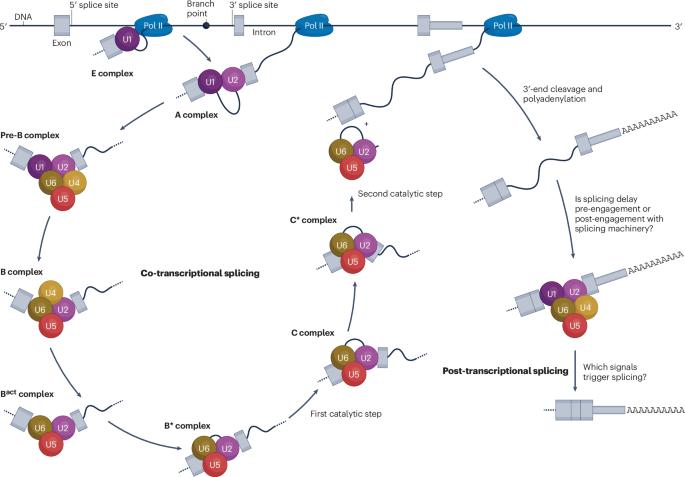
Eukaryotic RNA transcripts undergo extensive processing before becoming functional messenger RNAs, with splicing being a critical and highly regulated step that occurs both co-transcriptionally and post-transcriptionally. Recent analyses have revealed, with unprecedented spatial and temporal resolution, that up to 40% of mammalian introns are retained after transcription termination and are subsequently removed largely while transcripts remain chromatin-associated. Post-transcriptional splicing has emerged as a key layer of gene expression regulation during development, stress response and disease progression. The control of post-transcriptional splicing regulates protein production through delayed splicing and nuclear export, or nuclear retention and degradation of specific transcript isoforms. Here, we review current methodologies for detecting post-transcriptional splicing, discuss the mechanisms controlling the timing of splicing and examine how this temporal regulation affects gene expression programmes in healthy cells and in disease states. Post-transcriptional splicing has emerged as a key layer of gene expression regulation but is challenging to differentiate from co-transcriptional splicing. The authors review methodologies to detect post-transcriptional splicing, the mechanisms controlling splicing timing and how the temporal regulation of splicing affects gene expression.
期刊介绍:
At Nature Reviews Genetics, our goal is to be the leading source of reviews and commentaries for the scientific communities we serve. We are dedicated to publishing authoritative articles that are easily accessible to our readers. We believe in enhancing our articles with clear and understandable figures, tables, and other display items. Our aim is to provide an unparalleled service to authors, referees, and readers, and we are committed to maximizing the usefulness and impact of each article we publish.
Within our journal, we publish a range of content including Research Highlights, Comments, Reviews, and Perspectives that are relevant to geneticists and genomicists. With our broad scope, we ensure that the articles we publish reach the widest possible audience.
As part of the Nature Reviews portfolio of journals, we strive to uphold the high standards and reputation associated with this esteemed collection of publications.





 京公网安备 11010802042870号
京ICP备2023020795号-1
京公网安备 11010802042870号
京ICP备2023020795号-1

 分享
分享
 求助内容:
求助内容: 应助结果提醒方式:
 扫码关注我们
