Renato Odria, Aina Cardús, Clara Gomis-Coloma, Marta Balanyà-Segura, Alexandra Mercado-Amarilla, Pau Maestre-Mora, Andrea Poveda-Sabuco, Joan Carles Domingo, Gisela Nogales-Gadea, Jose A. Gomez-Sanchez, Erica Hurtado, Mònica Suelves
{"title":"HDAC11缺乏调节与年龄相关的肌肉衰退和肌肉减少症","authors":"Renato Odria, Aina Cardús, Clara Gomis-Coloma, Marta Balanyà-Segura, Alexandra Mercado-Amarilla, Pau Maestre-Mora, Andrea Poveda-Sabuco, Joan Carles Domingo, Gisela Nogales-Gadea, Jose A. Gomez-Sanchez, Erica Hurtado, Mònica Suelves","doi":"10.1007/s11357-025-01611-y","DOIUrl":null,"url":null,"abstract":"<p>Sarcopenia, defined as the progressive loss of skeletal muscle mass and function associated with ageing, has devastating effects in terms of reducing the quality of life of older people. Muscle ageing is characterised by muscle atrophy and decreased capacity for muscle repair, including a reduction in the muscle stem cell pool that impedes recovery after injury. Histone deacetylase 11 (HDAC11) is the newest member of the HDAC family and it is highly expressed in skeletal muscle. Our group recently showed that genetic deficiency in HDAC11 increases skeletal muscle regeneration, mitochondrial function and globally improves muscle performance in young mice. Here, we explore for the first time the functional consequences of HDAC11 deficiency in old mice, in homeostasis and during muscle regeneration. Aged mice lacking HDAC11 show attenuated muscle atrophy and postsynaptic fragmentation of the neuromuscular junction, but no significant differences in the number or diameter of myelinated axons of peripheral nerves. Maintenance of the muscle stem cell reservoir and advanced skeletal muscle regeneration after injury are also observed. HDAC11 depletion enhances mitochondrial fatty acid oxidation and attenuates age-associated alterations in skeletal muscle fatty acid composition, reducing drastically the omega-6/omega-3 fatty acid ratio and improving significantly the omega-3 index, providing an explanation for improved muscle strength and fatigue resistance and decreased mortality. Taken together, our results point to HDAC11 as a new target for the treatment of sarcopenia. Importantly, selective HDAC11 inhibitors have recently been developed that could offer a new therapeutic approach to slow the ageing process.</p>","PeriodicalId":12730,"journal":{"name":"GeroScience","volume":"30 1","pages":""},"PeriodicalIF":5.4000,"publicationDate":"2025-04-12","publicationTypes":"Journal Article","fieldsOfStudy":null,"isOpenAccess":false,"openAccessPdf":"","citationCount":"0","resultStr":"{\"title\":\"HDAC11 deficiency regulates age-related muscle decline and sarcopenia\",\"authors\":\"Renato Odria, Aina Cardús, Clara Gomis-Coloma, Marta Balanyà-Segura, Alexandra Mercado-Amarilla, Pau Maestre-Mora, Andrea Poveda-Sabuco, Joan Carles Domingo, Gisela Nogales-Gadea, Jose A. Gomez-Sanchez, Erica Hurtado, Mònica Suelves\",\"doi\":\"10.1007/s11357-025-01611-y\",\"DOIUrl\":null,\"url\":null,\"abstract\":\"<p>Sarcopenia, defined as the progressive loss of skeletal muscle mass and function associated with ageing, has devastating effects in terms of reducing the quality of life of older people. Muscle ageing is characterised by muscle atrophy and decreased capacity for muscle repair, including a reduction in the muscle stem cell pool that impedes recovery after injury. Histone deacetylase 11 (HDAC11) is the newest member of the HDAC family and it is highly expressed in skeletal muscle. Our group recently showed that genetic deficiency in HDAC11 increases skeletal muscle regeneration, mitochondrial function and globally improves muscle performance in young mice. Here, we explore for the first time the functional consequences of HDAC11 deficiency in old mice, in homeostasis and during muscle regeneration. Aged mice lacking HDAC11 show attenuated muscle atrophy and postsynaptic fragmentation of the neuromuscular junction, but no significant differences in the number or diameter of myelinated axons of peripheral nerves. Maintenance of the muscle stem cell reservoir and advanced skeletal muscle regeneration after injury are also observed. HDAC11 depletion enhances mitochondrial fatty acid oxidation and attenuates age-associated alterations in skeletal muscle fatty acid composition, reducing drastically the omega-6/omega-3 fatty acid ratio and improving significantly the omega-3 index, providing an explanation for improved muscle strength and fatigue resistance and decreased mortality. Taken together, our results point to HDAC11 as a new target for the treatment of sarcopenia. Importantly, selective HDAC11 inhibitors have recently been developed that could offer a new therapeutic approach to slow the ageing process.</p>\",\"PeriodicalId\":12730,\"journal\":{\"name\":\"GeroScience\",\"volume\":\"30 1\",\"pages\":\"\"},\"PeriodicalIF\":5.4000,\"publicationDate\":\"2025-04-12\",\"publicationTypes\":\"Journal Article\",\"fieldsOfStudy\":null,\"isOpenAccess\":false,\"openAccessPdf\":\"\",\"citationCount\":\"0\",\"resultStr\":null,\"platform\":\"Semanticscholar\",\"paperid\":null,\"PeriodicalName\":\"GeroScience\",\"FirstCategoryId\":\"3\",\"ListUrlMain\":\"https://doi.org/10.1007/s11357-025-01611-y\",\"RegionNum\":2,\"RegionCategory\":\"医学\",\"ArticlePicture\":[],\"TitleCN\":null,\"AbstractTextCN\":null,\"PMCID\":null,\"EPubDate\":\"\",\"PubModel\":\"\",\"JCR\":\"Q1\",\"JCRName\":\"GERIATRICS & GERONTOLOGY\",\"Score\":null,\"Total\":0}","platform":"Semanticscholar","paperid":null,"PeriodicalName":"GeroScience","FirstCategoryId":"3","ListUrlMain":"https://doi.org/10.1007/s11357-025-01611-y","RegionNum":2,"RegionCategory":"医学","ArticlePicture":[],"TitleCN":null,"AbstractTextCN":null,"PMCID":null,"EPubDate":"","PubModel":"","JCR":"Q1","JCRName":"GERIATRICS & GERONTOLOGY","Score":null,"Total":0}
HDAC11 deficiency regulates age-related muscle decline and sarcopenia
Sarcopenia, defined as the progressive loss of skeletal muscle mass and function associated with ageing, has devastating effects in terms of reducing the quality of life of older people. Muscle ageing is characterised by muscle atrophy and decreased capacity for muscle repair, including a reduction in the muscle stem cell pool that impedes recovery after injury. Histone deacetylase 11 (HDAC11) is the newest member of the HDAC family and it is highly expressed in skeletal muscle. Our group recently showed that genetic deficiency in HDAC11 increases skeletal muscle regeneration, mitochondrial function and globally improves muscle performance in young mice. Here, we explore for the first time the functional consequences of HDAC11 deficiency in old mice, in homeostasis and during muscle regeneration. Aged mice lacking HDAC11 show attenuated muscle atrophy and postsynaptic fragmentation of the neuromuscular junction, but no significant differences in the number or diameter of myelinated axons of peripheral nerves. Maintenance of the muscle stem cell reservoir and advanced skeletal muscle regeneration after injury are also observed. HDAC11 depletion enhances mitochondrial fatty acid oxidation and attenuates age-associated alterations in skeletal muscle fatty acid composition, reducing drastically the omega-6/omega-3 fatty acid ratio and improving significantly the omega-3 index, providing an explanation for improved muscle strength and fatigue resistance and decreased mortality. Taken together, our results point to HDAC11 as a new target for the treatment of sarcopenia. Importantly, selective HDAC11 inhibitors have recently been developed that could offer a new therapeutic approach to slow the ageing process.
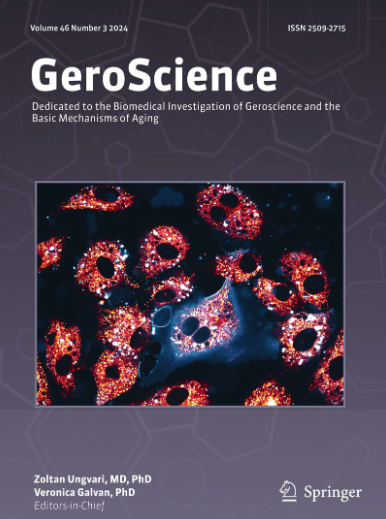
GeroScienceMedicine-Complementary and Alternative Medicine
CiteScore
10.50
自引率
5.40%
发文量
182
期刊介绍:
GeroScience is a bi-monthly, international, peer-reviewed journal that publishes articles related to research in the biology of aging and research on biomedical applications that impact aging. The scope of articles to be considered include evolutionary biology, biophysics, genetics, genomics, proteomics, molecular biology, cell biology, biochemistry, endocrinology, immunology, physiology, pharmacology, neuroscience, and psychology.



 京公网安备 11010802042870号
京ICP备2023020795号-1
京公网安备 11010802042870号
京ICP备2023020795号-1

 分享
分享
 求助内容:
求助内容: 应助结果提醒方式:
 扫码关注我们
