Shabnam Zargarian, Camille Roiron, Giovanni Ferro, Plamen Atanassov
{"title":"非导电TiO2载体上氧化铱网络作为析氧反应催化剂的研究","authors":"Shabnam Zargarian, Camille Roiron, Giovanni Ferro, Plamen Atanassov","doi":"10.1002/celc.202400625","DOIUrl":null,"url":null,"abstract":"<p>Successful deployment of hydrogen technologies relies on converting electricity from renewable energy sources into hydrogen. Proton exchange membrane electrolyzers are currently the technology of choice for this transformation. These devices use electricity to split water molecules into hydrogen and oxygen. To build membrane electrode assemblies with low iridium loading, while maintaining good in-plane conductivity, an extended network of iridium oxide is required. To this effect, we synthesize IrO2 catalysts on a non-conductive titanium dioxide anatase support. The iridium oxide particles obtained are well dispersed on the surface of the support. Furthermore, at the optimal iridium oxide loading, a network of relatively small iridium oxide particles covers the surface of the support. Increasing the iridium oxide loading beyond this optimum does not bring any appreciable increase in connectivity and decreases the surface-to-mass ratio of iridium oxide, which is detrimental to the mass activity of the material. The synthesis method presented herein leads to the formation of an iridium oxide extended network that grants electrical conductivity to the material despite the high resistivity of the titanium dioxide anatase support. The result is a catalyst that enjoys the chemical stability of anatase but is also conductive and highly active for the OER.</p>","PeriodicalId":142,"journal":{"name":"ChemElectroChem","volume":"12 8","pages":""},"PeriodicalIF":5.2000,"publicationDate":"2025-03-25","publicationTypes":"Journal Article","fieldsOfStudy":null,"isOpenAccess":false,"openAccessPdf":"https://onlinelibrary.wiley.com/doi/epdf/10.1002/celc.202400625","citationCount":"0","resultStr":"{\"title\":\"Iridium Oxide Network on Non-conductive TiO2 Support as a Catalyst for Oxygen Evolution Reaction\",\"authors\":\"Shabnam Zargarian, Camille Roiron, Giovanni Ferro, Plamen Atanassov\",\"doi\":\"10.1002/celc.202400625\",\"DOIUrl\":null,\"url\":null,\"abstract\":\"<p>Successful deployment of hydrogen technologies relies on converting electricity from renewable energy sources into hydrogen. Proton exchange membrane electrolyzers are currently the technology of choice for this transformation. These devices use electricity to split water molecules into hydrogen and oxygen. To build membrane electrode assemblies with low iridium loading, while maintaining good in-plane conductivity, an extended network of iridium oxide is required. To this effect, we synthesize IrO2 catalysts on a non-conductive titanium dioxide anatase support. The iridium oxide particles obtained are well dispersed on the surface of the support. Furthermore, at the optimal iridium oxide loading, a network of relatively small iridium oxide particles covers the surface of the support. Increasing the iridium oxide loading beyond this optimum does not bring any appreciable increase in connectivity and decreases the surface-to-mass ratio of iridium oxide, which is detrimental to the mass activity of the material. The synthesis method presented herein leads to the formation of an iridium oxide extended network that grants electrical conductivity to the material despite the high resistivity of the titanium dioxide anatase support. The result is a catalyst that enjoys the chemical stability of anatase but is also conductive and highly active for the OER.</p>\",\"PeriodicalId\":142,\"journal\":{\"name\":\"ChemElectroChem\",\"volume\":\"12 8\",\"pages\":\"\"},\"PeriodicalIF\":5.2000,\"publicationDate\":\"2025-03-25\",\"publicationTypes\":\"Journal Article\",\"fieldsOfStudy\":null,\"isOpenAccess\":false,\"openAccessPdf\":\"https://onlinelibrary.wiley.com/doi/epdf/10.1002/celc.202400625\",\"citationCount\":\"0\",\"resultStr\":null,\"platform\":\"Semanticscholar\",\"paperid\":null,\"PeriodicalName\":\"ChemElectroChem\",\"FirstCategoryId\":\"92\",\"ListUrlMain\":\"https://chemistry-europe.onlinelibrary.wiley.com/doi/10.1002/celc.202400625\",\"RegionNum\":4,\"RegionCategory\":\"化学\",\"ArticlePicture\":[],\"TitleCN\":null,\"AbstractTextCN\":null,\"PMCID\":null,\"EPubDate\":\"\",\"PubModel\":\"\",\"JCR\":\"Q2\",\"JCRName\":\"ELECTROCHEMISTRY\",\"Score\":null,\"Total\":0}","platform":"Semanticscholar","paperid":null,"PeriodicalName":"ChemElectroChem","FirstCategoryId":"92","ListUrlMain":"https://chemistry-europe.onlinelibrary.wiley.com/doi/10.1002/celc.202400625","RegionNum":4,"RegionCategory":"化学","ArticlePicture":[],"TitleCN":null,"AbstractTextCN":null,"PMCID":null,"EPubDate":"","PubModel":"","JCR":"Q2","JCRName":"ELECTROCHEMISTRY","Score":null,"Total":0}
Iridium Oxide Network on Non-conductive TiO2 Support as a Catalyst for Oxygen Evolution Reaction
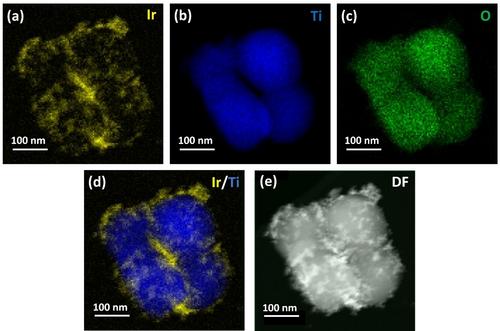
Successful deployment of hydrogen technologies relies on converting electricity from renewable energy sources into hydrogen. Proton exchange membrane electrolyzers are currently the technology of choice for this transformation. These devices use electricity to split water molecules into hydrogen and oxygen. To build membrane electrode assemblies with low iridium loading, while maintaining good in-plane conductivity, an extended network of iridium oxide is required. To this effect, we synthesize IrO2 catalysts on a non-conductive titanium dioxide anatase support. The iridium oxide particles obtained are well dispersed on the surface of the support. Furthermore, at the optimal iridium oxide loading, a network of relatively small iridium oxide particles covers the surface of the support. Increasing the iridium oxide loading beyond this optimum does not bring any appreciable increase in connectivity and decreases the surface-to-mass ratio of iridium oxide, which is detrimental to the mass activity of the material. The synthesis method presented herein leads to the formation of an iridium oxide extended network that grants electrical conductivity to the material despite the high resistivity of the titanium dioxide anatase support. The result is a catalyst that enjoys the chemical stability of anatase but is also conductive and highly active for the OER.
期刊介绍:
ChemElectroChem is aimed to become a top-ranking electrochemistry journal for primary research papers and critical secondary information from authors across the world. The journal covers the entire scope of pure and applied electrochemistry, the latter encompassing (among others) energy applications, electrochemistry at interfaces (including surfaces), photoelectrochemistry and bioelectrochemistry.







 京公网安备 11010802042870号
京ICP备2023020795号-1
京公网安备 11010802042870号
京ICP备2023020795号-1

 分享
分享
 求助内容:
求助内容: 应助结果提醒方式:
 扫码关注我们
