{"title":"α -蒎烯改善3-硝基丙酸诱导的亨廷顿病大鼠模型的记忆缺陷","authors":"Paria Hashemi, Mohammad Raman Moloudi, Helia Rahmani, Katayoun Hassanzadeh, Zakaria Vahabzadeh, Esmael Izadpanah","doi":"10.1007/s11064-025-04393-z","DOIUrl":null,"url":null,"abstract":"<div><p>Memory impairment is one of the cognitive symptoms in Huntington’s disease (HD) which appears before motor dysfunction in patients. Various molecular mechanisms, including disruptions in neurotrophins levels, are involved in the occurrence of memory problems in HD. Alpha-pinene (APN), a member of the monoterpene family, exhibited beneficial effects in animal models of neurodegenerative disorders. As a result, this study assessed the impact of APN on memory in the 3-nitropropionic acid (3-NP) induced model of HD in rats. Male Wistar rats received saline, 3-NP to model HD, or APN (1, 5, or 10 mg/kg) plus 3-NP for 21 days to assess APN’s effects. Working and spatial memory were examined by the Y-maze and Morris-water-maze (MWM) tests. The mRNA levels of neurotrophins and their receptors in the brain cortex and hippocampus of the rats were quantitatively assessed through Reverse Transcription Quantitative Polymerase Chain Reaction (RT-qPCR) analysis. The results showed that APN, at all three doses, significantly prevented the disease phenotype induced by 3-NP administration. In addition, APN treatment elevated the gene expression levels of BDNF, TrkA, TrkB, and CREB, while significantly decreasing P75 NTR showing a dose-dependent effect in the brain cortex and hippocampus, compared to the 3-NP group. These findings suggest that APN alleviates 3-NP-induced memory deficits by enhancing neurotrophins and their receptor levels in an animal model of HD.</p></div>","PeriodicalId":719,"journal":{"name":"Neurochemical Research","volume":"50 3","pages":""},"PeriodicalIF":3.8000,"publicationDate":"2025-04-16","publicationTypes":"Journal Article","fieldsOfStudy":null,"isOpenAccess":false,"openAccessPdf":"","citationCount":"0","resultStr":"{\"title\":\"Alpha-Pinene Ameliorates Memory Deficits in 3-Nitropropionic Acid-Induced Rat Model of Huntington’s Disease\",\"authors\":\"Paria Hashemi, Mohammad Raman Moloudi, Helia Rahmani, Katayoun Hassanzadeh, Zakaria Vahabzadeh, Esmael Izadpanah\",\"doi\":\"10.1007/s11064-025-04393-z\",\"DOIUrl\":null,\"url\":null,\"abstract\":\"<div><p>Memory impairment is one of the cognitive symptoms in Huntington’s disease (HD) which appears before motor dysfunction in patients. Various molecular mechanisms, including disruptions in neurotrophins levels, are involved in the occurrence of memory problems in HD. Alpha-pinene (APN), a member of the monoterpene family, exhibited beneficial effects in animal models of neurodegenerative disorders. As a result, this study assessed the impact of APN on memory in the 3-nitropropionic acid (3-NP) induced model of HD in rats. Male Wistar rats received saline, 3-NP to model HD, or APN (1, 5, or 10 mg/kg) plus 3-NP for 21 days to assess APN’s effects. Working and spatial memory were examined by the Y-maze and Morris-water-maze (MWM) tests. The mRNA levels of neurotrophins and their receptors in the brain cortex and hippocampus of the rats were quantitatively assessed through Reverse Transcription Quantitative Polymerase Chain Reaction (RT-qPCR) analysis. The results showed that APN, at all three doses, significantly prevented the disease phenotype induced by 3-NP administration. In addition, APN treatment elevated the gene expression levels of BDNF, TrkA, TrkB, and CREB, while significantly decreasing P75 NTR showing a dose-dependent effect in the brain cortex and hippocampus, compared to the 3-NP group. These findings suggest that APN alleviates 3-NP-induced memory deficits by enhancing neurotrophins and their receptor levels in an animal model of HD.</p></div>\",\"PeriodicalId\":719,\"journal\":{\"name\":\"Neurochemical Research\",\"volume\":\"50 3\",\"pages\":\"\"},\"PeriodicalIF\":3.8000,\"publicationDate\":\"2025-04-16\",\"publicationTypes\":\"Journal Article\",\"fieldsOfStudy\":null,\"isOpenAccess\":false,\"openAccessPdf\":\"\",\"citationCount\":\"0\",\"resultStr\":null,\"platform\":\"Semanticscholar\",\"paperid\":null,\"PeriodicalName\":\"Neurochemical Research\",\"FirstCategoryId\":\"3\",\"ListUrlMain\":\"https://link.springer.com/article/10.1007/s11064-025-04393-z\",\"RegionNum\":3,\"RegionCategory\":\"医学\",\"ArticlePicture\":[],\"TitleCN\":null,\"AbstractTextCN\":null,\"PMCID\":null,\"EPubDate\":\"\",\"PubModel\":\"\",\"JCR\":\"Q2\",\"JCRName\":\"BIOCHEMISTRY & MOLECULAR BIOLOGY\",\"Score\":null,\"Total\":0}","platform":"Semanticscholar","paperid":null,"PeriodicalName":"Neurochemical Research","FirstCategoryId":"3","ListUrlMain":"https://link.springer.com/article/10.1007/s11064-025-04393-z","RegionNum":3,"RegionCategory":"医学","ArticlePicture":[],"TitleCN":null,"AbstractTextCN":null,"PMCID":null,"EPubDate":"","PubModel":"","JCR":"Q2","JCRName":"BIOCHEMISTRY & MOLECULAR BIOLOGY","Score":null,"Total":0}
Alpha-Pinene Ameliorates Memory Deficits in 3-Nitropropionic Acid-Induced Rat Model of Huntington’s Disease
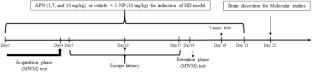
Memory impairment is one of the cognitive symptoms in Huntington’s disease (HD) which appears before motor dysfunction in patients. Various molecular mechanisms, including disruptions in neurotrophins levels, are involved in the occurrence of memory problems in HD. Alpha-pinene (APN), a member of the monoterpene family, exhibited beneficial effects in animal models of neurodegenerative disorders. As a result, this study assessed the impact of APN on memory in the 3-nitropropionic acid (3-NP) induced model of HD in rats. Male Wistar rats received saline, 3-NP to model HD, or APN (1, 5, or 10 mg/kg) plus 3-NP for 21 days to assess APN’s effects. Working and spatial memory were examined by the Y-maze and Morris-water-maze (MWM) tests. The mRNA levels of neurotrophins and their receptors in the brain cortex and hippocampus of the rats were quantitatively assessed through Reverse Transcription Quantitative Polymerase Chain Reaction (RT-qPCR) analysis. The results showed that APN, at all three doses, significantly prevented the disease phenotype induced by 3-NP administration. In addition, APN treatment elevated the gene expression levels of BDNF, TrkA, TrkB, and CREB, while significantly decreasing P75 NTR showing a dose-dependent effect in the brain cortex and hippocampus, compared to the 3-NP group. These findings suggest that APN alleviates 3-NP-induced memory deficits by enhancing neurotrophins and their receptor levels in an animal model of HD.
期刊介绍:
Neurochemical Research is devoted to the rapid publication of studies that use neurochemical methodology in research on nervous system structure and function. The journal publishes original reports of experimental and clinical research results, perceptive reviews of significant problem areas in the neurosciences, brief comments of a methodological or interpretive nature, and research summaries conducted by leading scientists whose works are not readily available in English.




 京公网安备 11010802042870号
京ICP备2023020795号-1
京公网安备 11010802042870号
京ICP备2023020795号-1

 分享
分享
 求助内容:
求助内容: 应助结果提醒方式:
 扫码关注我们
