Xinxin Zhao , Lin Yuan , Zheng Gong , Mengqi Li , Ye Yuan , Jin Geng
{"title":"2024 年国家药品管理局批准的新药:综述与临床应用","authors":"Xinxin Zhao , Lin Yuan , Zheng Gong , Mengqi Li , Ye Yuan , Jin Geng","doi":"10.1016/j.ejmech.2025.117643","DOIUrl":null,"url":null,"abstract":"<div><div>In 2024, the National Medical Products Administration (NMPA) approved 46 Class 1 or 1.1 innovative drugs, including 7 imported drugs and 39 domestically developed drugs, marking a new record in China's pharmaceutical innovation. These approvals encompassed 23 chemical drugs, 20 biological products, and 3 traditional Chinese medicines or natural products, demonstrating continuous growth in innovative drug development. Compared to 16 approvals in 2020 and the surge in 2021, when approvals equaled the total of the previous four years, the trend of increased approvals has resumed since 2024. Therapeutically, oncology drugs remained the dominant category in 2024, comprising 50 % (23/46) of approvals. Gastrointestinal and metabolic drugs, accounting for 13.04 % (6/46), surpassed other categories to rank second, followed by neurological drugs (8.7 %, 4/46). Anti-infectives, miscellaneous drugs, and traditional Chinese medicines each contributed three approvals (7.5 % each). Regulatory advancements played a significant role, with 18 drugs (39.13 %) approved via priority reviews, emergency reviews, or conditional approvals. This group included 9 chemical drugs and 9 biological products, with notable breakthrough therapies such as taletrectinib, lutetium monoclonal antibodies, and donanemab receiving special recognition. The 2024 data reflect China's growing capabilities in drug innovation and its commitment to addressing critical medical needs through accelerated regulatory pathways.</div></div>","PeriodicalId":314,"journal":{"name":"European Journal of Medicinal Chemistry","volume":"291 ","pages":"Article 117643"},"PeriodicalIF":5.9000,"publicationDate":"2025-07-05","publicationTypes":"Journal Article","fieldsOfStudy":null,"isOpenAccess":false,"openAccessPdf":"","citationCount":"0","resultStr":"{\"title\":\"New drugs approved by the NMPA in 2024: Synthesis and clinical applications\",\"authors\":\"Xinxin Zhao , Lin Yuan , Zheng Gong , Mengqi Li , Ye Yuan , Jin Geng\",\"doi\":\"10.1016/j.ejmech.2025.117643\",\"DOIUrl\":null,\"url\":null,\"abstract\":\"<div><div>In 2024, the National Medical Products Administration (NMPA) approved 46 Class 1 or 1.1 innovative drugs, including 7 imported drugs and 39 domestically developed drugs, marking a new record in China's pharmaceutical innovation. These approvals encompassed 23 chemical drugs, 20 biological products, and 3 traditional Chinese medicines or natural products, demonstrating continuous growth in innovative drug development. Compared to 16 approvals in 2020 and the surge in 2021, when approvals equaled the total of the previous four years, the trend of increased approvals has resumed since 2024. Therapeutically, oncology drugs remained the dominant category in 2024, comprising 50 % (23/46) of approvals. Gastrointestinal and metabolic drugs, accounting for 13.04 % (6/46), surpassed other categories to rank second, followed by neurological drugs (8.7 %, 4/46). Anti-infectives, miscellaneous drugs, and traditional Chinese medicines each contributed three approvals (7.5 % each). Regulatory advancements played a significant role, with 18 drugs (39.13 %) approved via priority reviews, emergency reviews, or conditional approvals. This group included 9 chemical drugs and 9 biological products, with notable breakthrough therapies such as taletrectinib, lutetium monoclonal antibodies, and donanemab receiving special recognition. The 2024 data reflect China's growing capabilities in drug innovation and its commitment to addressing critical medical needs through accelerated regulatory pathways.</div></div>\",\"PeriodicalId\":314,\"journal\":{\"name\":\"European Journal of Medicinal Chemistry\",\"volume\":\"291 \",\"pages\":\"Article 117643\"},\"PeriodicalIF\":5.9000,\"publicationDate\":\"2025-07-05\",\"publicationTypes\":\"Journal Article\",\"fieldsOfStudy\":null,\"isOpenAccess\":false,\"openAccessPdf\":\"\",\"citationCount\":\"0\",\"resultStr\":null,\"platform\":\"Semanticscholar\",\"paperid\":null,\"PeriodicalName\":\"European Journal of Medicinal Chemistry\",\"FirstCategoryId\":\"3\",\"ListUrlMain\":\"https://www.sciencedirect.com/science/article/pii/S0223523425004088\",\"RegionNum\":2,\"RegionCategory\":\"医学\",\"ArticlePicture\":[],\"TitleCN\":null,\"AbstractTextCN\":null,\"PMCID\":null,\"EPubDate\":\"2025/4/17 0:00:00\",\"PubModel\":\"Epub\",\"JCR\":\"Q1\",\"JCRName\":\"CHEMISTRY, MEDICINAL\",\"Score\":null,\"Total\":0}","platform":"Semanticscholar","paperid":null,"PeriodicalName":"European Journal of Medicinal Chemistry","FirstCategoryId":"3","ListUrlMain":"https://www.sciencedirect.com/science/article/pii/S0223523425004088","RegionNum":2,"RegionCategory":"医学","ArticlePicture":[],"TitleCN":null,"AbstractTextCN":null,"PMCID":null,"EPubDate":"2025/4/17 0:00:00","PubModel":"Epub","JCR":"Q1","JCRName":"CHEMISTRY, MEDICINAL","Score":null,"Total":0}
New drugs approved by the NMPA in 2024: Synthesis and clinical applications
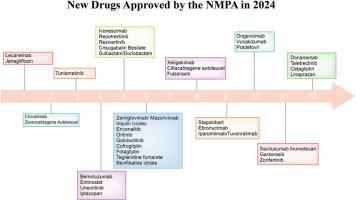
In 2024, the National Medical Products Administration (NMPA) approved 46 Class 1 or 1.1 innovative drugs, including 7 imported drugs and 39 domestically developed drugs, marking a new record in China's pharmaceutical innovation. These approvals encompassed 23 chemical drugs, 20 biological products, and 3 traditional Chinese medicines or natural products, demonstrating continuous growth in innovative drug development. Compared to 16 approvals in 2020 and the surge in 2021, when approvals equaled the total of the previous four years, the trend of increased approvals has resumed since 2024. Therapeutically, oncology drugs remained the dominant category in 2024, comprising 50 % (23/46) of approvals. Gastrointestinal and metabolic drugs, accounting for 13.04 % (6/46), surpassed other categories to rank second, followed by neurological drugs (8.7 %, 4/46). Anti-infectives, miscellaneous drugs, and traditional Chinese medicines each contributed three approvals (7.5 % each). Regulatory advancements played a significant role, with 18 drugs (39.13 %) approved via priority reviews, emergency reviews, or conditional approvals. This group included 9 chemical drugs and 9 biological products, with notable breakthrough therapies such as taletrectinib, lutetium monoclonal antibodies, and donanemab receiving special recognition. The 2024 data reflect China's growing capabilities in drug innovation and its commitment to addressing critical medical needs through accelerated regulatory pathways.
期刊介绍:
The European Journal of Medicinal Chemistry is a global journal that publishes studies on all aspects of medicinal chemistry. It provides a medium for publication of original papers and also welcomes critical review papers.
A typical paper would report on the organic synthesis, characterization and pharmacological evaluation of compounds. Other topics of interest are drug design, QSAR, molecular modeling, drug-receptor interactions, molecular aspects of drug metabolism, prodrug synthesis and drug targeting. The journal expects manuscripts to present the rational for a study, provide insight into the design of compounds or understanding of mechanism, or clarify the targets.




 京公网安备 11010802042870号
京ICP备2023020795号-1
京公网安备 11010802042870号
京ICP备2023020795号-1

 分享
分享
 求助内容:
求助内容: 应助结果提醒方式:
 扫码关注我们
