Haiyan Xu, Zhidan Wu, Pei Wang, Jili Gong, Li Qiu, Yueling Gu, Li Zhan, Fuyun Tian, Zhaobing Gao
{"title":"(+)-冰片通过药代动力学和药效学相互作用增强雷加滨的抗癫痫作用","authors":"Haiyan Xu, Zhidan Wu, Pei Wang, Jili Gong, Li Qiu, Yueling Gu, Li Zhan, Fuyun Tian, Zhaobing Gao","doi":"10.1007/s11064-025-04396-w","DOIUrl":null,"url":null,"abstract":"<div><p>Epilepsy is a chronic neurological disorder characterized by recurrent seizures, approximately one-third of whom are resistant to current anti-seizure drugs (ASDs). Retigabine (RTG) is a potential treatment for treating drug-resistant epilepsy and KCNQ2-related developmental and epileptic encephalopathy (KCNQ2-DEE). However, its use is limited by side effects from high doses and long-term use. This study aims to evaluate the anticonvulsant efficacy of RTG in combination with (+)-borneol in mouse models of maximal electroshock seizure (MES) and 6-Hz (44-mA) seizure. The individual anti-seizure efficacy of RTG and (+)-borneol was evaluated in the MES and 6-Hz seizure models, then isobolographic analysis was conducted to assess their interactions. The plasma and brain concentrations of RTG were measured with and without (+)-borneol. Electrophysiological experiments using the patch-clamp technique investigated the interactions of (+)-borneol and RTG at the α1β3γ2L-GABAAR and KCNQ2 channels. Both RTG and (+)-borneol exhibited anticonvulsant activity in MES and 6-Hz seizure models. In the isobolographic analysis, the co-administration of RTG and (+)-borneol proved to be significantly more effective than predicted based on additive effects. The ED50mix was reduced by approximately 20 to 100-fold and 2 to 6-fold compared to the ED50add in the MES and 6-Hz models, respectively. The plasma and brain levels of RTG increased following co-administration with higher doses of (+)-borneol. Patch-clamp studies indicated that both RTG and (+)-borneol positively modulated α1β3γ2L-GABAAR currents and showed additive effects. However, (+)-borneol inhibited the KCNQ2 current at 100 µM and did not enhance RTG activation on KCNQ2 channels at this concentration. These results demonstrate that (+)-borneol enhances the antiseizure effects of RTG by both pharmacokinetic and pharmacodynamic interaction and this approach may be clinically effective for patients with intractable seizures or KCNQ2-DEE.</p></div>","PeriodicalId":719,"journal":{"name":"Neurochemical Research","volume":"50 3","pages":""},"PeriodicalIF":3.8000,"publicationDate":"2025-04-19","publicationTypes":"Journal Article","fieldsOfStudy":null,"isOpenAccess":false,"openAccessPdf":"","citationCount":"0","resultStr":"{\"title\":\"(+)-Borneol Enhances the Antiseizure Effects of Retigabine by both Pharmacokinetic and Pharmacodynamic Interaction\",\"authors\":\"Haiyan Xu, Zhidan Wu, Pei Wang, Jili Gong, Li Qiu, Yueling Gu, Li Zhan, Fuyun Tian, Zhaobing Gao\",\"doi\":\"10.1007/s11064-025-04396-w\",\"DOIUrl\":null,\"url\":null,\"abstract\":\"<div><p>Epilepsy is a chronic neurological disorder characterized by recurrent seizures, approximately one-third of whom are resistant to current anti-seizure drugs (ASDs). Retigabine (RTG) is a potential treatment for treating drug-resistant epilepsy and KCNQ2-related developmental and epileptic encephalopathy (KCNQ2-DEE). However, its use is limited by side effects from high doses and long-term use. This study aims to evaluate the anticonvulsant efficacy of RTG in combination with (+)-borneol in mouse models of maximal electroshock seizure (MES) and 6-Hz (44-mA) seizure. The individual anti-seizure efficacy of RTG and (+)-borneol was evaluated in the MES and 6-Hz seizure models, then isobolographic analysis was conducted to assess their interactions. The plasma and brain concentrations of RTG were measured with and without (+)-borneol. Electrophysiological experiments using the patch-clamp technique investigated the interactions of (+)-borneol and RTG at the α1β3γ2L-GABAAR and KCNQ2 channels. Both RTG and (+)-borneol exhibited anticonvulsant activity in MES and 6-Hz seizure models. In the isobolographic analysis, the co-administration of RTG and (+)-borneol proved to be significantly more effective than predicted based on additive effects. The ED50mix was reduced by approximately 20 to 100-fold and 2 to 6-fold compared to the ED50add in the MES and 6-Hz models, respectively. The plasma and brain levels of RTG increased following co-administration with higher doses of (+)-borneol. Patch-clamp studies indicated that both RTG and (+)-borneol positively modulated α1β3γ2L-GABAAR currents and showed additive effects. However, (+)-borneol inhibited the KCNQ2 current at 100 µM and did not enhance RTG activation on KCNQ2 channels at this concentration. These results demonstrate that (+)-borneol enhances the antiseizure effects of RTG by both pharmacokinetic and pharmacodynamic interaction and this approach may be clinically effective for patients with intractable seizures or KCNQ2-DEE.</p></div>\",\"PeriodicalId\":719,\"journal\":{\"name\":\"Neurochemical Research\",\"volume\":\"50 3\",\"pages\":\"\"},\"PeriodicalIF\":3.8000,\"publicationDate\":\"2025-04-19\",\"publicationTypes\":\"Journal Article\",\"fieldsOfStudy\":null,\"isOpenAccess\":false,\"openAccessPdf\":\"\",\"citationCount\":\"0\",\"resultStr\":null,\"platform\":\"Semanticscholar\",\"paperid\":null,\"PeriodicalName\":\"Neurochemical Research\",\"FirstCategoryId\":\"3\",\"ListUrlMain\":\"https://link.springer.com/article/10.1007/s11064-025-04396-w\",\"RegionNum\":3,\"RegionCategory\":\"医学\",\"ArticlePicture\":[],\"TitleCN\":null,\"AbstractTextCN\":null,\"PMCID\":null,\"EPubDate\":\"\",\"PubModel\":\"\",\"JCR\":\"Q2\",\"JCRName\":\"BIOCHEMISTRY & MOLECULAR BIOLOGY\",\"Score\":null,\"Total\":0}","platform":"Semanticscholar","paperid":null,"PeriodicalName":"Neurochemical Research","FirstCategoryId":"3","ListUrlMain":"https://link.springer.com/article/10.1007/s11064-025-04396-w","RegionNum":3,"RegionCategory":"医学","ArticlePicture":[],"TitleCN":null,"AbstractTextCN":null,"PMCID":null,"EPubDate":"","PubModel":"","JCR":"Q2","JCRName":"BIOCHEMISTRY & MOLECULAR BIOLOGY","Score":null,"Total":0}
(+)-Borneol Enhances the Antiseizure Effects of Retigabine by both Pharmacokinetic and Pharmacodynamic Interaction
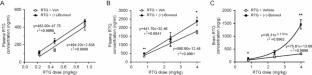
Epilepsy is a chronic neurological disorder characterized by recurrent seizures, approximately one-third of whom are resistant to current anti-seizure drugs (ASDs). Retigabine (RTG) is a potential treatment for treating drug-resistant epilepsy and KCNQ2-related developmental and epileptic encephalopathy (KCNQ2-DEE). However, its use is limited by side effects from high doses and long-term use. This study aims to evaluate the anticonvulsant efficacy of RTG in combination with (+)-borneol in mouse models of maximal electroshock seizure (MES) and 6-Hz (44-mA) seizure. The individual anti-seizure efficacy of RTG and (+)-borneol was evaluated in the MES and 6-Hz seizure models, then isobolographic analysis was conducted to assess their interactions. The plasma and brain concentrations of RTG were measured with and without (+)-borneol. Electrophysiological experiments using the patch-clamp technique investigated the interactions of (+)-borneol and RTG at the α1β3γ2L-GABAAR and KCNQ2 channels. Both RTG and (+)-borneol exhibited anticonvulsant activity in MES and 6-Hz seizure models. In the isobolographic analysis, the co-administration of RTG and (+)-borneol proved to be significantly more effective than predicted based on additive effects. The ED50mix was reduced by approximately 20 to 100-fold and 2 to 6-fold compared to the ED50add in the MES and 6-Hz models, respectively. The plasma and brain levels of RTG increased following co-administration with higher doses of (+)-borneol. Patch-clamp studies indicated that both RTG and (+)-borneol positively modulated α1β3γ2L-GABAAR currents and showed additive effects. However, (+)-borneol inhibited the KCNQ2 current at 100 µM and did not enhance RTG activation on KCNQ2 channels at this concentration. These results demonstrate that (+)-borneol enhances the antiseizure effects of RTG by both pharmacokinetic and pharmacodynamic interaction and this approach may be clinically effective for patients with intractable seizures or KCNQ2-DEE.
期刊介绍:
Neurochemical Research is devoted to the rapid publication of studies that use neurochemical methodology in research on nervous system structure and function. The journal publishes original reports of experimental and clinical research results, perceptive reviews of significant problem areas in the neurosciences, brief comments of a methodological or interpretive nature, and research summaries conducted by leading scientists whose works are not readily available in English.




 京公网安备 11010802042870号
京ICP备2023020795号-1
京公网安备 11010802042870号
京ICP备2023020795号-1

 分享
分享
 求助内容:
求助内容: 应助结果提醒方式:
 扫码关注我们
