{"title":"探讨几何误差耦合对圆形试验中方形误差辨识的影响","authors":"Sihan Yao , Lingtao Weng , Weiguo Gao , Wenjie Tian , Zhoujie Zhao , Dawei Zhang , Tian Huang","doi":"10.1016/j.mechmachtheory.2025.106045","DOIUrl":null,"url":null,"abstract":"<div><div>For circular tests, the measurement data are simultaneously affected by the coupling effect of position-dependent geometric errors (PDGEs) and squareness errors. Consequently, identification method that solely considers squareness errors struggle to accurately determine the true squareness error values. To address this issue and obtain the actual squareness error, the identification method considering the geometric error coupling effect is proposed. The PDGE values and the distance data of the geometric error coupling effect are obtained based on the multi-instrument measurement data fusion, enabling the establishment of a squareness error identification model that incorporates PDGEs. The validity of the identification results is corroborated through volumetric error prediction, yielding a maximum deviation of 18.9 µm between the predicted and measured volumetric errors. The prediction accuracies of the proposed method and Ballbar 20 software, characterized by the root-mean-square error between the predicted and measured volumetric errors, are 6.7 and 20.4 µm, respectively. This indicates that the proposed method prediction results are closer to the measured values. The proposed method mathematically elucidates the coupling effect of PDGEs and squareness errors for circular tests.</div></div>","PeriodicalId":49845,"journal":{"name":"Mechanism and Machine Theory","volume":"211 ","pages":"Article 106045"},"PeriodicalIF":4.5000,"publicationDate":"2025-09-01","publicationTypes":"Journal Article","fieldsOfStudy":null,"isOpenAccess":false,"openAccessPdf":"","citationCount":"0","resultStr":"{\"title\":\"Towards understanding the geometric error coupling effect on squareness error identification in circular tests\",\"authors\":\"Sihan Yao , Lingtao Weng , Weiguo Gao , Wenjie Tian , Zhoujie Zhao , Dawei Zhang , Tian Huang\",\"doi\":\"10.1016/j.mechmachtheory.2025.106045\",\"DOIUrl\":null,\"url\":null,\"abstract\":\"<div><div>For circular tests, the measurement data are simultaneously affected by the coupling effect of position-dependent geometric errors (PDGEs) and squareness errors. Consequently, identification method that solely considers squareness errors struggle to accurately determine the true squareness error values. To address this issue and obtain the actual squareness error, the identification method considering the geometric error coupling effect is proposed. The PDGE values and the distance data of the geometric error coupling effect are obtained based on the multi-instrument measurement data fusion, enabling the establishment of a squareness error identification model that incorporates PDGEs. The validity of the identification results is corroborated through volumetric error prediction, yielding a maximum deviation of 18.9 µm between the predicted and measured volumetric errors. The prediction accuracies of the proposed method and Ballbar 20 software, characterized by the root-mean-square error between the predicted and measured volumetric errors, are 6.7 and 20.4 µm, respectively. This indicates that the proposed method prediction results are closer to the measured values. The proposed method mathematically elucidates the coupling effect of PDGEs and squareness errors for circular tests.</div></div>\",\"PeriodicalId\":49845,\"journal\":{\"name\":\"Mechanism and Machine Theory\",\"volume\":\"211 \",\"pages\":\"Article 106045\"},\"PeriodicalIF\":4.5000,\"publicationDate\":\"2025-09-01\",\"publicationTypes\":\"Journal Article\",\"fieldsOfStudy\":null,\"isOpenAccess\":false,\"openAccessPdf\":\"\",\"citationCount\":\"0\",\"resultStr\":null,\"platform\":\"Semanticscholar\",\"paperid\":null,\"PeriodicalName\":\"Mechanism and Machine Theory\",\"FirstCategoryId\":\"5\",\"ListUrlMain\":\"https://www.sciencedirect.com/science/article/pii/S0094114X2500134X\",\"RegionNum\":1,\"RegionCategory\":\"工程技术\",\"ArticlePicture\":[],\"TitleCN\":null,\"AbstractTextCN\":null,\"PMCID\":null,\"EPubDate\":\"2025/4/23 0:00:00\",\"PubModel\":\"Epub\",\"JCR\":\"Q1\",\"JCRName\":\"ENGINEERING, MECHANICAL\",\"Score\":null,\"Total\":0}","platform":"Semanticscholar","paperid":null,"PeriodicalName":"Mechanism and Machine Theory","FirstCategoryId":"5","ListUrlMain":"https://www.sciencedirect.com/science/article/pii/S0094114X2500134X","RegionNum":1,"RegionCategory":"工程技术","ArticlePicture":[],"TitleCN":null,"AbstractTextCN":null,"PMCID":null,"EPubDate":"2025/4/23 0:00:00","PubModel":"Epub","JCR":"Q1","JCRName":"ENGINEERING, MECHANICAL","Score":null,"Total":0}
Towards understanding the geometric error coupling effect on squareness error identification in circular tests
For circular tests, the measurement data are simultaneously affected by the coupling effect of position-dependent geometric errors (PDGEs) and squareness errors. Consequently, identification method that solely considers squareness errors struggle to accurately determine the true squareness error values. To address this issue and obtain the actual squareness error, the identification method considering the geometric error coupling effect is proposed. The PDGE values and the distance data of the geometric error coupling effect are obtained based on the multi-instrument measurement data fusion, enabling the establishment of a squareness error identification model that incorporates PDGEs. The validity of the identification results is corroborated through volumetric error prediction, yielding a maximum deviation of 18.9 µm between the predicted and measured volumetric errors. The prediction accuracies of the proposed method and Ballbar 20 software, characterized by the root-mean-square error between the predicted and measured volumetric errors, are 6.7 and 20.4 µm, respectively. This indicates that the proposed method prediction results are closer to the measured values. The proposed method mathematically elucidates the coupling effect of PDGEs and squareness errors for circular tests.
期刊介绍:
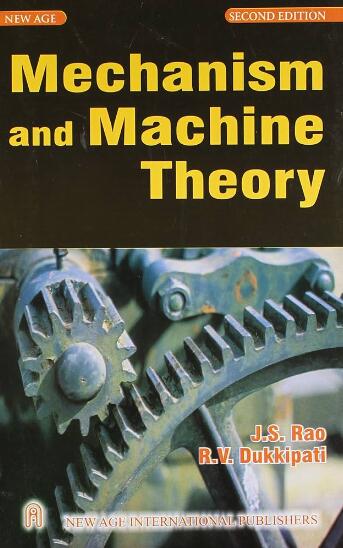
Mechanism and Machine Theory provides a medium of communication between engineers and scientists engaged in research and development within the fields of knowledge embraced by IFToMM, the International Federation for the Promotion of Mechanism and Machine Science, therefore affiliated with IFToMM as its official research journal.
The main topics are:
Design Theory and Methodology;
Haptics and Human-Machine-Interfaces;
Robotics, Mechatronics and Micro-Machines;
Mechanisms, Mechanical Transmissions and Machines;
Kinematics, Dynamics, and Control of Mechanical Systems;
Applications to Bioengineering and Molecular Chemistry





 京公网安备 11010802042870号
京ICP备2023020795号-1
京公网安备 11010802042870号
京ICP备2023020795号-1

 分享
分享
 求助内容:
求助内容: 应助结果提醒方式:
 扫码关注我们
