{"title":"MiR-10b通过靶向AKT降低胶质母细胞瘤细胞对辐射的敏感性。","authors":"Limin Zhen, Jian Li, Mingran Zhang, Kun Yang","doi":"10.1186/s40709-016-0051-x","DOIUrl":null,"url":null,"abstract":"<p><strong>Background: </strong>Glioblastomas are the most aggressive brain tumors with extremely poor prognosis despite advances in treatment techniques. MiR-10b is highly expressed in glioblastoma and regulates cell proliferation, migration and invasion. Here, we examined the role of MiR-10b on radiotherapy of glioblastomas.</p><p><strong>Methods: </strong>MiR-10b mimic or anti-MiR-10b inhibitor was transfected in glioblastoma cells. WST-1 assay was used to examine the effect of MiR-10b on proliferation of transfected glioblastoma cells after radiation treatment. Apoptosis was examined by caspase 3/7 activity and TUNEL assay. The western blot was used to evaluate protein expression.</p><p><strong>Results: </strong>Altered expression of MiR-10b changed the radiation-induced inhibitory effect on proliferation of glioblastoma cells with dose-dependent manner. MiR-10b decreased radiation-induced apoptosis in glioblastoma cells by activation of caspase 3/7 and inhibition Bcl-2 expression. MiR-10b enhances migration and invasion of glioblastoma cells in presence of radiation. In addition, MiR-10b decreased the sensitivity of glioblastoma cells to radiotherapy by activation of p-AKT expression.</p><p><strong>Conclusions: </strong>MiR-10b might be a potential biomarker to predict radiotherapy response and prognosis in glioblastomas.</p>","PeriodicalId":87292,"journal":{"name":"","volume":"23 ","pages":"14"},"PeriodicalIF":0.0,"publicationDate":"2016-06-24","publicationTypes":"Journal Article","fieldsOfStudy":null,"isOpenAccess":false,"openAccessPdf":"https://sci-hub-pdf.com/10.1186/s40709-016-0051-x","citationCount":"2","resultStr":"{\"title\":\"MiR-10b decreases sensitivity of glioblastoma cells to radiation by targeting AKT.\",\"authors\":\"Limin Zhen, Jian Li, Mingran Zhang, Kun Yang\",\"doi\":\"10.1186/s40709-016-0051-x\",\"DOIUrl\":null,\"url\":null,\"abstract\":\"<p><strong>Background: </strong>Glioblastomas are the most aggressive brain tumors with extremely poor prognosis despite advances in treatment techniques. MiR-10b is highly expressed in glioblastoma and regulates cell proliferation, migration and invasion. Here, we examined the role of MiR-10b on radiotherapy of glioblastomas.</p><p><strong>Methods: </strong>MiR-10b mimic or anti-MiR-10b inhibitor was transfected in glioblastoma cells. WST-1 assay was used to examine the effect of MiR-10b on proliferation of transfected glioblastoma cells after radiation treatment. Apoptosis was examined by caspase 3/7 activity and TUNEL assay. The western blot was used to evaluate protein expression.</p><p><strong>Results: </strong>Altered expression of MiR-10b changed the radiation-induced inhibitory effect on proliferation of glioblastoma cells with dose-dependent manner. MiR-10b decreased radiation-induced apoptosis in glioblastoma cells by activation of caspase 3/7 and inhibition Bcl-2 expression. MiR-10b enhances migration and invasion of glioblastoma cells in presence of radiation. In addition, MiR-10b decreased the sensitivity of glioblastoma cells to radiotherapy by activation of p-AKT expression.</p><p><strong>Conclusions: </strong>MiR-10b might be a potential biomarker to predict radiotherapy response and prognosis in glioblastomas.</p>\",\"PeriodicalId\":87292,\"journal\":{\"name\":\"\",\"volume\":\"23 \",\"pages\":\"14\"},\"PeriodicalIF\":0.0,\"publicationDate\":\"2016-06-24\",\"publicationTypes\":\"Journal Article\",\"fieldsOfStudy\":null,\"isOpenAccess\":false,\"openAccessPdf\":\"https://sci-hub-pdf.com/10.1186/s40709-016-0051-x\",\"citationCount\":\"2\",\"resultStr\":null,\"platform\":\"Semanticscholar\",\"paperid\":null,\"PeriodicalName\":\"\",\"FirstCategoryId\":\"99\",\"ListUrlMain\":\"https://doi.org/10.1186/s40709-016-0051-x\",\"RegionNum\":0,\"RegionCategory\":null,\"ArticlePicture\":[],\"TitleCN\":null,\"AbstractTextCN\":null,\"PMCID\":null,\"EPubDate\":\"2016/12/1 0:00:00\",\"PubModel\":\"eCollection\",\"JCR\":\"\",\"JCRName\":\"\",\"Score\":null,\"Total\":0}","platform":"Semanticscholar","paperid":null,"PeriodicalName":"","FirstCategoryId":"99","ListUrlMain":"https://doi.org/10.1186/s40709-016-0051-x","RegionNum":0,"RegionCategory":null,"ArticlePicture":[],"TitleCN":null,"AbstractTextCN":null,"PMCID":null,"EPubDate":"2016/12/1 0:00:00","PubModel":"eCollection","JCR":"","JCRName":"","Score":null,"Total":0}
MiR-10b decreases sensitivity of glioblastoma cells to radiation by targeting AKT.
Background: Glioblastomas are the most aggressive brain tumors with extremely poor prognosis despite advances in treatment techniques. MiR-10b is highly expressed in glioblastoma and regulates cell proliferation, migration and invasion. Here, we examined the role of MiR-10b on radiotherapy of glioblastomas.
Methods: MiR-10b mimic or anti-MiR-10b inhibitor was transfected in glioblastoma cells. WST-1 assay was used to examine the effect of MiR-10b on proliferation of transfected glioblastoma cells after radiation treatment. Apoptosis was examined by caspase 3/7 activity and TUNEL assay. The western blot was used to evaluate protein expression.
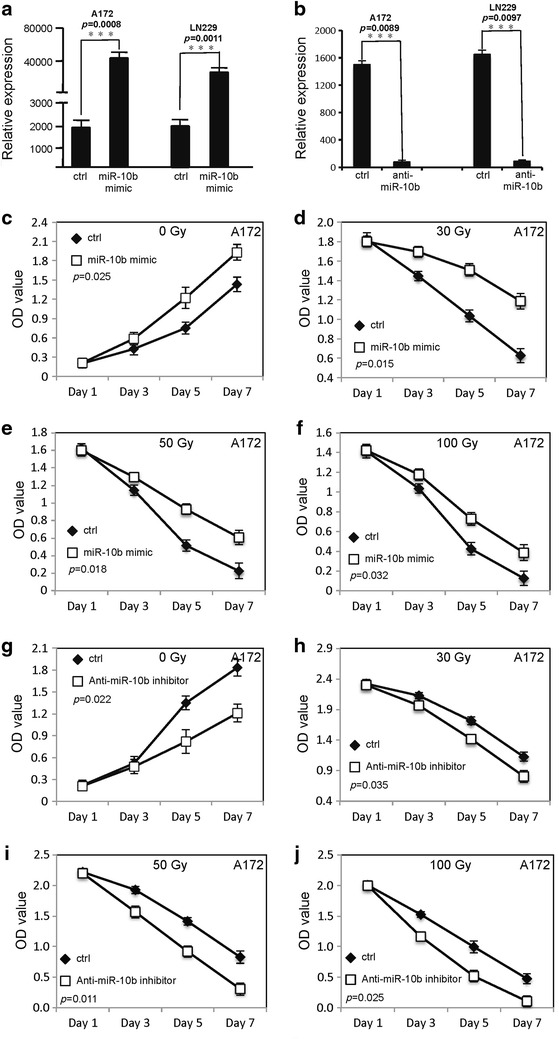
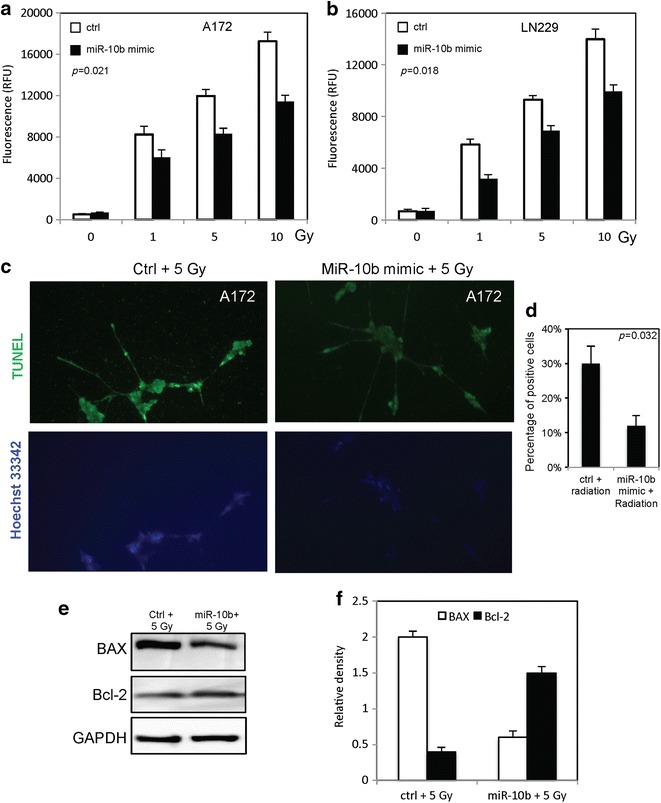
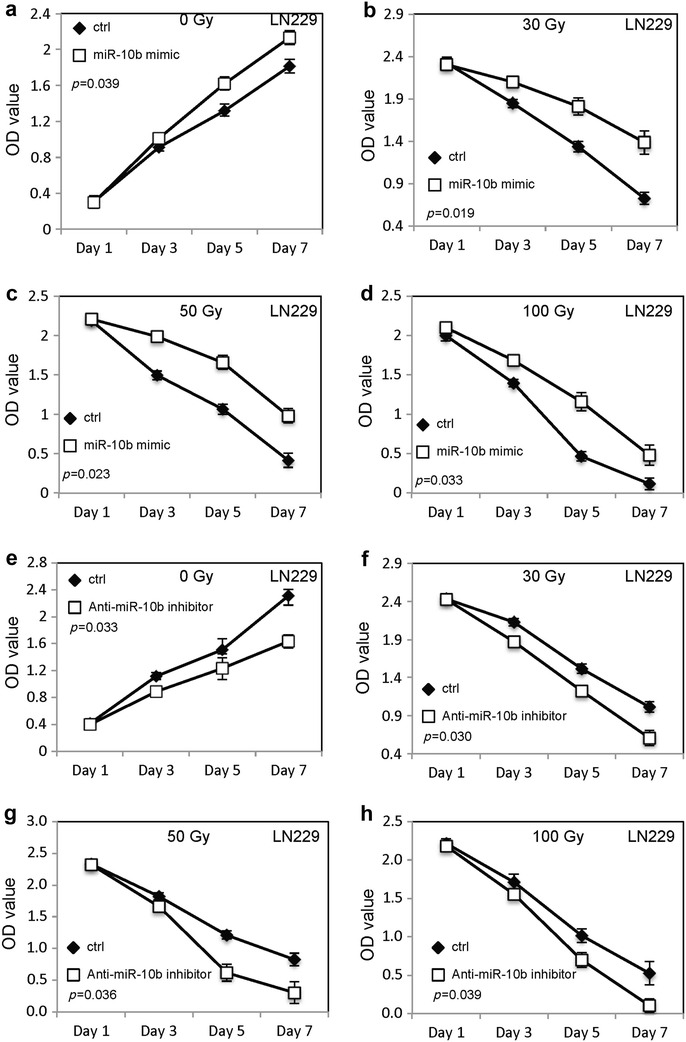
Results: Altered expression of MiR-10b changed the radiation-induced inhibitory effect on proliferation of glioblastoma cells with dose-dependent manner. MiR-10b decreased radiation-induced apoptosis in glioblastoma cells by activation of caspase 3/7 and inhibition Bcl-2 expression. MiR-10b enhances migration and invasion of glioblastoma cells in presence of radiation. In addition, MiR-10b decreased the sensitivity of glioblastoma cells to radiotherapy by activation of p-AKT expression.
Conclusions: MiR-10b might be a potential biomarker to predict radiotherapy response and prognosis in glioblastomas.



 京公网安备 11010802042870号
京ICP备2023020795号-1
京公网安备 11010802042870号
京ICP备2023020795号-1

 分享
分享
 求助内容:
求助内容: 应助结果提醒方式:
 扫码关注我们
