{"title":"向主观认知能力下降、认知正常的研究参与者披露淀粉样蛋白状态以了解阿尔茨海默病风险:一项纵向研究。","authors":"Taisei Wake, Hajime Tabuchi, Kei Funaki, Daisuke Ito, Bun Yamagata, Takahito Yoshizaki, Tadaki Nakahara, Masahiro Jinzaki, Haruo Yoshimasu, Iori Tanahashi, Hiroumi Shimazaki, Masaru Mimura","doi":"10.1177/1533317520904551","DOIUrl":null,"url":null,"abstract":"<p><p>This study aimed to investigate the long-term impacts of disclosing amyloid status for a risk of Alzheimer disease (AD) to cognitively normal research participants with subjective cognitive decline (SCD), which represents an initial manifestation of AD. Forty-two participants were classified as the amyloid-positive (<i>n</i> = 10) or amyloid-negative (<i>n</i> = 32) groups. We assessed symptoms of anxiety, depression, and test-related distress at 6, 24, and 52 weeks after results disclosure. No difference was found over time in anxiety, depression, and test-related distress in either group. Although no significant differences were observed between groups in anxiety or depression, the amyloid-negative group had a significantly higher level of test-related distress than the amyloid-positive group at 52 weeks. Disclosing amyloid status to cognitively healthy research participants with SCD did not cause significant long-term psychological risks. However, a theoretical spectrum of subjective concern may exist about cognitive decline in amyloid-negative individuals.</p>","PeriodicalId":2,"journal":{"name":"ACS Applied Bio Materials","volume":" ","pages":"1533317520904551"},"PeriodicalIF":4.7000,"publicationDate":"2020-01-01","publicationTypes":"Journal Article","fieldsOfStudy":null,"isOpenAccess":false,"openAccessPdf":"https://www.ncbi.nlm.nih.gov/pmc/articles/PMC10623980/pdf/","citationCount":"0","resultStr":"{\"title\":\"Disclosure of Amyloid Status for Risk of Alzheimer Disease to Cognitively Normal Research Participants With Subjective Cognitive Decline: A Longitudinal Study.\",\"authors\":\"Taisei Wake, Hajime Tabuchi, Kei Funaki, Daisuke Ito, Bun Yamagata, Takahito Yoshizaki, Tadaki Nakahara, Masahiro Jinzaki, Haruo Yoshimasu, Iori Tanahashi, Hiroumi Shimazaki, Masaru Mimura\",\"doi\":\"10.1177/1533317520904551\",\"DOIUrl\":null,\"url\":null,\"abstract\":\"<p><p>This study aimed to investigate the long-term impacts of disclosing amyloid status for a risk of Alzheimer disease (AD) to cognitively normal research participants with subjective cognitive decline (SCD), which represents an initial manifestation of AD. Forty-two participants were classified as the amyloid-positive (<i>n</i> = 10) or amyloid-negative (<i>n</i> = 32) groups. We assessed symptoms of anxiety, depression, and test-related distress at 6, 24, and 52 weeks after results disclosure. No difference was found over time in anxiety, depression, and test-related distress in either group. Although no significant differences were observed between groups in anxiety or depression, the amyloid-negative group had a significantly higher level of test-related distress than the amyloid-positive group at 52 weeks. Disclosing amyloid status to cognitively healthy research participants with SCD did not cause significant long-term psychological risks. However, a theoretical spectrum of subjective concern may exist about cognitive decline in amyloid-negative individuals.</p>\",\"PeriodicalId\":2,\"journal\":{\"name\":\"ACS Applied Bio Materials\",\"volume\":\" \",\"pages\":\"1533317520904551\"},\"PeriodicalIF\":4.7000,\"publicationDate\":\"2020-01-01\",\"publicationTypes\":\"Journal Article\",\"fieldsOfStudy\":null,\"isOpenAccess\":false,\"openAccessPdf\":\"https://www.ncbi.nlm.nih.gov/pmc/articles/PMC10623980/pdf/\",\"citationCount\":\"0\",\"resultStr\":null,\"platform\":\"Semanticscholar\",\"paperid\":null,\"PeriodicalName\":\"ACS Applied Bio Materials\",\"FirstCategoryId\":\"3\",\"ListUrlMain\":\"https://doi.org/10.1177/1533317520904551\",\"RegionNum\":0,\"RegionCategory\":null,\"ArticlePicture\":[],\"TitleCN\":null,\"AbstractTextCN\":null,\"PMCID\":null,\"EPubDate\":\"\",\"PubModel\":\"\",\"JCR\":\"Q2\",\"JCRName\":\"MATERIALS SCIENCE, BIOMATERIALS\",\"Score\":null,\"Total\":0}","platform":"Semanticscholar","paperid":null,"PeriodicalName":"ACS Applied Bio Materials","FirstCategoryId":"3","ListUrlMain":"https://doi.org/10.1177/1533317520904551","RegionNum":0,"RegionCategory":null,"ArticlePicture":[],"TitleCN":null,"AbstractTextCN":null,"PMCID":null,"EPubDate":"","PubModel":"","JCR":"Q2","JCRName":"MATERIALS SCIENCE, BIOMATERIALS","Score":null,"Total":0}
Disclosure of Amyloid Status for Risk of Alzheimer Disease to Cognitively Normal Research Participants With Subjective Cognitive Decline: A Longitudinal Study.
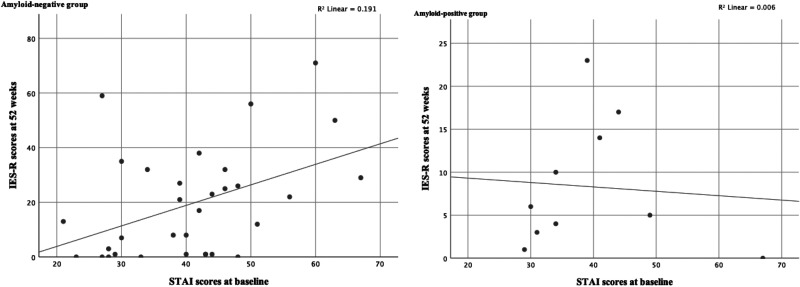
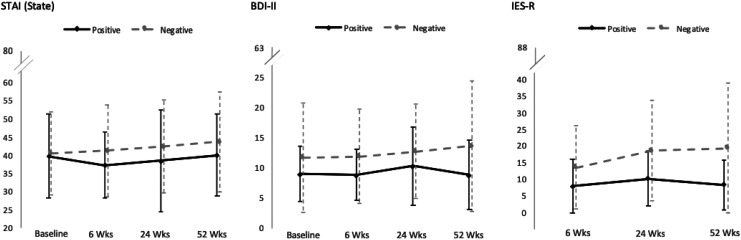
This study aimed to investigate the long-term impacts of disclosing amyloid status for a risk of Alzheimer disease (AD) to cognitively normal research participants with subjective cognitive decline (SCD), which represents an initial manifestation of AD. Forty-two participants were classified as the amyloid-positive (n = 10) or amyloid-negative (n = 32) groups. We assessed symptoms of anxiety, depression, and test-related distress at 6, 24, and 52 weeks after results disclosure. No difference was found over time in anxiety, depression, and test-related distress in either group. Although no significant differences were observed between groups in anxiety or depression, the amyloid-negative group had a significantly higher level of test-related distress than the amyloid-positive group at 52 weeks. Disclosing amyloid status to cognitively healthy research participants with SCD did not cause significant long-term psychological risks. However, a theoretical spectrum of subjective concern may exist about cognitive decline in amyloid-negative individuals.
期刊介绍:
ACS Applied Bio Materials is an interdisciplinary journal publishing original research covering all aspects of biomaterials and biointerfaces including and beyond the traditional biosensing, biomedical and therapeutic applications.
The journal is devoted to reports of new and original experimental and theoretical research of an applied nature that integrates knowledge in the areas of materials, engineering, physics, bioscience, and chemistry into important bio applications. The journal is specifically interested in work that addresses the relationship between structure and function and assesses the stability and degradation of materials under relevant environmental and biological conditions.






 京公网安备 11010802042870号
京ICP备2023020795号-1
京公网安备 11010802042870号
京ICP备2023020795号-1

 分享
分享
 求助内容:
求助内容: 应助结果提醒方式:
 扫码关注我们
