{"title":"使用定制模具对非黑色素瘤皮肤癌进行高剂量率近距离放射治疗--单中心经验。","authors":"Concetta Laliscia, Taiusha Fuentes, Natalina Coccia, Roberto Mattioni, Franco Perrone, Fabiola Paiar","doi":"10.5114/wo.2021.104688","DOIUrl":null,"url":null,"abstract":"<p><strong>Aim of the study: </strong>The aim of this retrospective study was to analyse tumour control, toxicity, and aesthetic outcome of patients affected by non-melanoma skin cancer (NMSC) treated with 192 Ir high-dose-rate (HDR)-brachytherapy (BT) at the Division of Radiotherapy, University of Pisa.</p><p><strong>Material and methods: </strong>From January 2014 to December 2019 we treated 37 patients (median age 79 years; range 31-91 years) affected by NMSC, with the following histological subtypes: 62.2% basal cell carcinoma and 37.8% squamous cell carcinoma. We analysed 40 lesions with a depth ≤ 5 mm, located in 40.0% scalp, 17.5% nose, 25.0% face, and 17.5% ear, all treated with 192 Ir-based HDR-BT, using tailored custom moulds, with a median of 5 catheters (range, 1-9) spaced 1 cm apart. The most common fractionation scheme was 40 Gy in 8 daily fractions; the biological effective dose was 60 Gy.</p><p><strong>Results: </strong>The median follow-up was 25 months (range, 3-70 months). The 2-year local control rate was 90%. Common terminology criteria for adverse event (CTCAE vs. 5.0) G1 toxicities were dermatitis (52%), pain (25%), and ulceration (22%). The only G2 acute toxicities were dermatitis and ulceration. The most common G1 late toxicities were fibrosis (17%), atrophy (15%), and hypopigmentation (12%). No G3 or higher acute or late toxicity was reported. Excellent cosmetic results were observed in 65.0% of the lesions; only 1 case (2.5%) reported a poor cosmetic result.</p><p><strong>Conclusions: </strong>Surface mould HDR-BT is a safe, effective, and well tolerated treatment modality for NMSC and can be considered a good alternative, especially for elderly patients who are often unfit for surgery.</p>","PeriodicalId":72699,"journal":{"name":"","volume":"25 1","pages":"12-16"},"PeriodicalIF":0.0,"publicationDate":"2021-01-01","publicationTypes":"Journal Article","fieldsOfStudy":null,"isOpenAccess":false,"openAccessPdf":"https://ftp.ncbi.nlm.nih.gov/pub/pmc/oa_pdf/4f/90/WO-25-43572.PMC8063903.pdf","citationCount":"0","resultStr":"{\"title\":\"High-dose-rate brachytherapy for non-melanoma skin cancer using tailored custom moulds - a single-centre experience.\",\"authors\":\"Concetta Laliscia, Taiusha Fuentes, Natalina Coccia, Roberto Mattioni, Franco Perrone, Fabiola Paiar\",\"doi\":\"10.5114/wo.2021.104688\",\"DOIUrl\":null,\"url\":null,\"abstract\":\"<p><strong>Aim of the study: </strong>The aim of this retrospective study was to analyse tumour control, toxicity, and aesthetic outcome of patients affected by non-melanoma skin cancer (NMSC) treated with 192 Ir high-dose-rate (HDR)-brachytherapy (BT) at the Division of Radiotherapy, University of Pisa.</p><p><strong>Material and methods: </strong>From January 2014 to December 2019 we treated 37 patients (median age 79 years; range 31-91 years) affected by NMSC, with the following histological subtypes: 62.2% basal cell carcinoma and 37.8% squamous cell carcinoma. We analysed 40 lesions with a depth ≤ 5 mm, located in 40.0% scalp, 17.5% nose, 25.0% face, and 17.5% ear, all treated with 192 Ir-based HDR-BT, using tailored custom moulds, with a median of 5 catheters (range, 1-9) spaced 1 cm apart. The most common fractionation scheme was 40 Gy in 8 daily fractions; the biological effective dose was 60 Gy.</p><p><strong>Results: </strong>The median follow-up was 25 months (range, 3-70 months). The 2-year local control rate was 90%. Common terminology criteria for adverse event (CTCAE vs. 5.0) G1 toxicities were dermatitis (52%), pain (25%), and ulceration (22%). The only G2 acute toxicities were dermatitis and ulceration. The most common G1 late toxicities were fibrosis (17%), atrophy (15%), and hypopigmentation (12%). No G3 or higher acute or late toxicity was reported. Excellent cosmetic results were observed in 65.0% of the lesions; only 1 case (2.5%) reported a poor cosmetic result.</p><p><strong>Conclusions: </strong>Surface mould HDR-BT is a safe, effective, and well tolerated treatment modality for NMSC and can be considered a good alternative, especially for elderly patients who are often unfit for surgery.</p>\",\"PeriodicalId\":72699,\"journal\":{\"name\":\"\",\"volume\":\"25 1\",\"pages\":\"12-16\"},\"PeriodicalIF\":0.0,\"publicationDate\":\"2021-01-01\",\"publicationTypes\":\"Journal Article\",\"fieldsOfStudy\":null,\"isOpenAccess\":false,\"openAccessPdf\":\"https://ftp.ncbi.nlm.nih.gov/pub/pmc/oa_pdf/4f/90/WO-25-43572.PMC8063903.pdf\",\"citationCount\":\"0\",\"resultStr\":null,\"platform\":\"Semanticscholar\",\"paperid\":null,\"PeriodicalName\":\"\",\"FirstCategoryId\":\"1085\",\"ListUrlMain\":\"https://doi.org/10.5114/wo.2021.104688\",\"RegionNum\":0,\"RegionCategory\":null,\"ArticlePicture\":[],\"TitleCN\":null,\"AbstractTextCN\":null,\"PMCID\":null,\"EPubDate\":\"2021/3/24 0:00:00\",\"PubModel\":\"Epub\",\"JCR\":\"\",\"JCRName\":\"\",\"Score\":null,\"Total\":0}","platform":"Semanticscholar","paperid":null,"PeriodicalName":"","FirstCategoryId":"1085","ListUrlMain":"https://doi.org/10.5114/wo.2021.104688","RegionNum":0,"RegionCategory":null,"ArticlePicture":[],"TitleCN":null,"AbstractTextCN":null,"PMCID":null,"EPubDate":"2021/3/24 0:00:00","PubModel":"Epub","JCR":"","JCRName":"","Score":null,"Total":0}
High-dose-rate brachytherapy for non-melanoma skin cancer using tailored custom moulds - a single-centre experience.
Aim of the study: The aim of this retrospective study was to analyse tumour control, toxicity, and aesthetic outcome of patients affected by non-melanoma skin cancer (NMSC) treated with 192 Ir high-dose-rate (HDR)-brachytherapy (BT) at the Division of Radiotherapy, University of Pisa.
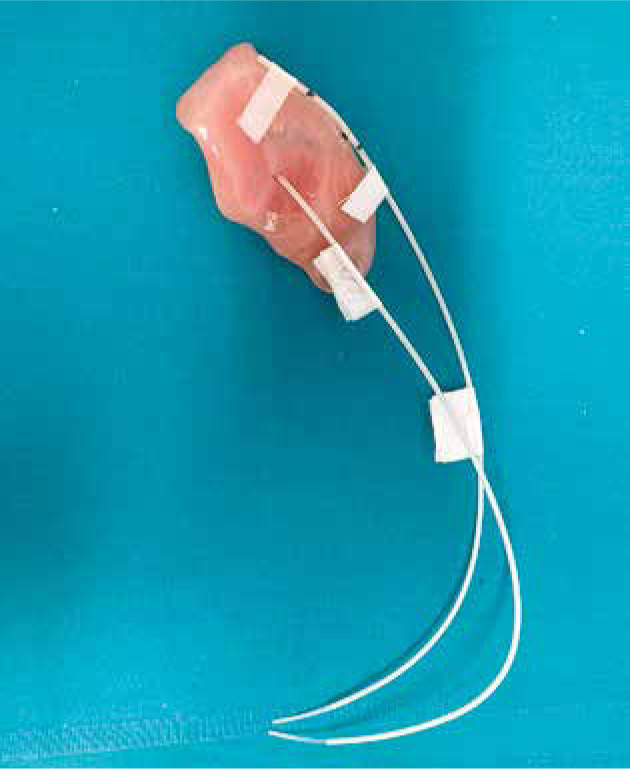
Material and methods: From January 2014 to December 2019 we treated 37 patients (median age 79 years; range 31-91 years) affected by NMSC, with the following histological subtypes: 62.2% basal cell carcinoma and 37.8% squamous cell carcinoma. We analysed 40 lesions with a depth ≤ 5 mm, located in 40.0% scalp, 17.5% nose, 25.0% face, and 17.5% ear, all treated with 192 Ir-based HDR-BT, using tailored custom moulds, with a median of 5 catheters (range, 1-9) spaced 1 cm apart. The most common fractionation scheme was 40 Gy in 8 daily fractions; the biological effective dose was 60 Gy.
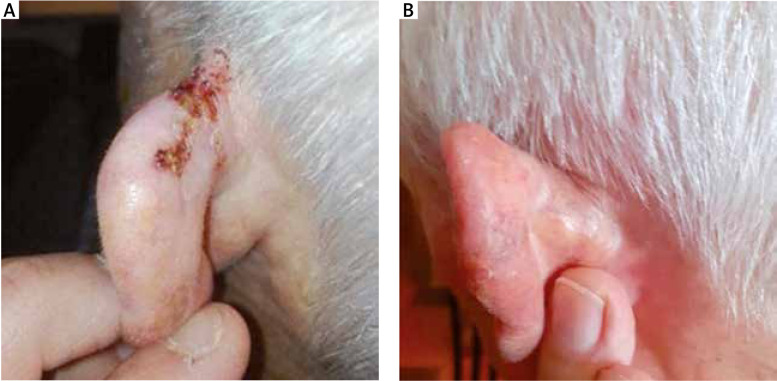
Results: The median follow-up was 25 months (range, 3-70 months). The 2-year local control rate was 90%. Common terminology criteria for adverse event (CTCAE vs. 5.0) G1 toxicities were dermatitis (52%), pain (25%), and ulceration (22%). The only G2 acute toxicities were dermatitis and ulceration. The most common G1 late toxicities were fibrosis (17%), atrophy (15%), and hypopigmentation (12%). No G3 or higher acute or late toxicity was reported. Excellent cosmetic results were observed in 65.0% of the lesions; only 1 case (2.5%) reported a poor cosmetic result.
Conclusions: Surface mould HDR-BT is a safe, effective, and well tolerated treatment modality for NMSC and can be considered a good alternative, especially for elderly patients who are often unfit for surgery.




 京公网安备 11010802042870号
京ICP备2023020795号-1
京公网安备 11010802042870号
京ICP备2023020795号-1

 分享
分享
 求助内容:
求助内容: 应助结果提醒方式:
 扫码关注我们
