Antonio Rampino, Rosa M Falcone, Arianna Giannuzzi, Rita Masellis, Linda A Antonucci, Silvia Torretta
{"title":"精神分裂症患者的精神康复策略及其认知结果:近五年研究综述。","authors":"Antonio Rampino, Rosa M Falcone, Arianna Giannuzzi, Rita Masellis, Linda A Antonucci, Silvia Torretta","doi":"10.2174/1745017902117010031","DOIUrl":null,"url":null,"abstract":"<p><strong>Background: </strong>Cognitive deficits are core features of Schizophrenia, showing poor response to antipsychotic treatment, therefore non-pharmacological rehabilitative approaches to such a symptom domain need to be identified. However, since not all patients with Schizophrenia exhibit the same cognitive impairment profile, individualized rehabilitative approaches should be set up.</p><p><strong>Objectives: </strong>We explored the last five-year literature addressing the issue of cognitive dysfunction response to rehabilitative methodologies in Schizophrenia to identify possible predictors of response and individualized strategies to treat such a dysfunction.</p><p><strong>Conclusion: </strong>A total of 76 studies were reviewed. Possible predictors of cognitive rehabilitation outcome were identified among patient-specific and approach-specific variables and a general overview of rehabilitative strategies used in the last five years has been depicted. Studies suggest the existence of multifaced and multi-domain variables that could significantly predict pro-cognitive effects of cognitive rehabilitation, which could also be useful for identifying individual-specific rehabilitation trajectories over time.An individualized rehabilitative approach to cognitive impairment in Schizophrenia is possible if taking into account both patient and approach specific predictors of outcomes.</p>","PeriodicalId":72621,"journal":{"name":"","volume":"17 ","pages":"31-47"},"PeriodicalIF":0.0,"publicationDate":"2021-05-24","publicationTypes":"Journal Article","fieldsOfStudy":null,"isOpenAccess":false,"openAccessPdf":"https://www.ncbi.nlm.nih.gov/pmc/articles/PMC8227533/pdf/","citationCount":"3","resultStr":"{\"title\":\"Strategies for Psychiatric Rehabilitation and their Cognitive Outcomes in Schizophrenia: Review of Last Five-year Studies.\",\"authors\":\"Antonio Rampino, Rosa M Falcone, Arianna Giannuzzi, Rita Masellis, Linda A Antonucci, Silvia Torretta\",\"doi\":\"10.2174/1745017902117010031\",\"DOIUrl\":null,\"url\":null,\"abstract\":\"<p><strong>Background: </strong>Cognitive deficits are core features of Schizophrenia, showing poor response to antipsychotic treatment, therefore non-pharmacological rehabilitative approaches to such a symptom domain need to be identified. However, since not all patients with Schizophrenia exhibit the same cognitive impairment profile, individualized rehabilitative approaches should be set up.</p><p><strong>Objectives: </strong>We explored the last five-year literature addressing the issue of cognitive dysfunction response to rehabilitative methodologies in Schizophrenia to identify possible predictors of response and individualized strategies to treat such a dysfunction.</p><p><strong>Conclusion: </strong>A total of 76 studies were reviewed. Possible predictors of cognitive rehabilitation outcome were identified among patient-specific and approach-specific variables and a general overview of rehabilitative strategies used in the last five years has been depicted. Studies suggest the existence of multifaced and multi-domain variables that could significantly predict pro-cognitive effects of cognitive rehabilitation, which could also be useful for identifying individual-specific rehabilitation trajectories over time.An individualized rehabilitative approach to cognitive impairment in Schizophrenia is possible if taking into account both patient and approach specific predictors of outcomes.</p>\",\"PeriodicalId\":72621,\"journal\":{\"name\":\"\",\"volume\":\"17 \",\"pages\":\"31-47\"},\"PeriodicalIF\":0.0,\"publicationDate\":\"2021-05-24\",\"publicationTypes\":\"Journal Article\",\"fieldsOfStudy\":null,\"isOpenAccess\":false,\"openAccessPdf\":\"https://www.ncbi.nlm.nih.gov/pmc/articles/PMC8227533/pdf/\",\"citationCount\":\"3\",\"resultStr\":null,\"platform\":\"Semanticscholar\",\"paperid\":null,\"PeriodicalName\":\"\",\"FirstCategoryId\":\"1085\",\"ListUrlMain\":\"https://doi.org/10.2174/1745017902117010031\",\"RegionNum\":0,\"RegionCategory\":null,\"ArticlePicture\":[],\"TitleCN\":null,\"AbstractTextCN\":null,\"PMCID\":null,\"EPubDate\":\"2021/1/1 0:00:00\",\"PubModel\":\"eCollection\",\"JCR\":\"\",\"JCRName\":\"\",\"Score\":null,\"Total\":0}","platform":"Semanticscholar","paperid":null,"PeriodicalName":"","FirstCategoryId":"1085","ListUrlMain":"https://doi.org/10.2174/1745017902117010031","RegionNum":0,"RegionCategory":null,"ArticlePicture":[],"TitleCN":null,"AbstractTextCN":null,"PMCID":null,"EPubDate":"2021/1/1 0:00:00","PubModel":"eCollection","JCR":"","JCRName":"","Score":null,"Total":0}
Strategies for Psychiatric Rehabilitation and their Cognitive Outcomes in Schizophrenia: Review of Last Five-year Studies.
Background: Cognitive deficits are core features of Schizophrenia, showing poor response to antipsychotic treatment, therefore non-pharmacological rehabilitative approaches to such a symptom domain need to be identified. However, since not all patients with Schizophrenia exhibit the same cognitive impairment profile, individualized rehabilitative approaches should be set up.
Objectives: We explored the last five-year literature addressing the issue of cognitive dysfunction response to rehabilitative methodologies in Schizophrenia to identify possible predictors of response and individualized strategies to treat such a dysfunction.
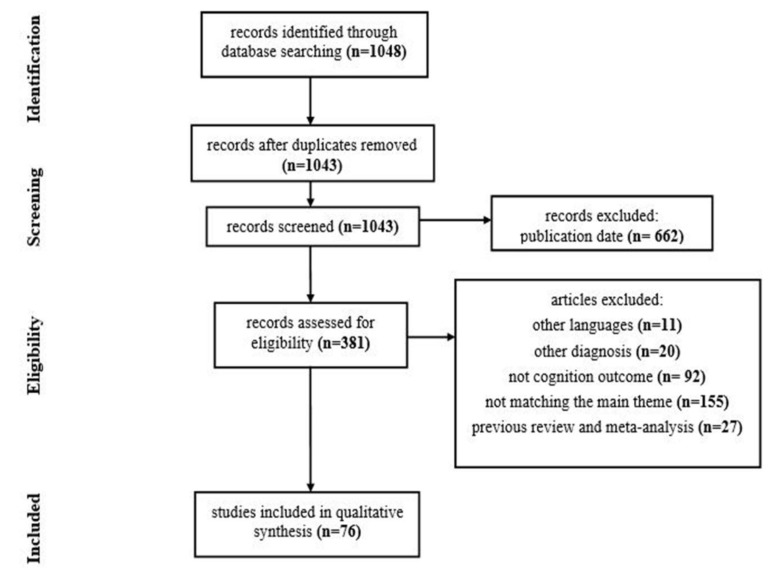
Conclusion: A total of 76 studies were reviewed. Possible predictors of cognitive rehabilitation outcome were identified among patient-specific and approach-specific variables and a general overview of rehabilitative strategies used in the last five years has been depicted. Studies suggest the existence of multifaced and multi-domain variables that could significantly predict pro-cognitive effects of cognitive rehabilitation, which could also be useful for identifying individual-specific rehabilitation trajectories over time.An individualized rehabilitative approach to cognitive impairment in Schizophrenia is possible if taking into account both patient and approach specific predictors of outcomes.




 京公网安备 11010802042870号
京ICP备2023020795号-1
京公网安备 11010802042870号
京ICP备2023020795号-1

 分享
分享
 求助内容:
求助内容: 应助结果提醒方式:
 扫码关注我们
