{"title":"撒哈拉以南非洲地区对痴呆症认识的挑战:对加纳在校学生进行的横断面调查。","authors":"Susanne Spittel, Elke Kraus, André Maier","doi":"10.1177/15333175211055315","DOIUrl":null,"url":null,"abstract":"<p><p>The survey focuses on identifying dementia awareness challenges among Ghanaian school students. Data were generated in a cross-sectional survey (n = 1137). 9.3% of school students showed dementia awareness whilst the community respondents, representing both higher age and level of education, showed greater awareness (32.2%, <i>P</i> < .001). 45% of respondents believed in witchcraft and 57% were afraid of potentially being harmed by witchcraft. Age and education did not influence people's belief in witchcraft. Moreover, dementia symptoms were often mistaken for witchcraft, especially by those who had encountered a person accused of witchcraft: \"swearing at others\" (24%), displaying \"memory loss\" and \"confused speech\" (22%), \"forgetfulness\" and who was seen \"roaming around\" (19%). Lack of dementia awareness was particularly evident among school students whereas belief in witchcraft was similar in both respondent groups. There was a correlation between low dementia awareness rates and misinterpretation of dementia symptoms with attribution to witchcraft.</p>","PeriodicalId":2,"journal":{"name":"ACS Applied Bio Materials","volume":" ","pages":"15333175211055315"},"PeriodicalIF":4.7000,"publicationDate":"2021-01-01","publicationTypes":"Journal Article","fieldsOfStudy":null,"isOpenAccess":false,"openAccessPdf":"https://www.ncbi.nlm.nih.gov/pmc/articles/PMC10581119/pdf/","citationCount":"0","resultStr":"{\"title\":\"Dementia Awareness Challenges in Sub-Saharan Africa: A Cross-Sectional Survey Conducted Among School Students in Ghana.\",\"authors\":\"Susanne Spittel, Elke Kraus, André Maier\",\"doi\":\"10.1177/15333175211055315\",\"DOIUrl\":null,\"url\":null,\"abstract\":\"<p><p>The survey focuses on identifying dementia awareness challenges among Ghanaian school students. Data were generated in a cross-sectional survey (n = 1137). 9.3% of school students showed dementia awareness whilst the community respondents, representing both higher age and level of education, showed greater awareness (32.2%, <i>P</i> < .001). 45% of respondents believed in witchcraft and 57% were afraid of potentially being harmed by witchcraft. Age and education did not influence people's belief in witchcraft. Moreover, dementia symptoms were often mistaken for witchcraft, especially by those who had encountered a person accused of witchcraft: \\\"swearing at others\\\" (24%), displaying \\\"memory loss\\\" and \\\"confused speech\\\" (22%), \\\"forgetfulness\\\" and who was seen \\\"roaming around\\\" (19%). Lack of dementia awareness was particularly evident among school students whereas belief in witchcraft was similar in both respondent groups. There was a correlation between low dementia awareness rates and misinterpretation of dementia symptoms with attribution to witchcraft.</p>\",\"PeriodicalId\":2,\"journal\":{\"name\":\"ACS Applied Bio Materials\",\"volume\":\" \",\"pages\":\"15333175211055315\"},\"PeriodicalIF\":4.7000,\"publicationDate\":\"2021-01-01\",\"publicationTypes\":\"Journal Article\",\"fieldsOfStudy\":null,\"isOpenAccess\":false,\"openAccessPdf\":\"https://www.ncbi.nlm.nih.gov/pmc/articles/PMC10581119/pdf/\",\"citationCount\":\"0\",\"resultStr\":null,\"platform\":\"Semanticscholar\",\"paperid\":null,\"PeriodicalName\":\"ACS Applied Bio Materials\",\"FirstCategoryId\":\"3\",\"ListUrlMain\":\"https://doi.org/10.1177/15333175211055315\",\"RegionNum\":0,\"RegionCategory\":null,\"ArticlePicture\":[],\"TitleCN\":null,\"AbstractTextCN\":null,\"PMCID\":null,\"EPubDate\":\"\",\"PubModel\":\"\",\"JCR\":\"Q2\",\"JCRName\":\"MATERIALS SCIENCE, BIOMATERIALS\",\"Score\":null,\"Total\":0}","platform":"Semanticscholar","paperid":null,"PeriodicalName":"ACS Applied Bio Materials","FirstCategoryId":"3","ListUrlMain":"https://doi.org/10.1177/15333175211055315","RegionNum":0,"RegionCategory":null,"ArticlePicture":[],"TitleCN":null,"AbstractTextCN":null,"PMCID":null,"EPubDate":"","PubModel":"","JCR":"Q2","JCRName":"MATERIALS SCIENCE, BIOMATERIALS","Score":null,"Total":0}
Dementia Awareness Challenges in Sub-Saharan Africa: A Cross-Sectional Survey Conducted Among School Students in Ghana.
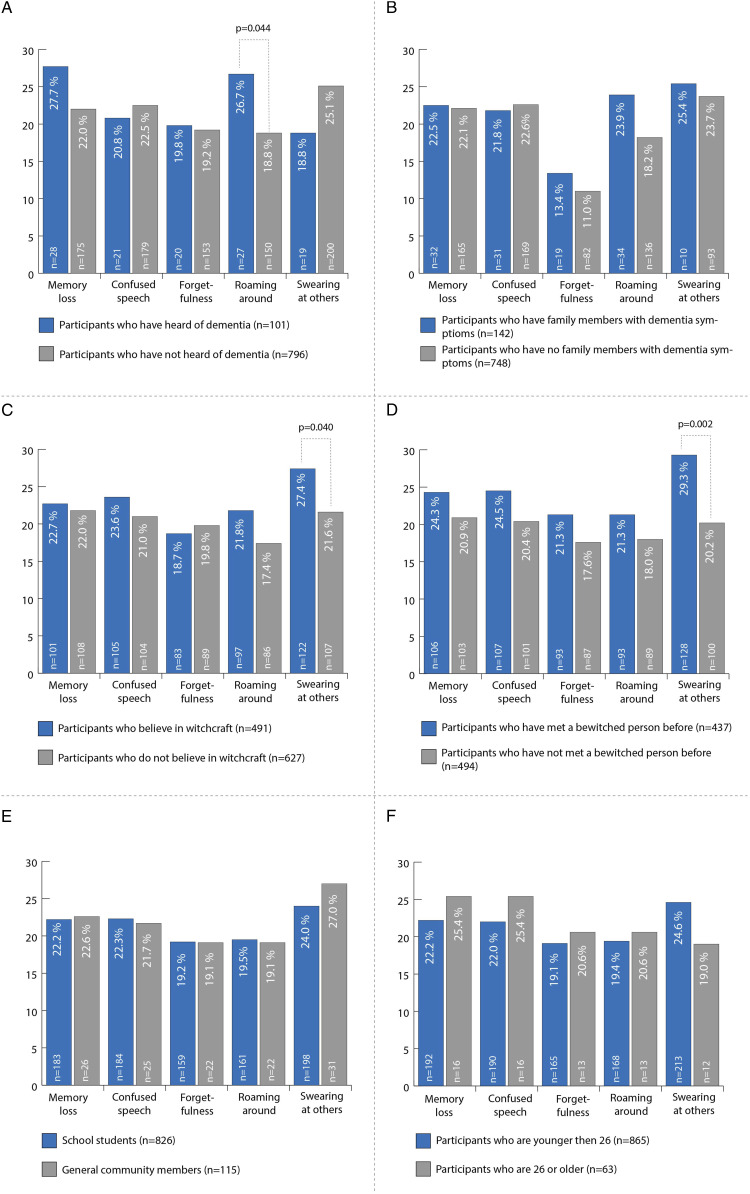
The survey focuses on identifying dementia awareness challenges among Ghanaian school students. Data were generated in a cross-sectional survey (n = 1137). 9.3% of school students showed dementia awareness whilst the community respondents, representing both higher age and level of education, showed greater awareness (32.2%, P < .001). 45% of respondents believed in witchcraft and 57% were afraid of potentially being harmed by witchcraft. Age and education did not influence people's belief in witchcraft. Moreover, dementia symptoms were often mistaken for witchcraft, especially by those who had encountered a person accused of witchcraft: "swearing at others" (24%), displaying "memory loss" and "confused speech" (22%), "forgetfulness" and who was seen "roaming around" (19%). Lack of dementia awareness was particularly evident among school students whereas belief in witchcraft was similar in both respondent groups. There was a correlation between low dementia awareness rates and misinterpretation of dementia symptoms with attribution to witchcraft.
期刊介绍:
ACS Applied Bio Materials is an interdisciplinary journal publishing original research covering all aspects of biomaterials and biointerfaces including and beyond the traditional biosensing, biomedical and therapeutic applications.
The journal is devoted to reports of new and original experimental and theoretical research of an applied nature that integrates knowledge in the areas of materials, engineering, physics, bioscience, and chemistry into important bio applications. The journal is specifically interested in work that addresses the relationship between structure and function and assesses the stability and degradation of materials under relevant environmental and biological conditions.






 京公网安备 11010802042870号
京ICP备2023020795号-1
京公网安备 11010802042870号
京ICP备2023020795号-1

 分享
分享
 求助内容:
求助内容: 应助结果提醒方式:
 扫码关注我们
