{"title":"有症状的透析通路相关Steal综合征患者远端流入翻修术的疗效。","authors":"Rashid Usman, Muhammad Jamil, Rabail Fatima, Minahil Mazhar, Shahid Majeed, Amna Shahab","doi":"10.3400/avd.oa.23-00043","DOIUrl":null,"url":null,"abstract":"<p><p><b>Objectives:</b> In this study, we aim to assess the efficacy of revision using distal inflow (RUDI) in patients with symptomatic dialysis access-associated steal syndrome (DASS). <b>Materials and Methods:</b> All consecutive patients who were diagnosed with grade 3 or 4 DASS and have undergone RUDI in 4 years were included in this study. <b>Results:</b> In total, 35 patients were included in this study; participants had a mean age of 47.5±7.52 years and 54% (n=19) were males. As per our findings, significant improvement was noted in terms of paresthesia (81.2%, p-value: 0.012), coolness (79.4%, p-value: 0.006), pain (78.1%, p-value: 0.006), discoloration (76.4%, p-value: 0.044), paresis (71.4%, p-value: 0.016), and ulcer healing (50%, p-value: 0.044). Gangrene did not further progress in all patients (n=35). Reduction in fistula flow rate after RUDI was 57.5% (682±121 ml/min, p-value: 0.001). Digital systolic pressure was noted to improve by 71.4% (60±9.2 mmHg, p-value: 0.002) after RUDI. Peak systolic velocity increased in both ulnar (66.1±8.2 cm/s, p-value: 0.04) and radial (64.2±7.6 cm/s, p-value: 0.024) arteries of the wrist. Cumulative patency of RUDI graft was 100%, 91.4%, and 85.7% at 3, 6, and 12 months, respectively. <b>Conclusion:</b> RUDI has resulted in significant improvements in terms of DASS symptoms. Using a native vein as conduit, RUDI should be considered a procedure of choice for patients with high-flow DASS.</p>","PeriodicalId":7995,"journal":{"name":"Annals of vascular diseases","volume":"16 3","pages":"205-209"},"PeriodicalIF":0.5000,"publicationDate":"2023-09-25","publicationTypes":"Journal Article","fieldsOfStudy":null,"isOpenAccess":false,"openAccessPdf":"https://ftp.ncbi.nlm.nih.gov/pub/pmc/oa_pdf/2e/df/avd-16-3-oa.23-00043.PMC10539131.pdf","citationCount":"0","resultStr":"{\"title\":\"Efficacy of Revision Using Distal Inflow in Patients with Symptomatic Dialysis Access-Associated Steal Syndrome.\",\"authors\":\"Rashid Usman, Muhammad Jamil, Rabail Fatima, Minahil Mazhar, Shahid Majeed, Amna Shahab\",\"doi\":\"10.3400/avd.oa.23-00043\",\"DOIUrl\":null,\"url\":null,\"abstract\":\"<p><p><b>Objectives:</b> In this study, we aim to assess the efficacy of revision using distal inflow (RUDI) in patients with symptomatic dialysis access-associated steal syndrome (DASS). <b>Materials and Methods:</b> All consecutive patients who were diagnosed with grade 3 or 4 DASS and have undergone RUDI in 4 years were included in this study. <b>Results:</b> In total, 35 patients were included in this study; participants had a mean age of 47.5±7.52 years and 54% (n=19) were males. As per our findings, significant improvement was noted in terms of paresthesia (81.2%, p-value: 0.012), coolness (79.4%, p-value: 0.006), pain (78.1%, p-value: 0.006), discoloration (76.4%, p-value: 0.044), paresis (71.4%, p-value: 0.016), and ulcer healing (50%, p-value: 0.044). Gangrene did not further progress in all patients (n=35). Reduction in fistula flow rate after RUDI was 57.5% (682±121 ml/min, p-value: 0.001). Digital systolic pressure was noted to improve by 71.4% (60±9.2 mmHg, p-value: 0.002) after RUDI. Peak systolic velocity increased in both ulnar (66.1±8.2 cm/s, p-value: 0.04) and radial (64.2±7.6 cm/s, p-value: 0.024) arteries of the wrist. Cumulative patency of RUDI graft was 100%, 91.4%, and 85.7% at 3, 6, and 12 months, respectively. <b>Conclusion:</b> RUDI has resulted in significant improvements in terms of DASS symptoms. Using a native vein as conduit, RUDI should be considered a procedure of choice for patients with high-flow DASS.</p>\",\"PeriodicalId\":7995,\"journal\":{\"name\":\"Annals of vascular diseases\",\"volume\":\"16 3\",\"pages\":\"205-209\"},\"PeriodicalIF\":0.5000,\"publicationDate\":\"2023-09-25\",\"publicationTypes\":\"Journal Article\",\"fieldsOfStudy\":null,\"isOpenAccess\":false,\"openAccessPdf\":\"https://ftp.ncbi.nlm.nih.gov/pub/pmc/oa_pdf/2e/df/avd-16-3-oa.23-00043.PMC10539131.pdf\",\"citationCount\":\"0\",\"resultStr\":null,\"platform\":\"Semanticscholar\",\"paperid\":null,\"PeriodicalName\":\"Annals of vascular diseases\",\"FirstCategoryId\":\"1085\",\"ListUrlMain\":\"https://doi.org/10.3400/avd.oa.23-00043\",\"RegionNum\":0,\"RegionCategory\":null,\"ArticlePicture\":[],\"TitleCN\":null,\"AbstractTextCN\":null,\"PMCID\":null,\"EPubDate\":\"\",\"PubModel\":\"\",\"JCR\":\"Q4\",\"JCRName\":\"PERIPHERAL VASCULAR DISEASE\",\"Score\":null,\"Total\":0}","platform":"Semanticscholar","paperid":null,"PeriodicalName":"Annals of vascular diseases","FirstCategoryId":"1085","ListUrlMain":"https://doi.org/10.3400/avd.oa.23-00043","RegionNum":0,"RegionCategory":null,"ArticlePicture":[],"TitleCN":null,"AbstractTextCN":null,"PMCID":null,"EPubDate":"","PubModel":"","JCR":"Q4","JCRName":"PERIPHERAL VASCULAR DISEASE","Score":null,"Total":0}
Efficacy of Revision Using Distal Inflow in Patients with Symptomatic Dialysis Access-Associated Steal Syndrome.
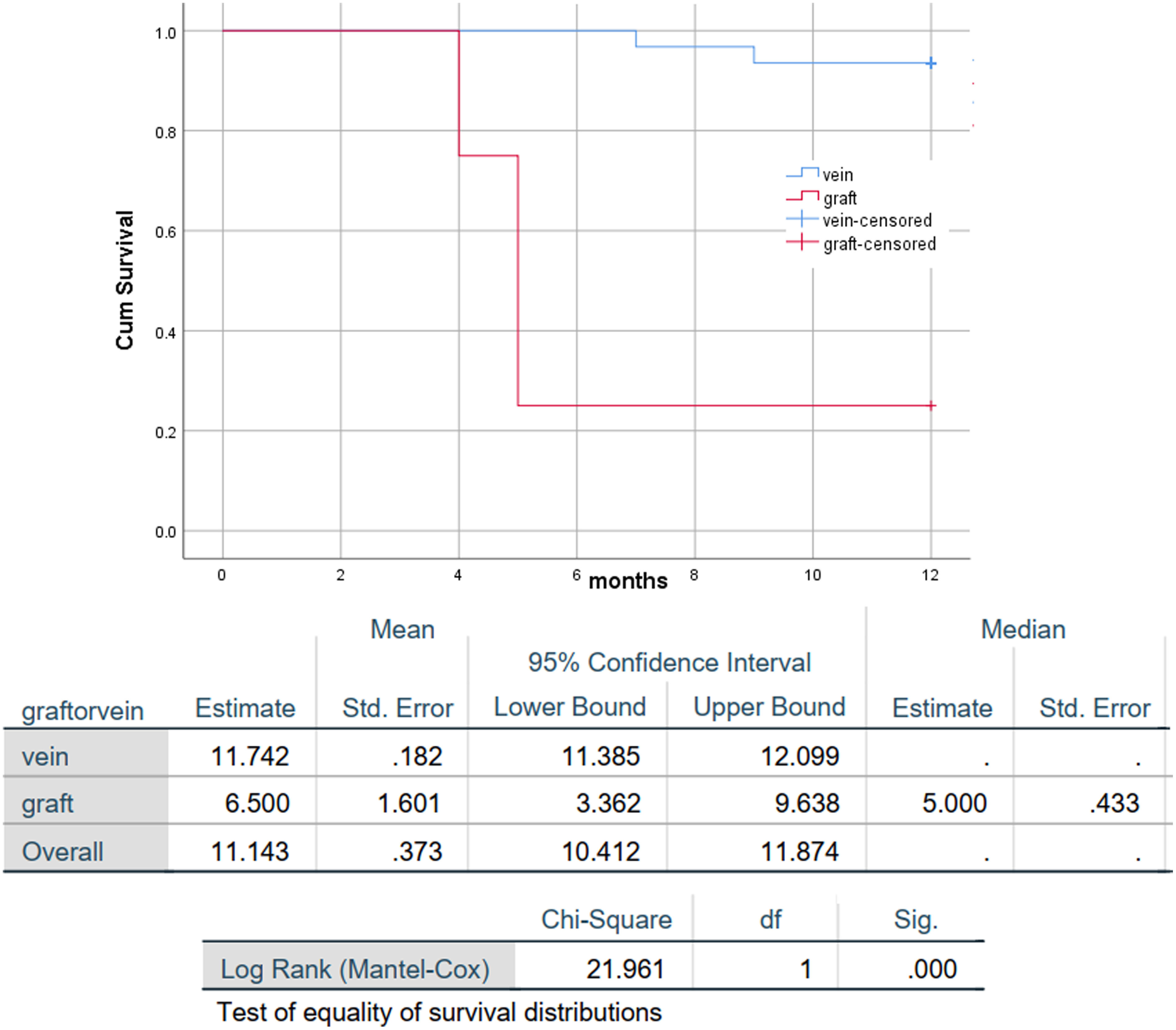
Objectives: In this study, we aim to assess the efficacy of revision using distal inflow (RUDI) in patients with symptomatic dialysis access-associated steal syndrome (DASS). Materials and Methods: All consecutive patients who were diagnosed with grade 3 or 4 DASS and have undergone RUDI in 4 years were included in this study. Results: In total, 35 patients were included in this study; participants had a mean age of 47.5±7.52 years and 54% (n=19) were males. As per our findings, significant improvement was noted in terms of paresthesia (81.2%, p-value: 0.012), coolness (79.4%, p-value: 0.006), pain (78.1%, p-value: 0.006), discoloration (76.4%, p-value: 0.044), paresis (71.4%, p-value: 0.016), and ulcer healing (50%, p-value: 0.044). Gangrene did not further progress in all patients (n=35). Reduction in fistula flow rate after RUDI was 57.5% (682±121 ml/min, p-value: 0.001). Digital systolic pressure was noted to improve by 71.4% (60±9.2 mmHg, p-value: 0.002) after RUDI. Peak systolic velocity increased in both ulnar (66.1±8.2 cm/s, p-value: 0.04) and radial (64.2±7.6 cm/s, p-value: 0.024) arteries of the wrist. Cumulative patency of RUDI graft was 100%, 91.4%, and 85.7% at 3, 6, and 12 months, respectively. Conclusion: RUDI has resulted in significant improvements in terms of DASS symptoms. Using a native vein as conduit, RUDI should be considered a procedure of choice for patients with high-flow DASS.





 京公网安备 11010802042870号
京ICP备2023020795号-1
京公网安备 11010802042870号
京ICP备2023020795号-1

 分享
分享
 求助内容:
求助内容: 应助结果提醒方式:
 扫码关注我们
