Briana S Last, Christina Johnson, Natalie Dallard, Sara Fernandez-Marcote, Arturo Zinny, Kamilah Jackson, Lauren Cliggitt, Brittany N Rudd, Chynna Mills, Rinad S Beidas
{"title":"在费城实施以创伤为重点的认知行为疗法:10年评估。","authors":"Briana S Last, Christina Johnson, Natalie Dallard, Sara Fernandez-Marcote, Arturo Zinny, Kamilah Jackson, Lauren Cliggitt, Brittany N Rudd, Chynna Mills, Rinad S Beidas","doi":"10.1177/26334895231199467","DOIUrl":null,"url":null,"abstract":"<p><p><b>Background:</b> In 2012, Philadelphia's Department of Behavioral Health and Intellectual disAbility Services (DBHIDS) developed an initiative to implement an evidence-based treatment for posttraumatic stress disorder (PTSD), trauma-focused cognitive behavioral therapy (TF-CBT), across the city's behavioral health system. This report evaluates the initiative's 10-year implementation and effectiveness outcomes. <b>Method:</b> The Exploration, Preparation, Implementation, and Sustainment framework guided our implementation evaluation. The implementation outcomes include adoption, reach, and sustainment; these were obtained during regular evaluation data collection from publicly funded behavioral health agencies participating in the TF-CBT initiative. We analyze effectiveness outcomes (i.e., changes in PTSD symptoms) from a subset of patients receiving TF-CBT, which were collected in 6-month intervals by our research team between 2013 and 2021. <b>Results:</b> From 2012 to 2021, DBHIDS trained 478 clinicians in TF-CBT across 20 behavioral health agencies. During this time, 23,401 youths were screened for potentially traumatic events and PTSD symptoms, and 7,550 youths received TF-CBT. Through the TF-CBT initiative, the city expanded the network of TF-CBT providers from 3 to 20 agencies. DBHIDS sustained this network by maintaining the participation of 16 behavioral health agencies over the course of a decade. The subset of 202 youths who were evaluated to assess TF-CBT effectiveness was drawn from 94 therapists and 20 agencies across Philadelphia. All participating youths completed a baseline assessment, and 151 (75%) completed at least one follow-up assessment. Linear mixed-effects models accounting for observations nested within participants and nested within clinicians found that treatment significantly reduced PTSD symptoms. <b>Conclusion:</b> Between 2012 and 2021, DBHIDS successfully implemented and sustained TF-CBT across the city's behavioral health system. Adoption, reach, and sustainment of TF-CBT were high. Despite the considerable adverse experiences faced by youths seeking treatment in Philadelphia's behavioral health system, TF-CBT was effective. Future directions to improve TF-CBT implementation in the next iteration of the initiative are described.</p>","PeriodicalId":73354,"journal":{"name":"Implementation research and practice","volume":"4 ","pages":"26334895231199467"},"PeriodicalIF":2.2000,"publicationDate":"2023-09-11","publicationTypes":"Journal Article","fieldsOfStudy":null,"isOpenAccess":false,"openAccessPdf":"https://ftp.ncbi.nlm.nih.gov/pub/pmc/oa_pdf/5b/b1/10.1177_26334895231199467.PMC10496473.pdf","citationCount":"0","resultStr":"{\"title\":\"Implementing trauma-focused cognitive behavioral therapy in Philadelphia: A 10-year evaluation.\",\"authors\":\"Briana S Last, Christina Johnson, Natalie Dallard, Sara Fernandez-Marcote, Arturo Zinny, Kamilah Jackson, Lauren Cliggitt, Brittany N Rudd, Chynna Mills, Rinad S Beidas\",\"doi\":\"10.1177/26334895231199467\",\"DOIUrl\":null,\"url\":null,\"abstract\":\"<p><p><b>Background:</b> In 2012, Philadelphia's Department of Behavioral Health and Intellectual disAbility Services (DBHIDS) developed an initiative to implement an evidence-based treatment for posttraumatic stress disorder (PTSD), trauma-focused cognitive behavioral therapy (TF-CBT), across the city's behavioral health system. This report evaluates the initiative's 10-year implementation and effectiveness outcomes. <b>Method:</b> The Exploration, Preparation, Implementation, and Sustainment framework guided our implementation evaluation. The implementation outcomes include adoption, reach, and sustainment; these were obtained during regular evaluation data collection from publicly funded behavioral health agencies participating in the TF-CBT initiative. We analyze effectiveness outcomes (i.e., changes in PTSD symptoms) from a subset of patients receiving TF-CBT, which were collected in 6-month intervals by our research team between 2013 and 2021. <b>Results:</b> From 2012 to 2021, DBHIDS trained 478 clinicians in TF-CBT across 20 behavioral health agencies. During this time, 23,401 youths were screened for potentially traumatic events and PTSD symptoms, and 7,550 youths received TF-CBT. Through the TF-CBT initiative, the city expanded the network of TF-CBT providers from 3 to 20 agencies. DBHIDS sustained this network by maintaining the participation of 16 behavioral health agencies over the course of a decade. The subset of 202 youths who were evaluated to assess TF-CBT effectiveness was drawn from 94 therapists and 20 agencies across Philadelphia. All participating youths completed a baseline assessment, and 151 (75%) completed at least one follow-up assessment. Linear mixed-effects models accounting for observations nested within participants and nested within clinicians found that treatment significantly reduced PTSD symptoms. <b>Conclusion:</b> Between 2012 and 2021, DBHIDS successfully implemented and sustained TF-CBT across the city's behavioral health system. Adoption, reach, and sustainment of TF-CBT were high. Despite the considerable adverse experiences faced by youths seeking treatment in Philadelphia's behavioral health system, TF-CBT was effective. Future directions to improve TF-CBT implementation in the next iteration of the initiative are described.</p>\",\"PeriodicalId\":73354,\"journal\":{\"name\":\"Implementation research and practice\",\"volume\":\"4 \",\"pages\":\"26334895231199467\"},\"PeriodicalIF\":2.2000,\"publicationDate\":\"2023-09-11\",\"publicationTypes\":\"Journal Article\",\"fieldsOfStudy\":null,\"isOpenAccess\":false,\"openAccessPdf\":\"https://ftp.ncbi.nlm.nih.gov/pub/pmc/oa_pdf/5b/b1/10.1177_26334895231199467.PMC10496473.pdf\",\"citationCount\":\"0\",\"resultStr\":null,\"platform\":\"Semanticscholar\",\"paperid\":null,\"PeriodicalName\":\"Implementation research and practice\",\"FirstCategoryId\":\"1085\",\"ListUrlMain\":\"https://doi.org/10.1177/26334895231199467\",\"RegionNum\":0,\"RegionCategory\":null,\"ArticlePicture\":[],\"TitleCN\":null,\"AbstractTextCN\":null,\"PMCID\":null,\"EPubDate\":\"2023/1/1 0:00:00\",\"PubModel\":\"eCollection\",\"JCR\":\"\",\"JCRName\":\"\",\"Score\":null,\"Total\":0}","platform":"Semanticscholar","paperid":null,"PeriodicalName":"Implementation research and practice","FirstCategoryId":"1085","ListUrlMain":"https://doi.org/10.1177/26334895231199467","RegionNum":0,"RegionCategory":null,"ArticlePicture":[],"TitleCN":null,"AbstractTextCN":null,"PMCID":null,"EPubDate":"2023/1/1 0:00:00","PubModel":"eCollection","JCR":"","JCRName":"","Score":null,"Total":0}
Implementing trauma-focused cognitive behavioral therapy in Philadelphia: A 10-year evaluation.
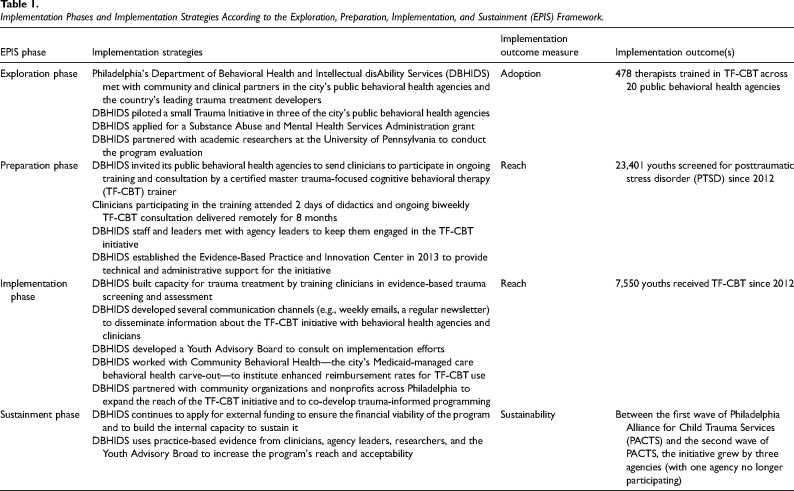
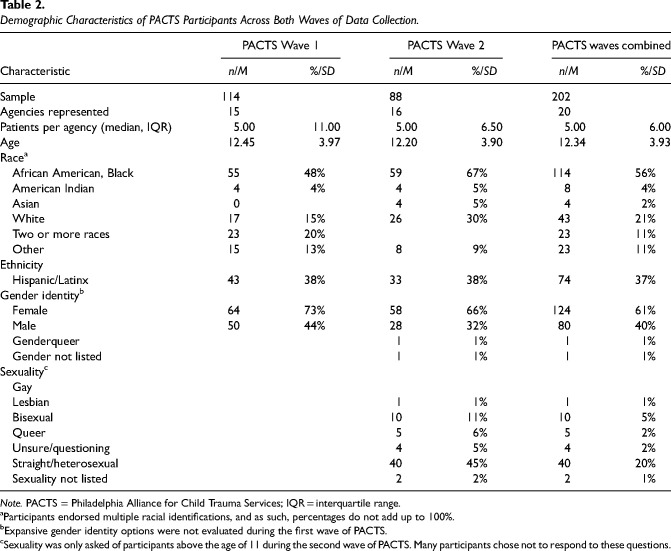
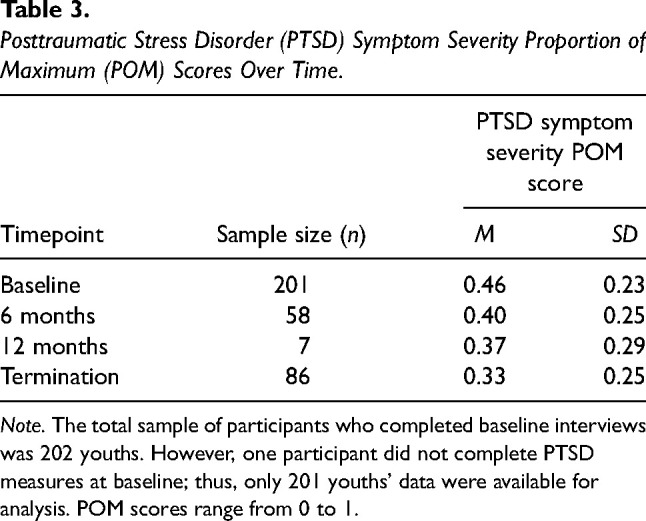
Background: In 2012, Philadelphia's Department of Behavioral Health and Intellectual disAbility Services (DBHIDS) developed an initiative to implement an evidence-based treatment for posttraumatic stress disorder (PTSD), trauma-focused cognitive behavioral therapy (TF-CBT), across the city's behavioral health system. This report evaluates the initiative's 10-year implementation and effectiveness outcomes. Method: The Exploration, Preparation, Implementation, and Sustainment framework guided our implementation evaluation. The implementation outcomes include adoption, reach, and sustainment; these were obtained during regular evaluation data collection from publicly funded behavioral health agencies participating in the TF-CBT initiative. We analyze effectiveness outcomes (i.e., changes in PTSD symptoms) from a subset of patients receiving TF-CBT, which were collected in 6-month intervals by our research team between 2013 and 2021. Results: From 2012 to 2021, DBHIDS trained 478 clinicians in TF-CBT across 20 behavioral health agencies. During this time, 23,401 youths were screened for potentially traumatic events and PTSD symptoms, and 7,550 youths received TF-CBT. Through the TF-CBT initiative, the city expanded the network of TF-CBT providers from 3 to 20 agencies. DBHIDS sustained this network by maintaining the participation of 16 behavioral health agencies over the course of a decade. The subset of 202 youths who were evaluated to assess TF-CBT effectiveness was drawn from 94 therapists and 20 agencies across Philadelphia. All participating youths completed a baseline assessment, and 151 (75%) completed at least one follow-up assessment. Linear mixed-effects models accounting for observations nested within participants and nested within clinicians found that treatment significantly reduced PTSD symptoms. Conclusion: Between 2012 and 2021, DBHIDS successfully implemented and sustained TF-CBT across the city's behavioral health system. Adoption, reach, and sustainment of TF-CBT were high. Despite the considerable adverse experiences faced by youths seeking treatment in Philadelphia's behavioral health system, TF-CBT was effective. Future directions to improve TF-CBT implementation in the next iteration of the initiative are described.




 京公网安备 11010802042870号
京ICP备2023020795号-1
京公网安备 11010802042870号
京ICP备2023020795号-1

 分享
分享

 求助内容:
求助内容: 应助结果提醒方式:
 扫码关注我们
