Philip R Crain, Jamilyn M Zepp, Sara Gille, Lindsay Jenkins, Tia L Kauffman, Elizabeth Shuster, Katrina A B Goddard, Benjamin S Wilfond, Jessica Ezzell Hunter
{"title":"在综合医疗保健系统中使用通用肿瘤筛查程序识别Lynch综合征患者","authors":"Philip R Crain, Jamilyn M Zepp, Sara Gille, Lindsay Jenkins, Tia L Kauffman, Elizabeth Shuster, Katrina A B Goddard, Benjamin S Wilfond, Jessica Ezzell Hunter","doi":"10.1186/s13053-022-00217-1","DOIUrl":null,"url":null,"abstract":"<p><strong>Introduction: </strong>Lynch syndrome (LS) is associated with an increased risk of colorectal (CRC) and endometrial (EC) cancers. Universal tumor screening (UTS) of all individuals diagnosed with CRC and EC is recommended to increase identification of LS. Kaiser Permanente Northwest (KPNW) implemented a UTS program for LS among individuals newly diagnosed with CRC in January 2016 and EC in November 2016. UTS at KPNW begins with immunohistochemistry (IHC) of tumor tissue to determine loss of mismatch repair proteins associated with LS (MLH1, MSH2, MSH6, and PMS2)., IHC showing loss of MLH1 is followed by reflex testing (automatic testing) to detect the presence of the BRAF V600E variant (in cases of CRC) and MLH1 promoter hypermethylation to rule out likely sporadic cases.</p><p><strong>Materials and methods: </strong>Individuals newly diagnosed with CRC and EC were identified between the initiation of the respective UTS programs and July 2018. Electronic medical records were reviewed to extract patient data related to UTS, including IHC and reflex testing results, date of referrals to the genetics department, and results of germline genetic testing for LS.</p><p><strong>Results: </strong>313 out of 362 individuals diagnosed with CRC and 61 out of 64 individuals diagnosed with EC who were eligible were screened by IHC for LS. Most (47/52 or 90%, including 46/49 CRC and 1/3 EC) individuals that were not screened by IHC only had a biopsy sample available. Fourteen individuals (3.7% overall, including 13/313 CRC and 1/61 EC) received an abnormal result after reflex testing and were referred for genetic counseling. Of these, 10 individuals (71% overall, including 9/13 CRC and 1/1 EC) underwent germline genetic testing for LS. Five individuals diagnosed with CRC were found to have pathogenic variants. in PMS2 (n = 3), MLH1 (n = 1), and MSH6 (n = 1). No pathogenic variants were identified in individuals diagnosed with EC.</p><p><strong>Conclusions: </strong>UTS identified individuals at risk for LS. Most individuals who screened positive for LS had follow-up germline genetic testing for LS. The consistent use of biopsy samples is an opportunity to improve UTS.</p>","PeriodicalId":2,"journal":{"name":"ACS Applied Bio Materials","volume":" ","pages":"17"},"PeriodicalIF":5.6000,"publicationDate":"2022-04-18","publicationTypes":"Journal Article","fieldsOfStudy":null,"isOpenAccess":false,"openAccessPdf":"https://www.ncbi.nlm.nih.gov/pmc/articles/PMC9014602/pdf/","citationCount":"0","resultStr":"{\"title\":\"Identifying patients with Lynch syndrome using a universal tumor screening program in an integrated healthcare system.\",\"authors\":\"Philip R Crain, Jamilyn M Zepp, Sara Gille, Lindsay Jenkins, Tia L Kauffman, Elizabeth Shuster, Katrina A B Goddard, Benjamin S Wilfond, Jessica Ezzell Hunter\",\"doi\":\"10.1186/s13053-022-00217-1\",\"DOIUrl\":null,\"url\":null,\"abstract\":\"<p><strong>Introduction: </strong>Lynch syndrome (LS) is associated with an increased risk of colorectal (CRC) and endometrial (EC) cancers. Universal tumor screening (UTS) of all individuals diagnosed with CRC and EC is recommended to increase identification of LS. Kaiser Permanente Northwest (KPNW) implemented a UTS program for LS among individuals newly diagnosed with CRC in January 2016 and EC in November 2016. UTS at KPNW begins with immunohistochemistry (IHC) of tumor tissue to determine loss of mismatch repair proteins associated with LS (MLH1, MSH2, MSH6, and PMS2)., IHC showing loss of MLH1 is followed by reflex testing (automatic testing) to detect the presence of the BRAF V600E variant (in cases of CRC) and MLH1 promoter hypermethylation to rule out likely sporadic cases.</p><p><strong>Materials and methods: </strong>Individuals newly diagnosed with CRC and EC were identified between the initiation of the respective UTS programs and July 2018. Electronic medical records were reviewed to extract patient data related to UTS, including IHC and reflex testing results, date of referrals to the genetics department, and results of germline genetic testing for LS.</p><p><strong>Results: </strong>313 out of 362 individuals diagnosed with CRC and 61 out of 64 individuals diagnosed with EC who were eligible were screened by IHC for LS. Most (47/52 or 90%, including 46/49 CRC and 1/3 EC) individuals that were not screened by IHC only had a biopsy sample available. Fourteen individuals (3.7% overall, including 13/313 CRC and 1/61 EC) received an abnormal result after reflex testing and were referred for genetic counseling. Of these, 10 individuals (71% overall, including 9/13 CRC and 1/1 EC) underwent germline genetic testing for LS. Five individuals diagnosed with CRC were found to have pathogenic variants. in PMS2 (n = 3), MLH1 (n = 1), and MSH6 (n = 1). No pathogenic variants were identified in individuals diagnosed with EC.</p><p><strong>Conclusions: </strong>UTS identified individuals at risk for LS. Most individuals who screened positive for LS had follow-up germline genetic testing for LS. The consistent use of biopsy samples is an opportunity to improve UTS.</p>\",\"PeriodicalId\":2,\"journal\":{\"name\":\"ACS Applied Bio Materials\",\"volume\":\" \",\"pages\":\"17\"},\"PeriodicalIF\":5.6000,\"publicationDate\":\"2022-04-18\",\"publicationTypes\":\"Journal Article\",\"fieldsOfStudy\":null,\"isOpenAccess\":false,\"openAccessPdf\":\"https://www.ncbi.nlm.nih.gov/pmc/articles/PMC9014602/pdf/\",\"citationCount\":\"0\",\"resultStr\":null,\"platform\":\"Semanticscholar\",\"paperid\":null,\"PeriodicalName\":\"ACS Applied Bio Materials\",\"FirstCategoryId\":\"3\",\"ListUrlMain\":\"https://doi.org/10.1186/s13053-022-00217-1\",\"RegionNum\":0,\"RegionCategory\":null,\"ArticlePicture\":[],\"TitleCN\":null,\"AbstractTextCN\":null,\"PMCID\":null,\"EPubDate\":\"\",\"PubModel\":\"\",\"JCR\":\"Q2\",\"JCRName\":\"MATERIALS SCIENCE, BIOMATERIALS\",\"Score\":null,\"Total\":0}","platform":"Semanticscholar","paperid":null,"PeriodicalName":"ACS Applied Bio Materials","FirstCategoryId":"3","ListUrlMain":"https://doi.org/10.1186/s13053-022-00217-1","RegionNum":0,"RegionCategory":null,"ArticlePicture":[],"TitleCN":null,"AbstractTextCN":null,"PMCID":null,"EPubDate":"","PubModel":"","JCR":"Q2","JCRName":"MATERIALS SCIENCE, BIOMATERIALS","Score":null,"Total":0}
Identifying patients with Lynch syndrome using a universal tumor screening program in an integrated healthcare system.
Introduction: Lynch syndrome (LS) is associated with an increased risk of colorectal (CRC) and endometrial (EC) cancers. Universal tumor screening (UTS) of all individuals diagnosed with CRC and EC is recommended to increase identification of LS. Kaiser Permanente Northwest (KPNW) implemented a UTS program for LS among individuals newly diagnosed with CRC in January 2016 and EC in November 2016. UTS at KPNW begins with immunohistochemistry (IHC) of tumor tissue to determine loss of mismatch repair proteins associated with LS (MLH1, MSH2, MSH6, and PMS2)., IHC showing loss of MLH1 is followed by reflex testing (automatic testing) to detect the presence of the BRAF V600E variant (in cases of CRC) and MLH1 promoter hypermethylation to rule out likely sporadic cases.
Materials and methods: Individuals newly diagnosed with CRC and EC were identified between the initiation of the respective UTS programs and July 2018. Electronic medical records were reviewed to extract patient data related to UTS, including IHC and reflex testing results, date of referrals to the genetics department, and results of germline genetic testing for LS.
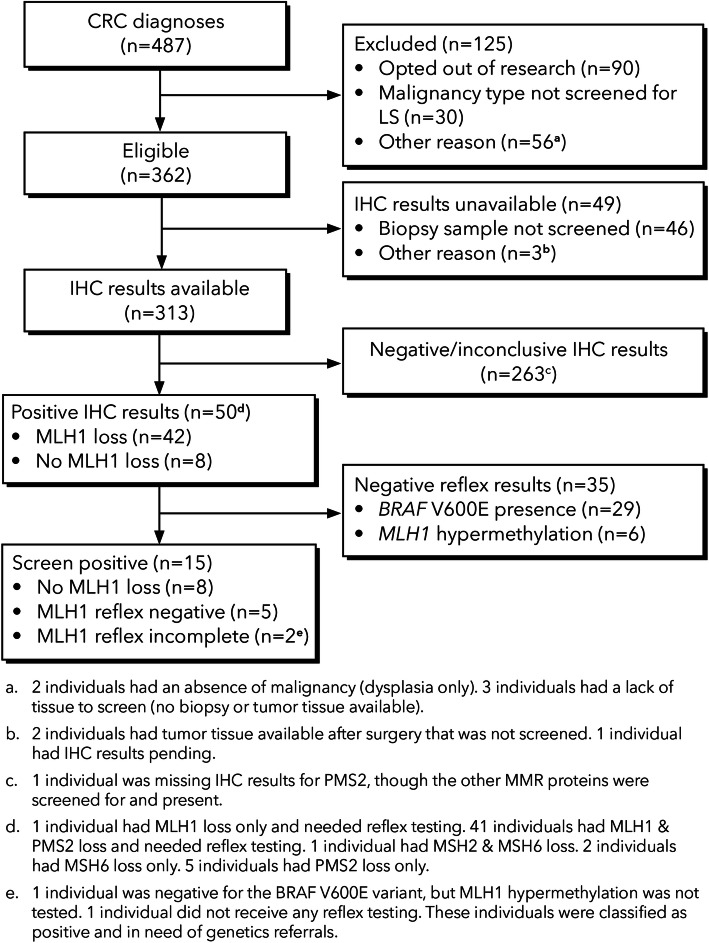
Results: 313 out of 362 individuals diagnosed with CRC and 61 out of 64 individuals diagnosed with EC who were eligible were screened by IHC for LS. Most (47/52 or 90%, including 46/49 CRC and 1/3 EC) individuals that were not screened by IHC only had a biopsy sample available. Fourteen individuals (3.7% overall, including 13/313 CRC and 1/61 EC) received an abnormal result after reflex testing and were referred for genetic counseling. Of these, 10 individuals (71% overall, including 9/13 CRC and 1/1 EC) underwent germline genetic testing for LS. Five individuals diagnosed with CRC were found to have pathogenic variants. in PMS2 (n = 3), MLH1 (n = 1), and MSH6 (n = 1). No pathogenic variants were identified in individuals diagnosed with EC.
Conclusions: UTS identified individuals at risk for LS. Most individuals who screened positive for LS had follow-up germline genetic testing for LS. The consistent use of biopsy samples is an opportunity to improve UTS.
期刊介绍:
ACS Applied Bio Materials is an interdisciplinary journal publishing original research covering all aspects of biomaterials and biointerfaces including and beyond the traditional biosensing, biomedical and therapeutic applications.
The journal is devoted to reports of new and original experimental and theoretical research of an applied nature that integrates knowledge in the areas of materials, engineering, physics, bioscience, and chemistry into important bio applications. The journal is specifically interested in work that addresses the relationship between structure and function and assesses the stability and degradation of materials under relevant environmental and biological conditions.







 京公网安备 11010802042870号
京ICP备2023020795号-1
京公网安备 11010802042870号
京ICP备2023020795号-1

 分享
分享
 求助内容:
求助内容: 应助结果提醒方式:
 扫码关注我们
