Farzaneh Hijroudi, Reza Rahbarghazi, Saeed Sadigh-Eteghad, Gozal Bahlakeh, Mehdi Hassanpour, Mohammad Shimia, Mohammad Karimipour
{"title":"阿尔茨海默病小鼠模型中神经干细胞分泌增加神经发生和行为表现及Wnt/β-儿茶素信号通路的激活","authors":"Farzaneh Hijroudi, Reza Rahbarghazi, Saeed Sadigh-Eteghad, Gozal Bahlakeh, Mehdi Hassanpour, Mohammad Shimia, Mohammad Karimipour","doi":"10.1007/s12017-022-08708-z","DOIUrl":null,"url":null,"abstract":"<p><p>Alzheimer's disease is a progressive and age-related neurodegenerative disorder that is manifested by neuropathological changes and clinical symptoms. Recently, cell-based therapeutic interventions have been considered as the promising and effective strategies in this field. Herein, we investigated therapeutic effects of neural stem cell secretome on Alzheimer's disease-like model by triggering of Wnt/β-catenin signaling pathway. In this study, mice were randomly allocated into three different groups as follows: Control, AD + Vehicle, and AD + NSCs-CM groups. To induce mouse model of AD, Aβ1-42 was injected into intracerebroventricular region. Following AD-like confirmation through thioflavin S staining and Passive avoidance test, about 5 µl mouse NSCs-CM was injected into the target areas 21 days after AD induction. For evaluation of endogenous proliferation rate (BrdU/Nestin<sup>+</sup> cells), 50 µg/kbW BrdU was intraperitoneally injected for 5 consecutive days. To track NSC differentiation, percent of BrdU/NeuN<sup>+</sup> cells were monitored via immunofluorescence staining. Histological Nissl staining was done to neurotoxicity and cell death in AD mice after NSCs-CM injection. Morris Water maze test was performed to assess learning and memory performance. Data showed that NSCs-CM could reverse the learning and memory deficits associated with Aβ pathology. The reduced expression of Wnt/β-catenin-related genes such as PI3K, Akt, MAPK, and ERK in AD mice was increased. Along with these changes, NSCs-CM suppressed overactivity of GSK3β activity induced by Aβ deposition. Besides, NSCs increased BrdU/Nestin<sup>+</sup> and BrdU/NeuN<sup>+</sup> cells in a paracrine manner, indicating proliferation and neural differentiation of NSCs. Moreover, neurotoxicity rate and cell loss were deceased after NSCs-CM injection. In summary, NSCs can regulate adult neurogenesis through modulating of Wnt/β-catenin signaling pathway and enhance the behavioral performance in the AD mice. These data present the alternative and effective approach in the management of AD and other cognitive impairments.</p>","PeriodicalId":19304,"journal":{"name":"NeuroMolecular Medicine","volume":"24 1","pages":"424-436"},"PeriodicalIF":3.9000,"publicationDate":"2022-12-01","publicationTypes":"Journal Article","fieldsOfStudy":null,"isOpenAccess":false,"openAccessPdf":"","citationCount":"0","resultStr":"{\"title\":\"Neural Stem Cells Secretome Increased Neurogenesis and Behavioral Performance and the Activation of Wnt/β-Catenin Signaling Pathway in Mouse Model of Alzheimer's Disease.\",\"authors\":\"Farzaneh Hijroudi, Reza Rahbarghazi, Saeed Sadigh-Eteghad, Gozal Bahlakeh, Mehdi Hassanpour, Mohammad Shimia, Mohammad Karimipour\",\"doi\":\"10.1007/s12017-022-08708-z\",\"DOIUrl\":null,\"url\":null,\"abstract\":\"<p><p>Alzheimer's disease is a progressive and age-related neurodegenerative disorder that is manifested by neuropathological changes and clinical symptoms. Recently, cell-based therapeutic interventions have been considered as the promising and effective strategies in this field. Herein, we investigated therapeutic effects of neural stem cell secretome on Alzheimer's disease-like model by triggering of Wnt/β-catenin signaling pathway. In this study, mice were randomly allocated into three different groups as follows: Control, AD + Vehicle, and AD + NSCs-CM groups. To induce mouse model of AD, Aβ1-42 was injected into intracerebroventricular region. Following AD-like confirmation through thioflavin S staining and Passive avoidance test, about 5 µl mouse NSCs-CM was injected into the target areas 21 days after AD induction. For evaluation of endogenous proliferation rate (BrdU/Nestin<sup>+</sup> cells), 50 µg/kbW BrdU was intraperitoneally injected for 5 consecutive days. To track NSC differentiation, percent of BrdU/NeuN<sup>+</sup> cells were monitored via immunofluorescence staining. Histological Nissl staining was done to neurotoxicity and cell death in AD mice after NSCs-CM injection. Morris Water maze test was performed to assess learning and memory performance. Data showed that NSCs-CM could reverse the learning and memory deficits associated with Aβ pathology. The reduced expression of Wnt/β-catenin-related genes such as PI3K, Akt, MAPK, and ERK in AD mice was increased. Along with these changes, NSCs-CM suppressed overactivity of GSK3β activity induced by Aβ deposition. Besides, NSCs increased BrdU/Nestin<sup>+</sup> and BrdU/NeuN<sup>+</sup> cells in a paracrine manner, indicating proliferation and neural differentiation of NSCs. Moreover, neurotoxicity rate and cell loss were deceased after NSCs-CM injection. In summary, NSCs can regulate adult neurogenesis through modulating of Wnt/β-catenin signaling pathway and enhance the behavioral performance in the AD mice. These data present the alternative and effective approach in the management of AD and other cognitive impairments.</p>\",\"PeriodicalId\":19304,\"journal\":{\"name\":\"NeuroMolecular Medicine\",\"volume\":\"24 1\",\"pages\":\"424-436\"},\"PeriodicalIF\":3.9000,\"publicationDate\":\"2022-12-01\",\"publicationTypes\":\"Journal Article\",\"fieldsOfStudy\":null,\"isOpenAccess\":false,\"openAccessPdf\":\"\",\"citationCount\":\"0\",\"resultStr\":null,\"platform\":\"Semanticscholar\",\"paperid\":null,\"PeriodicalName\":\"NeuroMolecular Medicine\",\"FirstCategoryId\":\"3\",\"ListUrlMain\":\"https://doi.org/10.1007/s12017-022-08708-z\",\"RegionNum\":4,\"RegionCategory\":\"医学\",\"ArticlePicture\":[],\"TitleCN\":null,\"AbstractTextCN\":null,\"PMCID\":null,\"EPubDate\":\"2022/5/16 0:00:00\",\"PubModel\":\"Epub\",\"JCR\":\"Q2\",\"JCRName\":\"NEUROSCIENCES\",\"Score\":null,\"Total\":0}","platform":"Semanticscholar","paperid":null,"PeriodicalName":"NeuroMolecular Medicine","FirstCategoryId":"3","ListUrlMain":"https://doi.org/10.1007/s12017-022-08708-z","RegionNum":4,"RegionCategory":"医学","ArticlePicture":[],"TitleCN":null,"AbstractTextCN":null,"PMCID":null,"EPubDate":"2022/5/16 0:00:00","PubModel":"Epub","JCR":"Q2","JCRName":"NEUROSCIENCES","Score":null,"Total":0}
Neural Stem Cells Secretome Increased Neurogenesis and Behavioral Performance and the Activation of Wnt/β-Catenin Signaling Pathway in Mouse Model of Alzheimer's Disease.
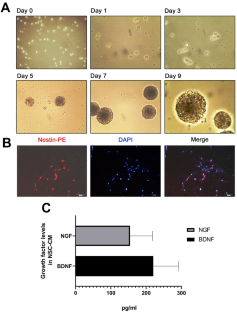
Alzheimer's disease is a progressive and age-related neurodegenerative disorder that is manifested by neuropathological changes and clinical symptoms. Recently, cell-based therapeutic interventions have been considered as the promising and effective strategies in this field. Herein, we investigated therapeutic effects of neural stem cell secretome on Alzheimer's disease-like model by triggering of Wnt/β-catenin signaling pathway. In this study, mice were randomly allocated into three different groups as follows: Control, AD + Vehicle, and AD + NSCs-CM groups. To induce mouse model of AD, Aβ1-42 was injected into intracerebroventricular region. Following AD-like confirmation through thioflavin S staining and Passive avoidance test, about 5 µl mouse NSCs-CM was injected into the target areas 21 days after AD induction. For evaluation of endogenous proliferation rate (BrdU/Nestin+ cells), 50 µg/kbW BrdU was intraperitoneally injected for 5 consecutive days. To track NSC differentiation, percent of BrdU/NeuN+ cells were monitored via immunofluorescence staining. Histological Nissl staining was done to neurotoxicity and cell death in AD mice after NSCs-CM injection. Morris Water maze test was performed to assess learning and memory performance. Data showed that NSCs-CM could reverse the learning and memory deficits associated with Aβ pathology. The reduced expression of Wnt/β-catenin-related genes such as PI3K, Akt, MAPK, and ERK in AD mice was increased. Along with these changes, NSCs-CM suppressed overactivity of GSK3β activity induced by Aβ deposition. Besides, NSCs increased BrdU/Nestin+ and BrdU/NeuN+ cells in a paracrine manner, indicating proliferation and neural differentiation of NSCs. Moreover, neurotoxicity rate and cell loss were deceased after NSCs-CM injection. In summary, NSCs can regulate adult neurogenesis through modulating of Wnt/β-catenin signaling pathway and enhance the behavioral performance in the AD mice. These data present the alternative and effective approach in the management of AD and other cognitive impairments.
期刊介绍:
NeuroMolecular Medicine publishes cutting-edge original research articles and critical reviews on the molecular and biochemical basis of neurological disorders. Studies range from genetic analyses of human populations to animal and cell culture models of neurological disorders. Emerging findings concerning the identification of genetic aberrancies and their pathogenic mechanisms at the molecular and cellular levels will be included. Also covered are experimental analyses of molecular cascades involved in the development and adult plasticity of the nervous system, in neurological dysfunction, and in neuronal degeneration and repair. NeuroMolecular Medicine encompasses basic research in the fields of molecular genetics, signal transduction, plasticity, and cell death. The information published in NEMM will provide a window into the future of molecular medicine for the nervous system.




 京公网安备 11010802042870号
京ICP备2023020795号-1
京公网安备 11010802042870号
京ICP备2023020795号-1

 分享
分享
 求助内容:
求助内容: 应助结果提醒方式:
 扫码关注我们
