{"title":"羊膜颌骨形态和功能进化的分子和细胞机制","authors":"Katherine C Woronowicz, Richard A Schneider","doi":"10.1186/s13227-019-0131-8","DOIUrl":null,"url":null,"abstract":"<p><p>The amniote jaw complex is a remarkable amalgamation of derivatives from distinct embryonic cell lineages. During development, the cells in these lineages experience concerted movements, migrations, and signaling interactions that take them from their initial origins to their final destinations and imbue their derivatives with aspects of form including their axial orientation, anatomical identity, size, and shape. Perturbations along the way can produce defects and disease, but also generate the variation necessary for jaw evolution and adaptation. We focus on molecular and cellular mechanisms that regulate form in the amniote jaw complex, and that enable structural and functional integration. Special emphasis is placed on the role of cranial neural crest mesenchyme (NCM) during the species-specific patterning of bone, cartilage, tendon, muscle, and other jaw tissues. We also address the effects of biomechanical forces during jaw development and discuss ways in which certain molecular and cellular responses add adaptive and evolutionary plasticity to jaw morphology. Overall, we highlight how variation in molecular and cellular programs can promote the phenomenal diversity and functional morphology achieved during amniote jaw evolution or lead to the range of jaw defects and disease that affect the human condition.</p>","PeriodicalId":49076,"journal":{"name":"Evodevo","volume":" ","pages":"17"},"PeriodicalIF":3.6000,"publicationDate":"2019-08-12","publicationTypes":"Journal Article","fieldsOfStudy":null,"isOpenAccess":false,"openAccessPdf":"https://www.ncbi.nlm.nih.gov/pmc/articles/PMC6691539/pdf/","citationCount":"0","resultStr":"{\"title\":\"Molecular and cellular mechanisms underlying the evolution of form and function in the amniote jaw.\",\"authors\":\"Katherine C Woronowicz, Richard A Schneider\",\"doi\":\"10.1186/s13227-019-0131-8\",\"DOIUrl\":null,\"url\":null,\"abstract\":\"<p><p>The amniote jaw complex is a remarkable amalgamation of derivatives from distinct embryonic cell lineages. During development, the cells in these lineages experience concerted movements, migrations, and signaling interactions that take them from their initial origins to their final destinations and imbue their derivatives with aspects of form including their axial orientation, anatomical identity, size, and shape. Perturbations along the way can produce defects and disease, but also generate the variation necessary for jaw evolution and adaptation. We focus on molecular and cellular mechanisms that regulate form in the amniote jaw complex, and that enable structural and functional integration. Special emphasis is placed on the role of cranial neural crest mesenchyme (NCM) during the species-specific patterning of bone, cartilage, tendon, muscle, and other jaw tissues. We also address the effects of biomechanical forces during jaw development and discuss ways in which certain molecular and cellular responses add adaptive and evolutionary plasticity to jaw morphology. Overall, we highlight how variation in molecular and cellular programs can promote the phenomenal diversity and functional morphology achieved during amniote jaw evolution or lead to the range of jaw defects and disease that affect the human condition.</p>\",\"PeriodicalId\":49076,\"journal\":{\"name\":\"Evodevo\",\"volume\":\" \",\"pages\":\"17\"},\"PeriodicalIF\":3.6000,\"publicationDate\":\"2019-08-12\",\"publicationTypes\":\"Journal Article\",\"fieldsOfStudy\":null,\"isOpenAccess\":false,\"openAccessPdf\":\"https://www.ncbi.nlm.nih.gov/pmc/articles/PMC6691539/pdf/\",\"citationCount\":\"0\",\"resultStr\":null,\"platform\":\"Semanticscholar\",\"paperid\":null,\"PeriodicalName\":\"Evodevo\",\"FirstCategoryId\":\"99\",\"ListUrlMain\":\"https://doi.org/10.1186/s13227-019-0131-8\",\"RegionNum\":2,\"RegionCategory\":\"生物学\",\"ArticlePicture\":[],\"TitleCN\":null,\"AbstractTextCN\":null,\"PMCID\":null,\"EPubDate\":\"2019/1/1 0:00:00\",\"PubModel\":\"eCollection\",\"JCR\":\"Q1\",\"JCRName\":\"DEVELOPMENTAL BIOLOGY\",\"Score\":null,\"Total\":0}","platform":"Semanticscholar","paperid":null,"PeriodicalName":"Evodevo","FirstCategoryId":"99","ListUrlMain":"https://doi.org/10.1186/s13227-019-0131-8","RegionNum":2,"RegionCategory":"生物学","ArticlePicture":[],"TitleCN":null,"AbstractTextCN":null,"PMCID":null,"EPubDate":"2019/1/1 0:00:00","PubModel":"eCollection","JCR":"Q1","JCRName":"DEVELOPMENTAL BIOLOGY","Score":null,"Total":0}
Molecular and cellular mechanisms underlying the evolution of form and function in the amniote jaw.
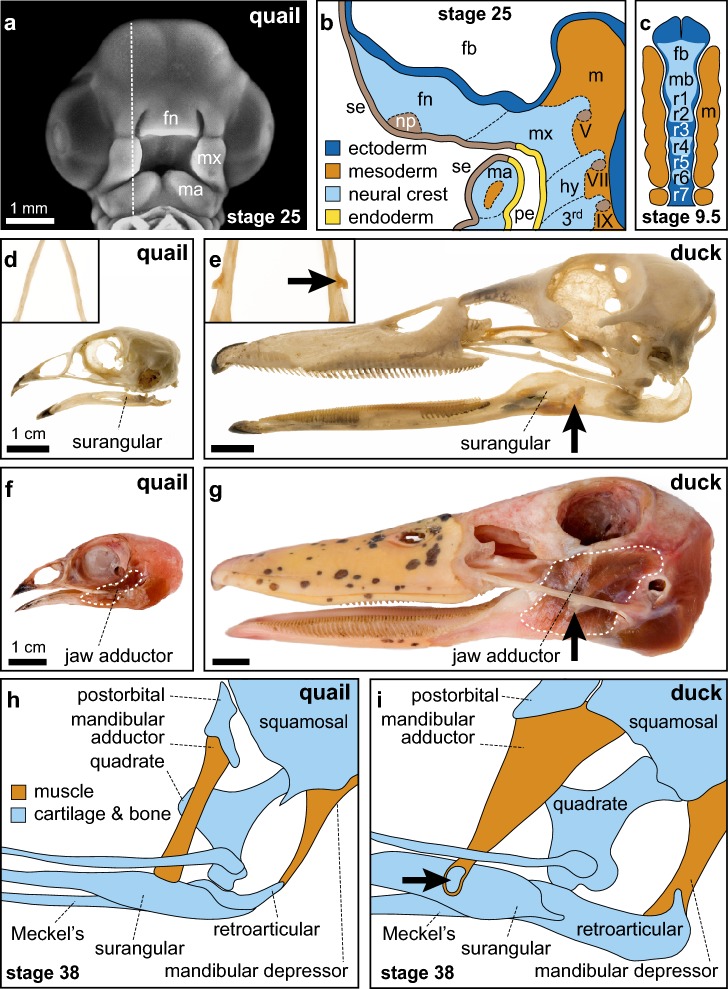
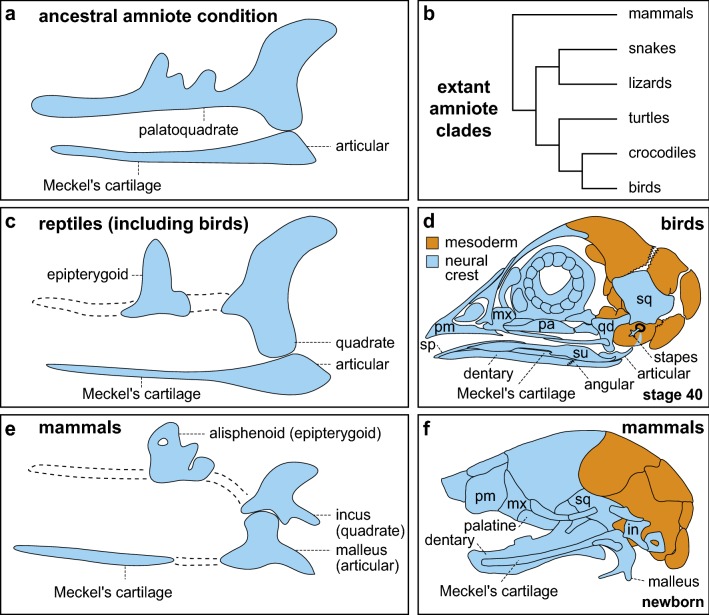
The amniote jaw complex is a remarkable amalgamation of derivatives from distinct embryonic cell lineages. During development, the cells in these lineages experience concerted movements, migrations, and signaling interactions that take them from their initial origins to their final destinations and imbue their derivatives with aspects of form including their axial orientation, anatomical identity, size, and shape. Perturbations along the way can produce defects and disease, but also generate the variation necessary for jaw evolution and adaptation. We focus on molecular and cellular mechanisms that regulate form in the amniote jaw complex, and that enable structural and functional integration. Special emphasis is placed on the role of cranial neural crest mesenchyme (NCM) during the species-specific patterning of bone, cartilage, tendon, muscle, and other jaw tissues. We also address the effects of biomechanical forces during jaw development and discuss ways in which certain molecular and cellular responses add adaptive and evolutionary plasticity to jaw morphology. Overall, we highlight how variation in molecular and cellular programs can promote the phenomenal diversity and functional morphology achieved during amniote jaw evolution or lead to the range of jaw defects and disease that affect the human condition.
期刊介绍:
EvoDevo publishes articles on a broad range of topics associated with the translation of genotype to phenotype in a phylogenetic context. Understanding the history of life, the evolution of novelty and the generation of form, whether through embryogenesis, budding, or regeneration are amongst the greatest challenges in biology. We support the understanding of these processes through the many complementary approaches that characterize the field of evo-devo.
The focus of the journal is on research that promotes understanding of the pattern and process of morphological evolution.
All articles that fulfill this aim will be welcome, in particular: evolution of pattern; formation comparative gene function/expression; life history evolution; homology and character evolution; comparative genomics; phylogenetics and palaeontology




 京公网安备 11010802042870号
京ICP备2023020795号-1
京公网安备 11010802042870号
京ICP备2023020795号-1

 分享
分享
 求助内容:
求助内容: 应助结果提醒方式:
 扫码关注我们
