{"title":"英国脱欧后退出:公众对未来欧盟成员国退出的看法","authors":"Joseph Ganderson","doi":"10.1080/01402382.2022.2164135","DOIUrl":null,"url":null,"abstract":"<p><p>Public opinion scholarship suggests that Europeans broadly interpret Brexit as a cautionary fable rather than an encouraging blueprint to follow. Yet, Brexit singularly demonstrates the possibility of European disintegration, and is but one of multiple recent crises that have brought the potential for member state departures into focus. Drawing on new survey data from 16 countries and using logistic regressions, this article charts Europeans' perceptions of the likelihood future EU exits over the next decade. It finds evidence of asymmetric motivated reasoning: Euroscepticism and pro-Brexit views strongly associate with perceiving exits likely, while among Europhiles this association is only ameliorated, not reversed. This reveals two gaps with repercussions for understanding EU public opinion dynamics. First, between Eurosceptic policy elites' softened policy stances on exit and their supporters' steadfast sense that further departures remain likely. Second, between Europhiles' scepticism of Brexit and a residual lack of confidence in EU cohesion.</p>","PeriodicalId":4,"journal":{"name":"ACS Applied Energy Materials","volume":" ","pages":"1199-1222"},"PeriodicalIF":5.5000,"publicationDate":"2023-01-23","publicationTypes":"Journal Article","fieldsOfStudy":null,"isOpenAccess":false,"openAccessPdf":"https://www.ncbi.nlm.nih.gov/pmc/articles/PMC11018069/pdf/","citationCount":"0","resultStr":"{\"title\":\"Exiting after Brexit: public perceptions of future European Union member state departures.\",\"authors\":\"Joseph Ganderson\",\"doi\":\"10.1080/01402382.2022.2164135\",\"DOIUrl\":null,\"url\":null,\"abstract\":\"<p><p>Public opinion scholarship suggests that Europeans broadly interpret Brexit as a cautionary fable rather than an encouraging blueprint to follow. Yet, Brexit singularly demonstrates the possibility of European disintegration, and is but one of multiple recent crises that have brought the potential for member state departures into focus. Drawing on new survey data from 16 countries and using logistic regressions, this article charts Europeans' perceptions of the likelihood future EU exits over the next decade. It finds evidence of asymmetric motivated reasoning: Euroscepticism and pro-Brexit views strongly associate with perceiving exits likely, while among Europhiles this association is only ameliorated, not reversed. This reveals two gaps with repercussions for understanding EU public opinion dynamics. First, between Eurosceptic policy elites' softened policy stances on exit and their supporters' steadfast sense that further departures remain likely. Second, between Europhiles' scepticism of Brexit and a residual lack of confidence in EU cohesion.</p>\",\"PeriodicalId\":4,\"journal\":{\"name\":\"ACS Applied Energy Materials\",\"volume\":\" \",\"pages\":\"1199-1222\"},\"PeriodicalIF\":5.5000,\"publicationDate\":\"2023-01-23\",\"publicationTypes\":\"Journal Article\",\"fieldsOfStudy\":null,\"isOpenAccess\":false,\"openAccessPdf\":\"https://www.ncbi.nlm.nih.gov/pmc/articles/PMC11018069/pdf/\",\"citationCount\":\"0\",\"resultStr\":null,\"platform\":\"Semanticscholar\",\"paperid\":null,\"PeriodicalName\":\"ACS Applied Energy Materials\",\"FirstCategoryId\":\"90\",\"ListUrlMain\":\"https://doi.org/10.1080/01402382.2022.2164135\",\"RegionNum\":3,\"RegionCategory\":\"材料科学\",\"ArticlePicture\":[],\"TitleCN\":null,\"AbstractTextCN\":null,\"PMCID\":null,\"EPubDate\":\"2024/1/1 0:00:00\",\"PubModel\":\"eCollection\",\"JCR\":\"Q2\",\"JCRName\":\"CHEMISTRY, PHYSICAL\",\"Score\":null,\"Total\":0}","platform":"Semanticscholar","paperid":null,"PeriodicalName":"ACS Applied Energy Materials","FirstCategoryId":"90","ListUrlMain":"https://doi.org/10.1080/01402382.2022.2164135","RegionNum":3,"RegionCategory":"材料科学","ArticlePicture":[],"TitleCN":null,"AbstractTextCN":null,"PMCID":null,"EPubDate":"2024/1/1 0:00:00","PubModel":"eCollection","JCR":"Q2","JCRName":"CHEMISTRY, PHYSICAL","Score":null,"Total":0}
Exiting after Brexit: public perceptions of future European Union member state departures.
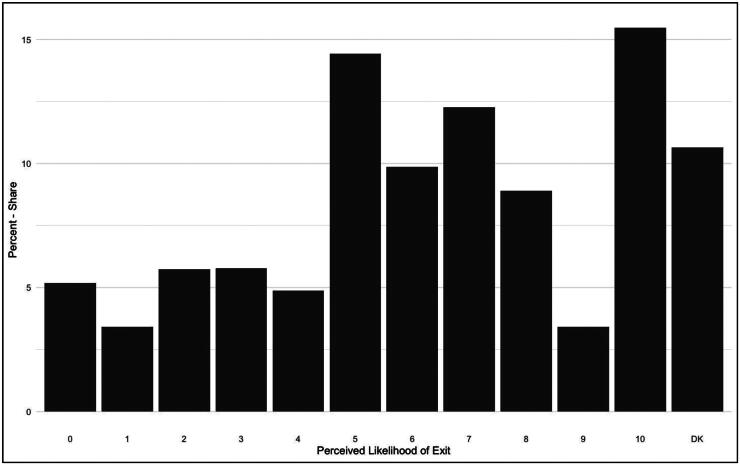
Public opinion scholarship suggests that Europeans broadly interpret Brexit as a cautionary fable rather than an encouraging blueprint to follow. Yet, Brexit singularly demonstrates the possibility of European disintegration, and is but one of multiple recent crises that have brought the potential for member state departures into focus. Drawing on new survey data from 16 countries and using logistic regressions, this article charts Europeans' perceptions of the likelihood future EU exits over the next decade. It finds evidence of asymmetric motivated reasoning: Euroscepticism and pro-Brexit views strongly associate with perceiving exits likely, while among Europhiles this association is only ameliorated, not reversed. This reveals two gaps with repercussions for understanding EU public opinion dynamics. First, between Eurosceptic policy elites' softened policy stances on exit and their supporters' steadfast sense that further departures remain likely. Second, between Europhiles' scepticism of Brexit and a residual lack of confidence in EU cohesion.
期刊介绍:
ACS Applied Energy Materials is an interdisciplinary journal publishing original research covering all aspects of materials, engineering, chemistry, physics and biology relevant to energy conversion and storage. The journal is devoted to reports of new and original experimental and theoretical research of an applied nature that integrate knowledge in the areas of materials, engineering, physics, bioscience, and chemistry into important energy applications.






 京公网安备 11010802042870号
京ICP备2023020795号-1
京公网安备 11010802042870号
京ICP备2023020795号-1

 分享
分享
 求助内容:
求助内容: 应助结果提醒方式:
 扫码关注我们
