{"title":"葡萄园土壤钾有效性评价方法的改进","authors":"Jaclyn C. Fiola, Ryan D. Stewart, Greg K. Evanylo","doi":"10.1002/saj2.20522","DOIUrl":null,"url":null,"abstract":"<p>Vineyard soils often contain mineralogy that can confound predictions of plant-available potassium (K). Too little or too much K uptake into wine-grape (<i>Vitis</i> varieties) tissues can negatively affect fruit chemistry, making it important to have soil tests that accurately quantify plant-available K. Our goal was to determine the best soil sampling, processing, and extraction methods for predicting K availability in vineyard soils. We sampled soil and grapevine tissue in 39 vineyard blocks from 22 vineyards in Virginia, Maryland, and New Jersey. Plant tissue sampling included petioles at bloom and both petioles and leaf blades at veraison. Soil samples were collected from 0 to 10- and 0 to 38-cm depths. We tested three soil extraction methods—Mehlich 1, Mehlich 3, and sodium tetraphenylboron (NaTPB)—on both oven-dried and field-moist samples. The different sampling, processing, and extracting procedures produced distinct K concentrations, with shallow 0–10 cm samples and NaTPB extraction resulting in higher K concentrations than their counterparts. Upon drying, three soils fixed K and 24 samples released K. Whole leaf (petiole plus leaf blade) samples collected at veraison had the best relationships with most soil K concentrations. The best soil testing method for predicting tissue K concentration in whole leaves at veraison was Mehlich 1 extractions of field-moist soils from 0 to 38-cm depth. This sampling combination appears to be best suited for growers to use when assessing K concentrations in vineyard soils.</p>","PeriodicalId":101043,"journal":{"name":"Proceedings - Soil Science Society of America","volume":"87 3","pages":"669-681"},"PeriodicalIF":0.0000,"publicationDate":"2023-01-27","publicationTypes":"Journal Article","fieldsOfStudy":null,"isOpenAccess":false,"openAccessPdf":"https://onlinelibrary.wiley.com/doi/epdf/10.1002/saj2.20522","citationCount":"0","resultStr":"{\"title\":\"Improving methods for evaluating potassium availability in vineyard soils\",\"authors\":\"Jaclyn C. Fiola, Ryan D. Stewart, Greg K. Evanylo\",\"doi\":\"10.1002/saj2.20522\",\"DOIUrl\":null,\"url\":null,\"abstract\":\"<p>Vineyard soils often contain mineralogy that can confound predictions of plant-available potassium (K). Too little or too much K uptake into wine-grape (<i>Vitis</i> varieties) tissues can negatively affect fruit chemistry, making it important to have soil tests that accurately quantify plant-available K. Our goal was to determine the best soil sampling, processing, and extraction methods for predicting K availability in vineyard soils. We sampled soil and grapevine tissue in 39 vineyard blocks from 22 vineyards in Virginia, Maryland, and New Jersey. Plant tissue sampling included petioles at bloom and both petioles and leaf blades at veraison. Soil samples were collected from 0 to 10- and 0 to 38-cm depths. We tested three soil extraction methods—Mehlich 1, Mehlich 3, and sodium tetraphenylboron (NaTPB)—on both oven-dried and field-moist samples. The different sampling, processing, and extracting procedures produced distinct K concentrations, with shallow 0–10 cm samples and NaTPB extraction resulting in higher K concentrations than their counterparts. Upon drying, three soils fixed K and 24 samples released K. Whole leaf (petiole plus leaf blade) samples collected at veraison had the best relationships with most soil K concentrations. The best soil testing method for predicting tissue K concentration in whole leaves at veraison was Mehlich 1 extractions of field-moist soils from 0 to 38-cm depth. This sampling combination appears to be best suited for growers to use when assessing K concentrations in vineyard soils.</p>\",\"PeriodicalId\":101043,\"journal\":{\"name\":\"Proceedings - Soil Science Society of America\",\"volume\":\"87 3\",\"pages\":\"669-681\"},\"PeriodicalIF\":0.0000,\"publicationDate\":\"2023-01-27\",\"publicationTypes\":\"Journal Article\",\"fieldsOfStudy\":null,\"isOpenAccess\":false,\"openAccessPdf\":\"https://onlinelibrary.wiley.com/doi/epdf/10.1002/saj2.20522\",\"citationCount\":\"0\",\"resultStr\":null,\"platform\":\"Semanticscholar\",\"paperid\":null,\"PeriodicalName\":\"Proceedings - Soil Science Society of America\",\"FirstCategoryId\":\"1085\",\"ListUrlMain\":\"https://onlinelibrary.wiley.com/doi/10.1002/saj2.20522\",\"RegionNum\":0,\"RegionCategory\":null,\"ArticlePicture\":[],\"TitleCN\":null,\"AbstractTextCN\":null,\"PMCID\":null,\"EPubDate\":\"\",\"PubModel\":\"\",\"JCR\":\"\",\"JCRName\":\"\",\"Score\":null,\"Total\":0}","platform":"Semanticscholar","paperid":null,"PeriodicalName":"Proceedings - Soil Science Society of America","FirstCategoryId":"1085","ListUrlMain":"https://onlinelibrary.wiley.com/doi/10.1002/saj2.20522","RegionNum":0,"RegionCategory":null,"ArticlePicture":[],"TitleCN":null,"AbstractTextCN":null,"PMCID":null,"EPubDate":"","PubModel":"","JCR":"","JCRName":"","Score":null,"Total":0}
Improving methods for evaluating potassium availability in vineyard soils
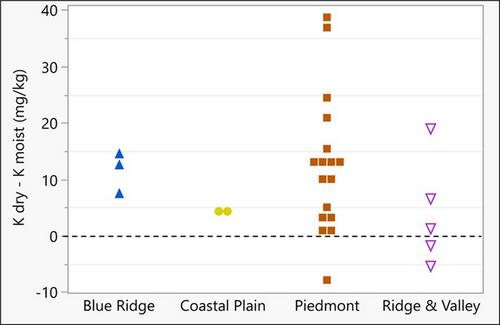
Vineyard soils often contain mineralogy that can confound predictions of plant-available potassium (K). Too little or too much K uptake into wine-grape (Vitis varieties) tissues can negatively affect fruit chemistry, making it important to have soil tests that accurately quantify plant-available K. Our goal was to determine the best soil sampling, processing, and extraction methods for predicting K availability in vineyard soils. We sampled soil and grapevine tissue in 39 vineyard blocks from 22 vineyards in Virginia, Maryland, and New Jersey. Plant tissue sampling included petioles at bloom and both petioles and leaf blades at veraison. Soil samples were collected from 0 to 10- and 0 to 38-cm depths. We tested three soil extraction methods—Mehlich 1, Mehlich 3, and sodium tetraphenylboron (NaTPB)—on both oven-dried and field-moist samples. The different sampling, processing, and extracting procedures produced distinct K concentrations, with shallow 0–10 cm samples and NaTPB extraction resulting in higher K concentrations than their counterparts. Upon drying, three soils fixed K and 24 samples released K. Whole leaf (petiole plus leaf blade) samples collected at veraison had the best relationships with most soil K concentrations. The best soil testing method for predicting tissue K concentration in whole leaves at veraison was Mehlich 1 extractions of field-moist soils from 0 to 38-cm depth. This sampling combination appears to be best suited for growers to use when assessing K concentrations in vineyard soils.




 京公网安备 11010802042870号
京ICP备2023020795号-1
京公网安备 11010802042870号
京ICP备2023020795号-1

 分享
分享

 求助内容:
求助内容: 应助结果提醒方式:
 扫码关注我们
