Alexei Solovchenko, Boris Shurygin, Dmitry A Nesterov, Dmitry V Sorokin
{"title":"基于光谱成像和机器学习的植物非侵入性表型综合方法","authors":"Alexei Solovchenko, Boris Shurygin, Dmitry A Nesterov, Dmitry V Sorokin","doi":"10.1007/s12551-023-01125-x","DOIUrl":null,"url":null,"abstract":"<p><p>High-throughput phenotyping is now central to the progress of plant sciences, accelerated breeding, and precision farming. The power of phenotyping comes from the automated, rapid, non-invasive collection of large datasets describing plant objects. In this context, the goal of extracting relevant information from different kinds of images is of paramount importance. We review both the spectral and machine learning-based approaches to imaging of plants for the purpose of their phenotyping. The advantages and drawbacks of both approaches will be discussed with a focus on the monitoring of plants. We argue that an emerging approach combining the strengths of the spectral and the machine learning-based approaches will remain a promising direction in plant phenotyping in the nearest future.</p>","PeriodicalId":4,"journal":{"name":"ACS Applied Energy Materials","volume":" ","pages":"939-946"},"PeriodicalIF":5.5000,"publicationDate":"2023-09-04","publicationTypes":"Journal Article","fieldsOfStudy":null,"isOpenAccess":false,"openAccessPdf":"https://www.ncbi.nlm.nih.gov/pmc/articles/PMC10643738/pdf/","citationCount":"0","resultStr":"{\"title\":\"Towards the synthesis of spectral imaging and machine learning-based approaches for non-invasive phenotyping of plants.\",\"authors\":\"Alexei Solovchenko, Boris Shurygin, Dmitry A Nesterov, Dmitry V Sorokin\",\"doi\":\"10.1007/s12551-023-01125-x\",\"DOIUrl\":null,\"url\":null,\"abstract\":\"<p><p>High-throughput phenotyping is now central to the progress of plant sciences, accelerated breeding, and precision farming. The power of phenotyping comes from the automated, rapid, non-invasive collection of large datasets describing plant objects. In this context, the goal of extracting relevant information from different kinds of images is of paramount importance. We review both the spectral and machine learning-based approaches to imaging of plants for the purpose of their phenotyping. The advantages and drawbacks of both approaches will be discussed with a focus on the monitoring of plants. We argue that an emerging approach combining the strengths of the spectral and the machine learning-based approaches will remain a promising direction in plant phenotyping in the nearest future.</p>\",\"PeriodicalId\":4,\"journal\":{\"name\":\"ACS Applied Energy Materials\",\"volume\":\" \",\"pages\":\"939-946\"},\"PeriodicalIF\":5.5000,\"publicationDate\":\"2023-09-04\",\"publicationTypes\":\"Journal Article\",\"fieldsOfStudy\":null,\"isOpenAccess\":false,\"openAccessPdf\":\"https://www.ncbi.nlm.nih.gov/pmc/articles/PMC10643738/pdf/\",\"citationCount\":\"0\",\"resultStr\":null,\"platform\":\"Semanticscholar\",\"paperid\":null,\"PeriodicalName\":\"ACS Applied Energy Materials\",\"FirstCategoryId\":\"1085\",\"ListUrlMain\":\"https://doi.org/10.1007/s12551-023-01125-x\",\"RegionNum\":3,\"RegionCategory\":\"材料科学\",\"ArticlePicture\":[],\"TitleCN\":null,\"AbstractTextCN\":null,\"PMCID\":null,\"EPubDate\":\"2023/10/1 0:00:00\",\"PubModel\":\"eCollection\",\"JCR\":\"Q2\",\"JCRName\":\"CHEMISTRY, PHYSICAL\",\"Score\":null,\"Total\":0}","platform":"Semanticscholar","paperid":null,"PeriodicalName":"ACS Applied Energy Materials","FirstCategoryId":"1085","ListUrlMain":"https://doi.org/10.1007/s12551-023-01125-x","RegionNum":3,"RegionCategory":"材料科学","ArticlePicture":[],"TitleCN":null,"AbstractTextCN":null,"PMCID":null,"EPubDate":"2023/10/1 0:00:00","PubModel":"eCollection","JCR":"Q2","JCRName":"CHEMISTRY, PHYSICAL","Score":null,"Total":0}
Towards the synthesis of spectral imaging and machine learning-based approaches for non-invasive phenotyping of plants.
High-throughput phenotyping is now central to the progress of plant sciences, accelerated breeding, and precision farming. The power of phenotyping comes from the automated, rapid, non-invasive collection of large datasets describing plant objects. In this context, the goal of extracting relevant information from different kinds of images is of paramount importance. We review both the spectral and machine learning-based approaches to imaging of plants for the purpose of their phenotyping. The advantages and drawbacks of both approaches will be discussed with a focus on the monitoring of plants. We argue that an emerging approach combining the strengths of the spectral and the machine learning-based approaches will remain a promising direction in plant phenotyping in the nearest future.
期刊介绍:
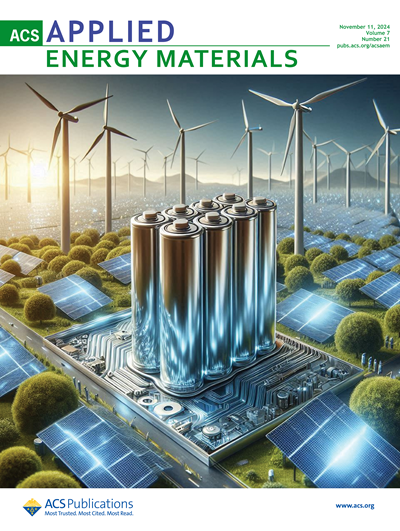
ACS Applied Energy Materials is an interdisciplinary journal publishing original research covering all aspects of materials, engineering, chemistry, physics and biology relevant to energy conversion and storage. The journal is devoted to reports of new and original experimental and theoretical research of an applied nature that integrate knowledge in the areas of materials, engineering, physics, bioscience, and chemistry into important energy applications.



 京公网安备 11010802042870号
京ICP备2023020795号-1
京公网安备 11010802042870号
京ICP备2023020795号-1

 分享
分享
 求助内容:
求助内容: 应助结果提醒方式:
 扫码关注我们
