{"title":"怀疑的头脑:意外的选举结果,感知选举的完整性和对美国总统选举中的民主的满意度","authors":"Philippe Mongrain","doi":"10.1177/10659129231166679","DOIUrl":null,"url":null,"abstract":"<p><p>A great amount of research has noted the existence of a gap between election winners and losers in relation to perceptions of electoral fairness and satisfaction with democracy. One aspect of the winner-loser gap that has been overlooked is the impact of citizens' expectations about election outcomes on these attitudes. More precisely, how do citizens react to unexpected defeats and victories? Are individuals on the losing side less critical of the electoral process or dissatisfied with democracy when they recognize beforehand that their favourite party or candidate was likely to be defeated? Does experiencing a surprise victory lead to a boost in perceived electoral integrity or democratic satisfaction? To answer these questions, I use data from the 1996, 2000, 2004, 2012, 2016 and 2020 ANES. While there is little evidence that expectations exert a major influence on post-election attitudes, outcome unexpectedness seems to have decreased confidence in the vote counting process among losers, independents and even winners in the 2020 election. The results show the considerable influence that fraud claims and conspiracy theories can have on public opinion when elected officials and candidates push a consistent story line of electoral malfeasance and corruption in an effort to denigrate political opponents.</p>","PeriodicalId":1,"journal":{"name":"Accounts of Chemical Research","volume":" ","pages":"1589-1603"},"PeriodicalIF":17.7000,"publicationDate":"2023-12-01","publicationTypes":"Journal Article","fieldsOfStudy":null,"isOpenAccess":false,"openAccessPdf":"https://www.ncbi.nlm.nih.gov/pmc/articles/PMC10615620/pdf/","citationCount":"1","resultStr":"{\"title\":\"Suspicious Minds: Unexpected Election Outcomes, Perceived Electoral Integrity and Satisfaction With Democracy in American Presidential Elections.\",\"authors\":\"Philippe Mongrain\",\"doi\":\"10.1177/10659129231166679\",\"DOIUrl\":null,\"url\":null,\"abstract\":\"<p><p>A great amount of research has noted the existence of a gap between election winners and losers in relation to perceptions of electoral fairness and satisfaction with democracy. One aspect of the winner-loser gap that has been overlooked is the impact of citizens' expectations about election outcomes on these attitudes. More precisely, how do citizens react to unexpected defeats and victories? Are individuals on the losing side less critical of the electoral process or dissatisfied with democracy when they recognize beforehand that their favourite party or candidate was likely to be defeated? Does experiencing a surprise victory lead to a boost in perceived electoral integrity or democratic satisfaction? To answer these questions, I use data from the 1996, 2000, 2004, 2012, 2016 and 2020 ANES. While there is little evidence that expectations exert a major influence on post-election attitudes, outcome unexpectedness seems to have decreased confidence in the vote counting process among losers, independents and even winners in the 2020 election. The results show the considerable influence that fraud claims and conspiracy theories can have on public opinion when elected officials and candidates push a consistent story line of electoral malfeasance and corruption in an effort to denigrate political opponents.</p>\",\"PeriodicalId\":1,\"journal\":{\"name\":\"Accounts of Chemical Research\",\"volume\":\" \",\"pages\":\"1589-1603\"},\"PeriodicalIF\":17.7000,\"publicationDate\":\"2023-12-01\",\"publicationTypes\":\"Journal Article\",\"fieldsOfStudy\":null,\"isOpenAccess\":false,\"openAccessPdf\":\"https://www.ncbi.nlm.nih.gov/pmc/articles/PMC10615620/pdf/\",\"citationCount\":\"1\",\"resultStr\":null,\"platform\":\"Semanticscholar\",\"paperid\":null,\"PeriodicalName\":\"Accounts of Chemical Research\",\"FirstCategoryId\":\"90\",\"ListUrlMain\":\"https://doi.org/10.1177/10659129231166679\",\"RegionNum\":1,\"RegionCategory\":\"化学\",\"ArticlePicture\":[],\"TitleCN\":null,\"AbstractTextCN\":null,\"PMCID\":null,\"EPubDate\":\"2023/4/10 0:00:00\",\"PubModel\":\"Epub\",\"JCR\":\"Q1\",\"JCRName\":\"CHEMISTRY, MULTIDISCIPLINARY\",\"Score\":null,\"Total\":0}","platform":"Semanticscholar","paperid":null,"PeriodicalName":"Accounts of Chemical Research","FirstCategoryId":"90","ListUrlMain":"https://doi.org/10.1177/10659129231166679","RegionNum":1,"RegionCategory":"化学","ArticlePicture":[],"TitleCN":null,"AbstractTextCN":null,"PMCID":null,"EPubDate":"2023/4/10 0:00:00","PubModel":"Epub","JCR":"Q1","JCRName":"CHEMISTRY, MULTIDISCIPLINARY","Score":null,"Total":0}
Suspicious Minds: Unexpected Election Outcomes, Perceived Electoral Integrity and Satisfaction With Democracy in American Presidential Elections.
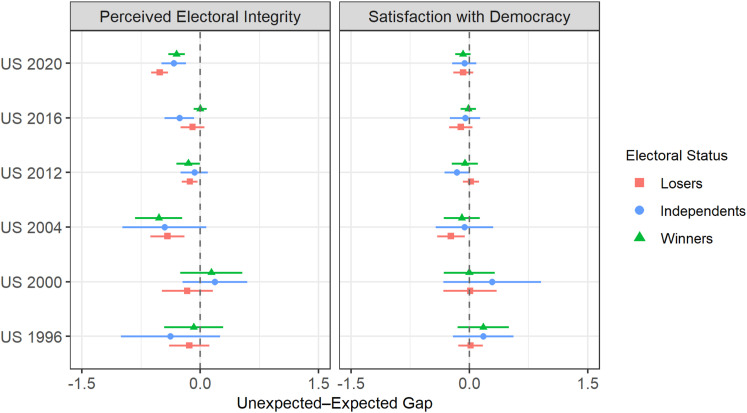
A great amount of research has noted the existence of a gap between election winners and losers in relation to perceptions of electoral fairness and satisfaction with democracy. One aspect of the winner-loser gap that has been overlooked is the impact of citizens' expectations about election outcomes on these attitudes. More precisely, how do citizens react to unexpected defeats and victories? Are individuals on the losing side less critical of the electoral process or dissatisfied with democracy when they recognize beforehand that their favourite party or candidate was likely to be defeated? Does experiencing a surprise victory lead to a boost in perceived electoral integrity or democratic satisfaction? To answer these questions, I use data from the 1996, 2000, 2004, 2012, 2016 and 2020 ANES. While there is little evidence that expectations exert a major influence on post-election attitudes, outcome unexpectedness seems to have decreased confidence in the vote counting process among losers, independents and even winners in the 2020 election. The results show the considerable influence that fraud claims and conspiracy theories can have on public opinion when elected officials and candidates push a consistent story line of electoral malfeasance and corruption in an effort to denigrate political opponents.
期刊介绍:
Accounts of Chemical Research presents short, concise and critical articles offering easy-to-read overviews of basic research and applications in all areas of chemistry and biochemistry. These short reviews focus on research from the author’s own laboratory and are designed to teach the reader about a research project. In addition, Accounts of Chemical Research publishes commentaries that give an informed opinion on a current research problem. Special Issues online are devoted to a single topic of unusual activity and significance.
Accounts of Chemical Research replaces the traditional article abstract with an article "Conspectus." These entries synopsize the research affording the reader a closer look at the content and significance of an article. Through this provision of a more detailed description of the article contents, the Conspectus enhances the article's discoverability by search engines and the exposure for the research.





 京公网安备 11010802042870号
京ICP备2023020795号-1
京公网安备 11010802042870号
京ICP备2023020795号-1

 分享
分享
 求助内容:
求助内容: 应助结果提醒方式:
 扫码关注我们
