Maria Fernanda Terraza Pira, Malcolm E. Sumner, Alain Plante, Aaron Thompson
{"title":"火山灰土矿物特征对硼吸附的影响","authors":"Maria Fernanda Terraza Pira, Malcolm E. Sumner, Alain Plante, Aaron Thompson","doi":"10.1002/saj2.20526","DOIUrl":null,"url":null,"abstract":"<p>Volcanic ash-derived soils are naturally deficient in the essential micronutrient B, but they also have maximum adsorption capacities (<i>b</i><sub>B</sub>) that are as much as 40 times greater than in nonvolcanic soils, further exacerbating B availability. Because short-range-order (SRO) aluminosilicates (allophane and imogolite) and iron (Fe) oxyhydroxides are the main clay-sized minerals in these soils, we hypothesized that their relative abundances would explain variations in boron sorption capacity (<i>b</i><sub>B</sub>). We characterized 23 volcanic ash-derived soils (Andisols and non-Andisols) from the Pacific coastal plain of Guatemala by X-ray diffraction, oxalate and pyrophosphate extractions, and thermal analysis, with four selected soils further examined by Mössbauer spectroscopy (MBS). Only soils with andic character (high SRO Si–Al content) contained considerable amounts of imogolite, with allophane in the clay fraction. Overall, soil SRO Al–Si phases were strongly correlated with clay B adsorption capacity (<i>R</i> = 0.65, <i>p</i> < 0.001) and clay specific surface area (<i>R</i> = 0.88, <i>p</i> < 0.001) suggesting that SRO Al–Si phases are the dominate influence on B behavior in these soils. Fe mineral composition was dominated (39%–71% of total Fe) by SRO Fe(III) oxyhydroxides (nanogoethite and ferrihydrite) of various crystallinities. In low allophane soils, SRO Fe phase abundance correlated with <i>b</i><sub>B</sub> as did the abundance of low crystallinity kaolinite phases, suggesting these phases are important when SRO Si–Al content is low. Any efforts to predict B behavior or plan soil fertility treatments in volcanic-influenced soils needs to consider the impact of SRO phases.</p>","PeriodicalId":101043,"journal":{"name":"Proceedings - Soil Science Society of America","volume":"87 3","pages":"682-695"},"PeriodicalIF":0.0000,"publicationDate":"2023-02-03","publicationTypes":"Journal Article","fieldsOfStudy":null,"isOpenAccess":false,"openAccessPdf":"https://onlinelibrary.wiley.com/doi/epdf/10.1002/saj2.20526","citationCount":"0","resultStr":"{\"title\":\"Mineral characteristics of volcanic ash-derived soils affecting boron adsorption\",\"authors\":\"Maria Fernanda Terraza Pira, Malcolm E. Sumner, Alain Plante, Aaron Thompson\",\"doi\":\"10.1002/saj2.20526\",\"DOIUrl\":null,\"url\":null,\"abstract\":\"<p>Volcanic ash-derived soils are naturally deficient in the essential micronutrient B, but they also have maximum adsorption capacities (<i>b</i><sub>B</sub>) that are as much as 40 times greater than in nonvolcanic soils, further exacerbating B availability. Because short-range-order (SRO) aluminosilicates (allophane and imogolite) and iron (Fe) oxyhydroxides are the main clay-sized minerals in these soils, we hypothesized that their relative abundances would explain variations in boron sorption capacity (<i>b</i><sub>B</sub>). We characterized 23 volcanic ash-derived soils (Andisols and non-Andisols) from the Pacific coastal plain of Guatemala by X-ray diffraction, oxalate and pyrophosphate extractions, and thermal analysis, with four selected soils further examined by Mössbauer spectroscopy (MBS). Only soils with andic character (high SRO Si–Al content) contained considerable amounts of imogolite, with allophane in the clay fraction. Overall, soil SRO Al–Si phases were strongly correlated with clay B adsorption capacity (<i>R</i> = 0.65, <i>p</i> < 0.001) and clay specific surface area (<i>R</i> = 0.88, <i>p</i> < 0.001) suggesting that SRO Al–Si phases are the dominate influence on B behavior in these soils. Fe mineral composition was dominated (39%–71% of total Fe) by SRO Fe(III) oxyhydroxides (nanogoethite and ferrihydrite) of various crystallinities. In low allophane soils, SRO Fe phase abundance correlated with <i>b</i><sub>B</sub> as did the abundance of low crystallinity kaolinite phases, suggesting these phases are important when SRO Si–Al content is low. Any efforts to predict B behavior or plan soil fertility treatments in volcanic-influenced soils needs to consider the impact of SRO phases.</p>\",\"PeriodicalId\":101043,\"journal\":{\"name\":\"Proceedings - Soil Science Society of America\",\"volume\":\"87 3\",\"pages\":\"682-695\"},\"PeriodicalIF\":0.0000,\"publicationDate\":\"2023-02-03\",\"publicationTypes\":\"Journal Article\",\"fieldsOfStudy\":null,\"isOpenAccess\":false,\"openAccessPdf\":\"https://onlinelibrary.wiley.com/doi/epdf/10.1002/saj2.20526\",\"citationCount\":\"0\",\"resultStr\":null,\"platform\":\"Semanticscholar\",\"paperid\":null,\"PeriodicalName\":\"Proceedings - Soil Science Society of America\",\"FirstCategoryId\":\"1085\",\"ListUrlMain\":\"https://onlinelibrary.wiley.com/doi/10.1002/saj2.20526\",\"RegionNum\":0,\"RegionCategory\":null,\"ArticlePicture\":[],\"TitleCN\":null,\"AbstractTextCN\":null,\"PMCID\":null,\"EPubDate\":\"\",\"PubModel\":\"\",\"JCR\":\"\",\"JCRName\":\"\",\"Score\":null,\"Total\":0}","platform":"Semanticscholar","paperid":null,"PeriodicalName":"Proceedings - Soil Science Society of America","FirstCategoryId":"1085","ListUrlMain":"https://onlinelibrary.wiley.com/doi/10.1002/saj2.20526","RegionNum":0,"RegionCategory":null,"ArticlePicture":[],"TitleCN":null,"AbstractTextCN":null,"PMCID":null,"EPubDate":"","PubModel":"","JCR":"","JCRName":"","Score":null,"Total":0}
引用次数: 0
摘要
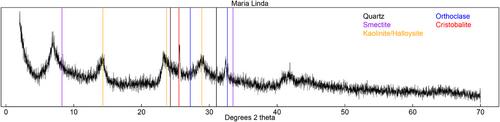
火山灰土壤天生缺乏必需的微量元素B,但它们的最大吸附能力(bB)是非火山土壤的40倍,进一步加剧了B的可用性。由于短程级(SRO)铝硅酸盐(allophane和imogolite)和铁(Fe)氧氢氧化物是这些土壤中主要的粘土级矿物,我们假设它们的相对丰度可以解释硼吸附能力(bB)的变化。我们通过x射线衍射、草酸盐和焦磷酸盐提取和热分析对危地马拉太平洋沿岸平原的23种火山灰衍生土壤(Andisols和非Andisols)进行了表征,并通过Mössbauer光谱(MBS)对其中四种土壤进行了进一步研究。只有具有冰岛特征(SRO Si-Al含量高)的土壤中含有大量的铁长石,粘土组分中含有铁矾。总体而言,土壤SRO Al-Si相与粘土B吸附能力密切相关(R = 0.65, p <;0.001)和粘土比表面积(R = 0.88, p <;0.001),表明SRO Al-Si相是这些土壤中B行为的主要影响因素。不同结晶度的SRO铁(III)氧氢氧化物(纳米针铁矿和水合铁)占总铁的39% ~ 71%。在低钙矾土中,SRO铁相丰度与bB相关,低结晶度高岭石相丰度也与bB相关,表明当SRO硅铝含量较低时,这些相很重要。在火山影响的土壤中,任何预测B行为或规划土壤肥力处理的努力都需要考虑SRO阶段的影响。
Mineral characteristics of volcanic ash-derived soils affecting boron adsorption
Volcanic ash-derived soils are naturally deficient in the essential micronutrient B, but they also have maximum adsorption capacities (bB) that are as much as 40 times greater than in nonvolcanic soils, further exacerbating B availability. Because short-range-order (SRO) aluminosilicates (allophane and imogolite) and iron (Fe) oxyhydroxides are the main clay-sized minerals in these soils, we hypothesized that their relative abundances would explain variations in boron sorption capacity (bB). We characterized 23 volcanic ash-derived soils (Andisols and non-Andisols) from the Pacific coastal plain of Guatemala by X-ray diffraction, oxalate and pyrophosphate extractions, and thermal analysis, with four selected soils further examined by Mössbauer spectroscopy (MBS). Only soils with andic character (high SRO Si–Al content) contained considerable amounts of imogolite, with allophane in the clay fraction. Overall, soil SRO Al–Si phases were strongly correlated with clay B adsorption capacity (R = 0.65, p < 0.001) and clay specific surface area (R = 0.88, p < 0.001) suggesting that SRO Al–Si phases are the dominate influence on B behavior in these soils. Fe mineral composition was dominated (39%–71% of total Fe) by SRO Fe(III) oxyhydroxides (nanogoethite and ferrihydrite) of various crystallinities. In low allophane soils, SRO Fe phase abundance correlated with bB as did the abundance of low crystallinity kaolinite phases, suggesting these phases are important when SRO Si–Al content is low. Any efforts to predict B behavior or plan soil fertility treatments in volcanic-influenced soils needs to consider the impact of SRO phases.




 京公网安备 11010802042870号
京ICP备2023020795号-1
京公网安备 11010802042870号
京ICP备2023020795号-1

 分享
分享

 求助内容:
求助内容: 应助结果提醒方式:
 扫码关注我们
