Joseph George Beton, Tristan Cragnolini, Manaz Kaleel, Thomas Mulvaney, Aaron Sweeney, Maya Topf
{"title":"整合模型模拟工具和低温电子显微镜","authors":"Joseph George Beton, Tristan Cragnolini, Manaz Kaleel, Thomas Mulvaney, Aaron Sweeney, Maya Topf","doi":"10.1002/wcms.1642","DOIUrl":null,"url":null,"abstract":"<p>The power of computer simulations, including machine-learning, has become an inseparable part of scientific analysis of biological data. This has significantly impacted the field of cryogenic electron microscopy (cryo-EM), which has grown dramatically since the “resolution-revolution.” Many maps are now solved at 3–4 Å or better resolution, although a significant proportion of maps deposited in the Electron Microscopy Data Bank are still at lower resolution, where the positions of atoms cannot be determined unambiguously. Additionally, cryo-EM maps are often characterized by a varying local resolution, partly due to conformational heterogeneity of the imaged molecule. To address such problems, many computational methods have been developed for cryo-EM map reconstruction and atomistic model building. Here, we review the development in algorithms and tools for building models in cryo-EM maps at different resolutions. We describe methods for model building, including rigid and flexible fitting of known models, model validation, small-molecule fitting, and model visualization. We provide examples of how these methods have been used to elucidate the structure and function of dynamic macromolecular machines.</p><p>This article is categorized under:\n </p>","PeriodicalId":236,"journal":{"name":"Wiley Interdisciplinary Reviews: Computational Molecular Science","volume":"13 3","pages":""},"PeriodicalIF":27.0000,"publicationDate":"2022-11-21","publicationTypes":"Journal Article","fieldsOfStudy":null,"isOpenAccess":false,"openAccessPdf":"https://onlinelibrary.wiley.com/doi/epdf/10.1002/wcms.1642","citationCount":"5","resultStr":"{\"title\":\"Integrating model simulation tools and cryo-electron microscopy\",\"authors\":\"Joseph George Beton, Tristan Cragnolini, Manaz Kaleel, Thomas Mulvaney, Aaron Sweeney, Maya Topf\",\"doi\":\"10.1002/wcms.1642\",\"DOIUrl\":null,\"url\":null,\"abstract\":\"<p>The power of computer simulations, including machine-learning, has become an inseparable part of scientific analysis of biological data. This has significantly impacted the field of cryogenic electron microscopy (cryo-EM), which has grown dramatically since the “resolution-revolution.” Many maps are now solved at 3–4 Å or better resolution, although a significant proportion of maps deposited in the Electron Microscopy Data Bank are still at lower resolution, where the positions of atoms cannot be determined unambiguously. Additionally, cryo-EM maps are often characterized by a varying local resolution, partly due to conformational heterogeneity of the imaged molecule. To address such problems, many computational methods have been developed for cryo-EM map reconstruction and atomistic model building. Here, we review the development in algorithms and tools for building models in cryo-EM maps at different resolutions. We describe methods for model building, including rigid and flexible fitting of known models, model validation, small-molecule fitting, and model visualization. We provide examples of how these methods have been used to elucidate the structure and function of dynamic macromolecular machines.</p><p>This article is categorized under:\\n </p>\",\"PeriodicalId\":236,\"journal\":{\"name\":\"Wiley Interdisciplinary Reviews: Computational Molecular Science\",\"volume\":\"13 3\",\"pages\":\"\"},\"PeriodicalIF\":27.0000,\"publicationDate\":\"2022-11-21\",\"publicationTypes\":\"Journal Article\",\"fieldsOfStudy\":null,\"isOpenAccess\":false,\"openAccessPdf\":\"https://onlinelibrary.wiley.com/doi/epdf/10.1002/wcms.1642\",\"citationCount\":\"5\",\"resultStr\":null,\"platform\":\"Semanticscholar\",\"paperid\":null,\"PeriodicalName\":\"Wiley Interdisciplinary Reviews: Computational Molecular Science\",\"FirstCategoryId\":\"92\",\"ListUrlMain\":\"https://onlinelibrary.wiley.com/doi/10.1002/wcms.1642\",\"RegionNum\":2,\"RegionCategory\":\"化学\",\"ArticlePicture\":[],\"TitleCN\":null,\"AbstractTextCN\":null,\"PMCID\":null,\"EPubDate\":\"\",\"PubModel\":\"\",\"JCR\":\"Q1\",\"JCRName\":\"CHEMISTRY, MULTIDISCIPLINARY\",\"Score\":null,\"Total\":0}","platform":"Semanticscholar","paperid":null,"PeriodicalName":"Wiley Interdisciplinary Reviews: Computational Molecular Science","FirstCategoryId":"92","ListUrlMain":"https://onlinelibrary.wiley.com/doi/10.1002/wcms.1642","RegionNum":2,"RegionCategory":"化学","ArticlePicture":[],"TitleCN":null,"AbstractTextCN":null,"PMCID":null,"EPubDate":"","PubModel":"","JCR":"Q1","JCRName":"CHEMISTRY, MULTIDISCIPLINARY","Score":null,"Total":0}
Integrating model simulation tools and cryo-electron microscopy
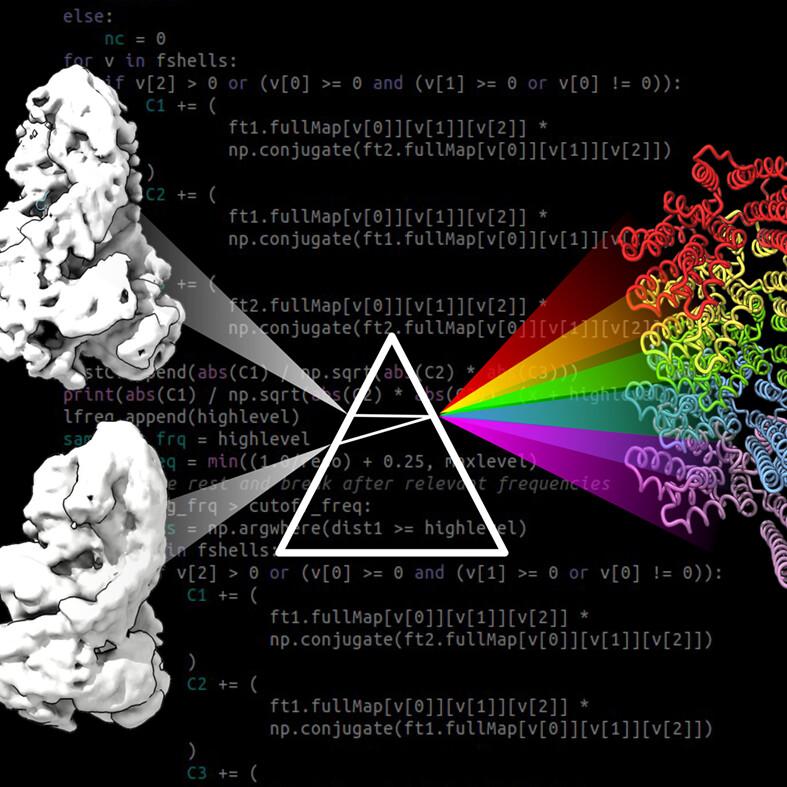
The power of computer simulations, including machine-learning, has become an inseparable part of scientific analysis of biological data. This has significantly impacted the field of cryogenic electron microscopy (cryo-EM), which has grown dramatically since the “resolution-revolution.” Many maps are now solved at 3–4 Å or better resolution, although a significant proportion of maps deposited in the Electron Microscopy Data Bank are still at lower resolution, where the positions of atoms cannot be determined unambiguously. Additionally, cryo-EM maps are often characterized by a varying local resolution, partly due to conformational heterogeneity of the imaged molecule. To address such problems, many computational methods have been developed for cryo-EM map reconstruction and atomistic model building. Here, we review the development in algorithms and tools for building models in cryo-EM maps at different resolutions. We describe methods for model building, including rigid and flexible fitting of known models, model validation, small-molecule fitting, and model visualization. We provide examples of how these methods have been used to elucidate the structure and function of dynamic macromolecular machines.
期刊介绍:
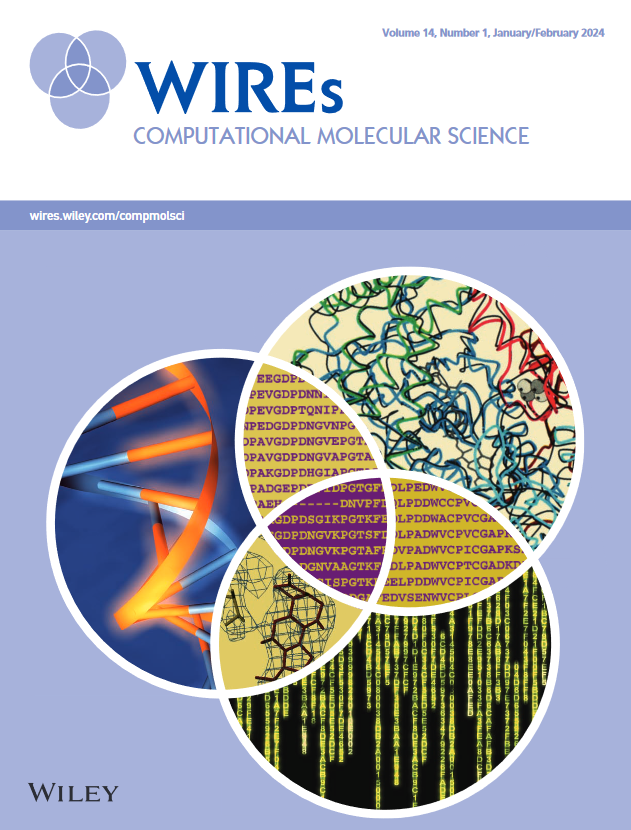
Computational molecular sciences harness the power of rigorous chemical and physical theories, employing computer-based modeling, specialized hardware, software development, algorithm design, and database management to explore and illuminate every facet of molecular sciences. These interdisciplinary approaches form a bridge between chemistry, biology, and materials sciences, establishing connections with adjacent application-driven fields in both chemistry and biology. WIREs Computational Molecular Science stands as a platform to comprehensively review and spotlight research from these dynamic and interconnected fields.



 京公网安备 11010802042870号
京ICP备2023020795号-1
京公网安备 11010802042870号
京ICP备2023020795号-1

 分享
分享
 求助内容:
求助内容: 应助结果提醒方式:
 扫码关注我们
