{"title":"[当地社区老年人痴呆预防行为的相关因素:信息-动机-行为技能模型的应用:一项横断面研究]。","authors":"Eun Hye Ha, Mi Yang Jeon","doi":"10.17079/jkgn.2023.25.1.34","DOIUrl":null,"url":null,"abstract":"<p><strong>Purpose: </strong>The purpose of this study was to identify the factors associated the dementia preventive behavior of older adults living in the community by adding fear of dementia to the information-motivation-behavioral skills model.</p><p><strong>Method: </strong>The data was collected from October 10~31, 2019 by using structured questionnaires for 202 older people aged over 65 living in the community. The data was analyzed independent t-test, one-way ANOVA, Scheffé test, Pearson's correlation coefficient, multiple regression and Bootstrapping by using SPSS/WIN 24.0.</p><p><strong>Results: </strong>As a result of the analysis, it was shown that factors associated dementia preventive behavior were age, social support, self- efficacy, and fear of dementia, which explained 20.9% dementia preventive behavior (F=13.01, <i>p</i><.001). The verification result of the mediating effects of self-efficacy and dementia fear by using Bootstrapping method in the relationship between dementia knowledge, dementia attitude, social support and dementia prevention behavior based on the information-motivation-behavioral skills model showed that indirect effects.</p><p><strong>Conclusion: </strong>When an effective dementia preventive behavior program is developed and provided for improving social support and self-efficacy and for reducing fear of dementia based on the results, it will contribute to the improvement of dementia prevention behavior for older adults.</p>","PeriodicalId":52377,"journal":{"name":"Journal of Korean Gerontological Nursing","volume":"69 1","pages":"34-43"},"PeriodicalIF":0.0000,"publicationDate":"2023-02-01","publicationTypes":"Journal Article","fieldsOfStudy":null,"isOpenAccess":false,"openAccessPdf":"https://www.ncbi.nlm.nih.gov/pmc/articles/PMC12674417/pdf/","citationCount":"0","resultStr":"{\"title\":\"[Factors associated dementia preventive behavior of older adults in a local community: Application of the information-motivation-behavioral skills model: A cross-sectional study].\",\"authors\":\"Eun Hye Ha, Mi Yang Jeon\",\"doi\":\"10.17079/jkgn.2023.25.1.34\",\"DOIUrl\":null,\"url\":null,\"abstract\":\"<p><strong>Purpose: </strong>The purpose of this study was to identify the factors associated the dementia preventive behavior of older adults living in the community by adding fear of dementia to the information-motivation-behavioral skills model.</p><p><strong>Method: </strong>The data was collected from October 10~31, 2019 by using structured questionnaires for 202 older people aged over 65 living in the community. The data was analyzed independent t-test, one-way ANOVA, Scheffé test, Pearson's correlation coefficient, multiple regression and Bootstrapping by using SPSS/WIN 24.0.</p><p><strong>Results: </strong>As a result of the analysis, it was shown that factors associated dementia preventive behavior were age, social support, self- efficacy, and fear of dementia, which explained 20.9% dementia preventive behavior (F=13.01, <i>p</i><.001). The verification result of the mediating effects of self-efficacy and dementia fear by using Bootstrapping method in the relationship between dementia knowledge, dementia attitude, social support and dementia prevention behavior based on the information-motivation-behavioral skills model showed that indirect effects.</p><p><strong>Conclusion: </strong>When an effective dementia preventive behavior program is developed and provided for improving social support and self-efficacy and for reducing fear of dementia based on the results, it will contribute to the improvement of dementia prevention behavior for older adults.</p>\",\"PeriodicalId\":52377,\"journal\":{\"name\":\"Journal of Korean Gerontological Nursing\",\"volume\":\"69 1\",\"pages\":\"34-43\"},\"PeriodicalIF\":0.0000,\"publicationDate\":\"2023-02-01\",\"publicationTypes\":\"Journal Article\",\"fieldsOfStudy\":null,\"isOpenAccess\":false,\"openAccessPdf\":\"https://www.ncbi.nlm.nih.gov/pmc/articles/PMC12674417/pdf/\",\"citationCount\":\"0\",\"resultStr\":null,\"platform\":\"Semanticscholar\",\"paperid\":null,\"PeriodicalName\":\"Journal of Korean Gerontological Nursing\",\"FirstCategoryId\":\"1085\",\"ListUrlMain\":\"https://doi.org/10.17079/jkgn.2023.25.1.34\",\"RegionNum\":0,\"RegionCategory\":null,\"ArticlePicture\":[],\"TitleCN\":null,\"AbstractTextCN\":null,\"PMCID\":null,\"EPubDate\":\"2023/2/28 0:00:00\",\"PubModel\":\"Epub\",\"JCR\":\"Q4\",\"JCRName\":\"Nursing\",\"Score\":null,\"Total\":0}","platform":"Semanticscholar","paperid":null,"PeriodicalName":"Journal of Korean Gerontological Nursing","FirstCategoryId":"1085","ListUrlMain":"https://doi.org/10.17079/jkgn.2023.25.1.34","RegionNum":0,"RegionCategory":null,"ArticlePicture":[],"TitleCN":null,"AbstractTextCN":null,"PMCID":null,"EPubDate":"2023/2/28 0:00:00","PubModel":"Epub","JCR":"Q4","JCRName":"Nursing","Score":null,"Total":0}
[Factors associated dementia preventive behavior of older adults in a local community: Application of the information-motivation-behavioral skills model: A cross-sectional study].
Purpose: The purpose of this study was to identify the factors associated the dementia preventive behavior of older adults living in the community by adding fear of dementia to the information-motivation-behavioral skills model.
Method: The data was collected from October 10~31, 2019 by using structured questionnaires for 202 older people aged over 65 living in the community. The data was analyzed independent t-test, one-way ANOVA, Scheffé test, Pearson's correlation coefficient, multiple regression and Bootstrapping by using SPSS/WIN 24.0.
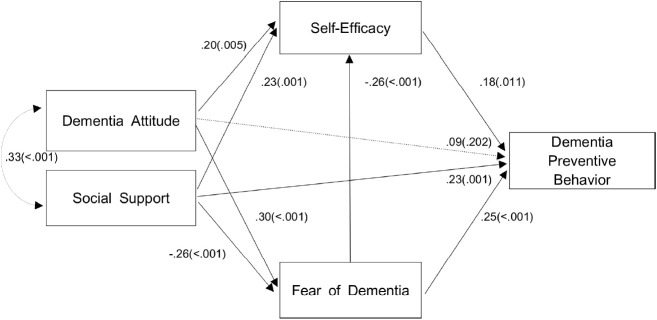
Results: As a result of the analysis, it was shown that factors associated dementia preventive behavior were age, social support, self- efficacy, and fear of dementia, which explained 20.9% dementia preventive behavior (F=13.01, p<.001). The verification result of the mediating effects of self-efficacy and dementia fear by using Bootstrapping method in the relationship between dementia knowledge, dementia attitude, social support and dementia prevention behavior based on the information-motivation-behavioral skills model showed that indirect effects.
Conclusion: When an effective dementia preventive behavior program is developed and provided for improving social support and self-efficacy and for reducing fear of dementia based on the results, it will contribute to the improvement of dementia prevention behavior for older adults.




 京公网安备 11010802042870号
京ICP备2023020795号-1
京公网安备 11010802042870号
京ICP备2023020795号-1

 分享
分享
 求助内容:
求助内容: 应助结果提醒方式:
 扫码关注我们
