{"title":"国际创伤问卷在台湾的心理测量特性。","authors":"Shih-Han Chiu, Yu-Lung Chiu, Chin-Bin Yeh","doi":"10.5152/pcp.2023.22572","DOIUrl":null,"url":null,"abstract":"<p><strong>Background: </strong>Complex post-traumatic stress disorder was often present after chronic traumatic events. The diagnostic criteria of complex post-traumatic disorder consisted of both post-traumatic stress disorder and disturbance in self-organization. People with complex post-traumatic disorder often exposed to chronic stress. It might not be as significant as the major traumatic event as survivors with post-traumatic stress disorder had experienced. Therefore, the impact of complex post-traumatic stress disorder was often ignored. It is critical to identify the at-risk individuals with complex post-traumatic disorder in community. We planned to investigate the psychometrics of the International Trauma Questionnaire for assessing complex post-traumatic stress disorder symptoms in Taiwan.</p><p><strong>Methods: </strong>One hundred twenty-one individuals were enrolled and they completed 8 self-report scales, including International Trauma Questionnaire, Childhood Trauma Questionnaire Short Form, Beck Depression Inventory-II, Beck Anxiety Inventory, the Chinese version of the Post-traumatic Stress Disorder Checklist for DSM-5, Difficulties in Emotional Regulation Scale, Rosenberg Self-Esteem Scale, and the Interpersonal Relationship Scale. The psychometric of International Trauma Questionnaire was examined by bivariate correlation analysis, independent <i>t</i>-test, and factor analysis.</p><p><strong>Results: </strong>The study showed International Trauma Questionnaire had good reliability and validity and corresponded with previous studies. The result of confirmatory factor analysis supported the structure of complex post-traumatic stress disorder criteria in International Classification of Diseases-11. The 2-factor second-order model was the best-fitting model. The 6 symptom domains of complex post-traumatic stress disorder were also significantly correlated with depressive and anxiety symptoms.</p><p><strong>Conclusion: </strong>It suggests that the Chinese version of International Trauma Questionnaire could be used for screening at-risk groups and future works for mental public health in Taiwan.</p>","PeriodicalId":11770,"journal":{"name":"Enzyme and Microbial Technology","volume":"22 1","pages":"28-37"},"PeriodicalIF":3.9000,"publicationDate":"2023-03-01","publicationTypes":"Journal Article","fieldsOfStudy":null,"isOpenAccess":false,"openAccessPdf":"https://www.ncbi.nlm.nih.gov/pmc/articles/PMC11082618/pdf/","citationCount":"0","resultStr":"{\"title\":\"The Psychometric Properties of the International Trauma Questionnaire in Taiwan.\",\"authors\":\"Shih-Han Chiu, Yu-Lung Chiu, Chin-Bin Yeh\",\"doi\":\"10.5152/pcp.2023.22572\",\"DOIUrl\":null,\"url\":null,\"abstract\":\"<p><strong>Background: </strong>Complex post-traumatic stress disorder was often present after chronic traumatic events. The diagnostic criteria of complex post-traumatic disorder consisted of both post-traumatic stress disorder and disturbance in self-organization. People with complex post-traumatic disorder often exposed to chronic stress. It might not be as significant as the major traumatic event as survivors with post-traumatic stress disorder had experienced. Therefore, the impact of complex post-traumatic stress disorder was often ignored. It is critical to identify the at-risk individuals with complex post-traumatic disorder in community. We planned to investigate the psychometrics of the International Trauma Questionnaire for assessing complex post-traumatic stress disorder symptoms in Taiwan.</p><p><strong>Methods: </strong>One hundred twenty-one individuals were enrolled and they completed 8 self-report scales, including International Trauma Questionnaire, Childhood Trauma Questionnaire Short Form, Beck Depression Inventory-II, Beck Anxiety Inventory, the Chinese version of the Post-traumatic Stress Disorder Checklist for DSM-5, Difficulties in Emotional Regulation Scale, Rosenberg Self-Esteem Scale, and the Interpersonal Relationship Scale. The psychometric of International Trauma Questionnaire was examined by bivariate correlation analysis, independent <i>t</i>-test, and factor analysis.</p><p><strong>Results: </strong>The study showed International Trauma Questionnaire had good reliability and validity and corresponded with previous studies. The result of confirmatory factor analysis supported the structure of complex post-traumatic stress disorder criteria in International Classification of Diseases-11. The 2-factor second-order model was the best-fitting model. The 6 symptom domains of complex post-traumatic stress disorder were also significantly correlated with depressive and anxiety symptoms.</p><p><strong>Conclusion: </strong>It suggests that the Chinese version of International Trauma Questionnaire could be used for screening at-risk groups and future works for mental public health in Taiwan.</p>\",\"PeriodicalId\":11770,\"journal\":{\"name\":\"Enzyme and Microbial Technology\",\"volume\":\"22 1\",\"pages\":\"28-37\"},\"PeriodicalIF\":3.9000,\"publicationDate\":\"2023-03-01\",\"publicationTypes\":\"Journal Article\",\"fieldsOfStudy\":null,\"isOpenAccess\":false,\"openAccessPdf\":\"https://www.ncbi.nlm.nih.gov/pmc/articles/PMC11082618/pdf/\",\"citationCount\":\"0\",\"resultStr\":null,\"platform\":\"Semanticscholar\",\"paperid\":null,\"PeriodicalName\":\"Enzyme and Microbial Technology\",\"FirstCategoryId\":\"3\",\"ListUrlMain\":\"https://doi.org/10.5152/pcp.2023.22572\",\"RegionNum\":3,\"RegionCategory\":\"生物学\",\"ArticlePicture\":[],\"TitleCN\":null,\"AbstractTextCN\":null,\"PMCID\":null,\"EPubDate\":\"\",\"PubModel\":\"\",\"JCR\":\"Q2\",\"JCRName\":\"BIOTECHNOLOGY & APPLIED MICROBIOLOGY\",\"Score\":null,\"Total\":0}","platform":"Semanticscholar","paperid":null,"PeriodicalName":"Enzyme and Microbial Technology","FirstCategoryId":"3","ListUrlMain":"https://doi.org/10.5152/pcp.2023.22572","RegionNum":3,"RegionCategory":"生物学","ArticlePicture":[],"TitleCN":null,"AbstractTextCN":null,"PMCID":null,"EPubDate":"","PubModel":"","JCR":"Q2","JCRName":"BIOTECHNOLOGY & APPLIED MICROBIOLOGY","Score":null,"Total":0}
引用次数: 0
摘要
背景:复杂性创伤后应激障碍通常出现在慢性创伤事件之后。复杂性创伤后应激障碍的诊断标准包括创伤后应激障碍和自我组织障碍。患有复杂性创伤后精神障碍的人通常会面临长期的压力。这可能不如创伤后应激障碍幸存者所经历的重大创伤事件那么重要。因此,复杂性创伤后应激障碍的影响往往被忽视。因此,在社区中识别复合型创伤后应激障碍的高危人群至关重要。我们计划在台湾调查国际创伤问卷的心理测量学,以评估复杂创伤后应激障碍的症状:方法:我们招募了121名受试者,让他们填写8份自我报告量表,包括国际创伤问卷、童年创伤问卷简表、贝克抑郁量表-II、贝克焦虑量表、DSM-5创伤后应激障碍核对表中文版、情绪调节困难量表、罗森伯格自尊量表和人际关系量表。通过双变量相关分析、独立 t 检验和因子分析对国际创伤问卷进行了心理测量:研究结果表明,国际创伤问卷具有良好的信度和效度,与以往的研究结果一致。确认性因子分析结果支持《国际疾病分类-11》中复杂创伤后应激障碍标准的结构。2 因子二阶模型是拟合度最高的模型。复杂创伤后应激障碍的 6 个症状域与抑郁症状和焦虑症状也有显著相关性:结论:国际创伤问卷中文版可用于台湾高危人群筛查和未来精神公共卫生工作。
The Psychometric Properties of the International Trauma Questionnaire in Taiwan.
Background: Complex post-traumatic stress disorder was often present after chronic traumatic events. The diagnostic criteria of complex post-traumatic disorder consisted of both post-traumatic stress disorder and disturbance in self-organization. People with complex post-traumatic disorder often exposed to chronic stress. It might not be as significant as the major traumatic event as survivors with post-traumatic stress disorder had experienced. Therefore, the impact of complex post-traumatic stress disorder was often ignored. It is critical to identify the at-risk individuals with complex post-traumatic disorder in community. We planned to investigate the psychometrics of the International Trauma Questionnaire for assessing complex post-traumatic stress disorder symptoms in Taiwan.
Methods: One hundred twenty-one individuals were enrolled and they completed 8 self-report scales, including International Trauma Questionnaire, Childhood Trauma Questionnaire Short Form, Beck Depression Inventory-II, Beck Anxiety Inventory, the Chinese version of the Post-traumatic Stress Disorder Checklist for DSM-5, Difficulties in Emotional Regulation Scale, Rosenberg Self-Esteem Scale, and the Interpersonal Relationship Scale. The psychometric of International Trauma Questionnaire was examined by bivariate correlation analysis, independent t-test, and factor analysis.
Results: The study showed International Trauma Questionnaire had good reliability and validity and corresponded with previous studies. The result of confirmatory factor analysis supported the structure of complex post-traumatic stress disorder criteria in International Classification of Diseases-11. The 2-factor second-order model was the best-fitting model. The 6 symptom domains of complex post-traumatic stress disorder were also significantly correlated with depressive and anxiety symptoms.
Conclusion: It suggests that the Chinese version of International Trauma Questionnaire could be used for screening at-risk groups and future works for mental public health in Taiwan.
期刊介绍:
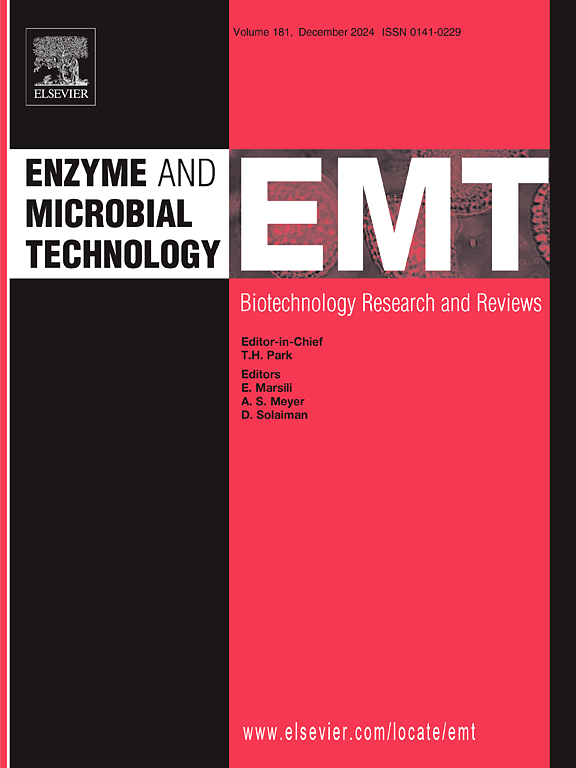
Enzyme and Microbial Technology is an international, peer-reviewed journal publishing original research and reviews, of biotechnological significance and novelty, on basic and applied aspects of the science and technology of processes involving the use of enzymes, micro-organisms, animal cells and plant cells.
We especially encourage submissions on:
Biocatalysis and the use of Directed Evolution in Synthetic Biology and Biotechnology
Biotechnological Production of New Bioactive Molecules, Biomaterials, Biopharmaceuticals, and Biofuels
New Imaging Techniques and Biosensors, especially as applicable to Healthcare and Systems Biology
New Biotechnological Approaches in Genomics, Proteomics and Metabolomics
Metabolic Engineering, Biomolecular Engineering and Nanobiotechnology
Manuscripts which report isolation, purification, immobilization or utilization of organisms or enzymes which are already well-described in the literature are not suitable for publication in EMT, unless their primary purpose is to report significant new findings or approaches which are of broad biotechnological importance. Similarly, manuscripts which report optimization studies on well-established processes are inappropriate. EMT does not accept papers dealing with mathematical modeling unless they report significant, new experimental data.






 京公网安备 11010802042870号
京ICP备2023020795号-1
京公网安备 11010802042870号
京ICP备2023020795号-1

 分享
分享
 求助内容:
求助内容: 应助结果提醒方式:
 扫码关注我们
