{"title":"一类新的由焦磷酸六戊烯基衍生的三萜化合物的发现和分析。","authors":"Dan Hu","doi":"10.1016/j.engmic.2022.100035","DOIUrl":null,"url":null,"abstract":"<p><p>Triterpenes are derived from squalene or oxidosqualene. However, a new class of triterpenes derived from hexaprenyl pyrophosphate has been recently discovered, formed by a new family of chimeric class I triterpene synthases. The cyclization mechanisms of triterpenes were elucidated by isotopic labeling and protein structural analyses, which helps understand the biosynthesis of triterpenes in nature.</p>","PeriodicalId":100478,"journal":{"name":"Engineering Microbiology","volume":"120 1","pages":"100035"},"PeriodicalIF":0.0000,"publicationDate":"2022-07-08","publicationTypes":"Journal Article","fieldsOfStudy":null,"isOpenAccess":false,"openAccessPdf":"https://www.ncbi.nlm.nih.gov/pmc/articles/PMC11610947/pdf/","citationCount":"0","resultStr":"{\"title\":\"Discovery and analysis of a new class of triterpenes derived from hexaprenyl pyrophosphate.\",\"authors\":\"Dan Hu\",\"doi\":\"10.1016/j.engmic.2022.100035\",\"DOIUrl\":null,\"url\":null,\"abstract\":\"<p><p>Triterpenes are derived from squalene or oxidosqualene. However, a new class of triterpenes derived from hexaprenyl pyrophosphate has been recently discovered, formed by a new family of chimeric class I triterpene synthases. The cyclization mechanisms of triterpenes were elucidated by isotopic labeling and protein structural analyses, which helps understand the biosynthesis of triterpenes in nature.</p>\",\"PeriodicalId\":100478,\"journal\":{\"name\":\"Engineering Microbiology\",\"volume\":\"120 1\",\"pages\":\"100035\"},\"PeriodicalIF\":0.0000,\"publicationDate\":\"2022-07-08\",\"publicationTypes\":\"Journal Article\",\"fieldsOfStudy\":null,\"isOpenAccess\":false,\"openAccessPdf\":\"https://www.ncbi.nlm.nih.gov/pmc/articles/PMC11610947/pdf/\",\"citationCount\":\"0\",\"resultStr\":null,\"platform\":\"Semanticscholar\",\"paperid\":null,\"PeriodicalName\":\"Engineering Microbiology\",\"FirstCategoryId\":\"1085\",\"ListUrlMain\":\"https://doi.org/10.1016/j.engmic.2022.100035\",\"RegionNum\":0,\"RegionCategory\":null,\"ArticlePicture\":[],\"TitleCN\":null,\"AbstractTextCN\":null,\"PMCID\":null,\"EPubDate\":\"2022/9/1 0:00:00\",\"PubModel\":\"eCollection\",\"JCR\":\"\",\"JCRName\":\"\",\"Score\":null,\"Total\":0}","platform":"Semanticscholar","paperid":null,"PeriodicalName":"Engineering Microbiology","FirstCategoryId":"1085","ListUrlMain":"https://doi.org/10.1016/j.engmic.2022.100035","RegionNum":0,"RegionCategory":null,"ArticlePicture":[],"TitleCN":null,"AbstractTextCN":null,"PMCID":null,"EPubDate":"2022/9/1 0:00:00","PubModel":"eCollection","JCR":"","JCRName":"","Score":null,"Total":0}
Discovery and analysis of a new class of triterpenes derived from hexaprenyl pyrophosphate.
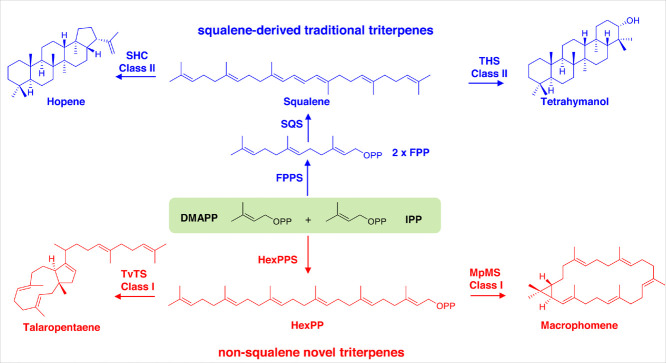
Triterpenes are derived from squalene or oxidosqualene. However, a new class of triterpenes derived from hexaprenyl pyrophosphate has been recently discovered, formed by a new family of chimeric class I triterpene synthases. The cyclization mechanisms of triterpenes were elucidated by isotopic labeling and protein structural analyses, which helps understand the biosynthesis of triterpenes in nature.





 京公网安备 11010802042870号
京ICP备2023020795号-1
京公网安备 11010802042870号
京ICP备2023020795号-1

 分享
分享

 求助内容:
求助内容: 应助结果提醒方式:
 扫码关注我们
