{"title":"两性霉素 B 的药代动力学:大鼠静脉注射市售最常见药物制剂后的菌株间差异。","authors":"Erfan Abdollahizad, Simin Dadashzadeh, Shima Bahri, Zahra Abbasian, Elham Rezaee","doi":"10.5812/ijpr-134772","DOIUrl":null,"url":null,"abstract":"<p><strong>Background: </strong>Amphotericin B (AmB) is the first-line drug to treat invasive fungal infections. However, its delivery to the body and clinical use faces many challenges because of its poor solubility, poor pharmacokinetics, and severe nephrotoxicity.</p><p><strong>Objectives: </strong>Due to the necessity for designing safer and more effective nanocarriers for AmB and the importance of preclinical pharmacokinetic studies in evaluating these novel drug delivery systems, the present study was framed to explore the influence of rat strain on the pharmacokinetic profile of this drug.</p><p><strong>Methods: </strong>Twenty-four Wistar and Sprague-Dawley (SD) rats were intravenously injected with 1 mg/kg AmB as Fungizone or AmBisome, which are the two most commonly marketed formulations of the drug. Blood samples were collected before and at regular intervals up to 24 h after administration. Drug concentration was analyzed by a validated HPLC method, and pharmacokinetic parameters were determined by the non-compartmental method.</p><p><strong>Results: </strong>Irrespective of the type of formulation, the AUC<sub>0-t</sub> and AUC<sub>0-∞</sub> values were significantly higher (P < 0.001), and Cl as an important PK parameter was markedly lower (P < 0.001) in SD rats compared to the Wistar strain. For Fungizone, the mean Cl values in SD and Wistar rats were 206.90 and 462.95 mL/h/kg (P < 0.001), respectively. The apparent volume of distribution (V<sub>ss</sub>) was also lower in SD rats compared to Wistar; however, for AmBisome, the difference in V<sub>ss</sub> was not statistically significant. Our further investigation suggested that the higher amount of total protein in the SD strain may justify the higher plasma concentrations and lower Cl and V<sub>ss</sub> of amphotericin B in this strain compared to the Wistar strain.</p><p><strong>Conclusions: </strong>Overall, following intravenous administration of AmB, there were significant differences in the pharmacokinetic parameters of the drug between two rat strains for both formulations. The obtained data is important for correctly interpreting experimental data from different research groups.</p>","PeriodicalId":14108,"journal":{"name":"International Journal of Modern Physics B","volume":"17 1","pages":"e134772"},"PeriodicalIF":2.8000,"publicationDate":"2023-03-23","publicationTypes":"Journal Article","fieldsOfStudy":null,"isOpenAccess":false,"openAccessPdf":"https://www.ncbi.nlm.nih.gov/pmc/articles/PMC10728861/pdf/","citationCount":"0","resultStr":"{\"title\":\"Amphotericin B Pharmacokinetics: Inter-strain Differences in Rats Following Intravenous Administration of the Most Commonly Marketed Formulations of the Drug.\",\"authors\":\"Erfan Abdollahizad, Simin Dadashzadeh, Shima Bahri, Zahra Abbasian, Elham Rezaee\",\"doi\":\"10.5812/ijpr-134772\",\"DOIUrl\":null,\"url\":null,\"abstract\":\"<p><strong>Background: </strong>Amphotericin B (AmB) is the first-line drug to treat invasive fungal infections. However, its delivery to the body and clinical use faces many challenges because of its poor solubility, poor pharmacokinetics, and severe nephrotoxicity.</p><p><strong>Objectives: </strong>Due to the necessity for designing safer and more effective nanocarriers for AmB and the importance of preclinical pharmacokinetic studies in evaluating these novel drug delivery systems, the present study was framed to explore the influence of rat strain on the pharmacokinetic profile of this drug.</p><p><strong>Methods: </strong>Twenty-four Wistar and Sprague-Dawley (SD) rats were intravenously injected with 1 mg/kg AmB as Fungizone or AmBisome, which are the two most commonly marketed formulations of the drug. Blood samples were collected before and at regular intervals up to 24 h after administration. Drug concentration was analyzed by a validated HPLC method, and pharmacokinetic parameters were determined by the non-compartmental method.</p><p><strong>Results: </strong>Irrespective of the type of formulation, the AUC<sub>0-t</sub> and AUC<sub>0-∞</sub> values were significantly higher (P < 0.001), and Cl as an important PK parameter was markedly lower (P < 0.001) in SD rats compared to the Wistar strain. For Fungizone, the mean Cl values in SD and Wistar rats were 206.90 and 462.95 mL/h/kg (P < 0.001), respectively. The apparent volume of distribution (V<sub>ss</sub>) was also lower in SD rats compared to Wistar; however, for AmBisome, the difference in V<sub>ss</sub> was not statistically significant. Our further investigation suggested that the higher amount of total protein in the SD strain may justify the higher plasma concentrations and lower Cl and V<sub>ss</sub> of amphotericin B in this strain compared to the Wistar strain.</p><p><strong>Conclusions: </strong>Overall, following intravenous administration of AmB, there were significant differences in the pharmacokinetic parameters of the drug between two rat strains for both formulations. The obtained data is important for correctly interpreting experimental data from different research groups.</p>\",\"PeriodicalId\":14108,\"journal\":{\"name\":\"International Journal of Modern Physics B\",\"volume\":\"17 1\",\"pages\":\"e134772\"},\"PeriodicalIF\":2.8000,\"publicationDate\":\"2023-03-23\",\"publicationTypes\":\"Journal Article\",\"fieldsOfStudy\":null,\"isOpenAccess\":false,\"openAccessPdf\":\"https://www.ncbi.nlm.nih.gov/pmc/articles/PMC10728861/pdf/\",\"citationCount\":\"0\",\"resultStr\":null,\"platform\":\"Semanticscholar\",\"paperid\":null,\"PeriodicalName\":\"International Journal of Modern Physics B\",\"FirstCategoryId\":\"3\",\"ListUrlMain\":\"https://doi.org/10.5812/ijpr-134772\",\"RegionNum\":4,\"RegionCategory\":\"物理与天体物理\",\"ArticlePicture\":[],\"TitleCN\":null,\"AbstractTextCN\":null,\"PMCID\":null,\"EPubDate\":\"2023/1/1 0:00:00\",\"PubModel\":\"eCollection\",\"JCR\":\"Q2\",\"JCRName\":\"PHYSICS, APPLIED\",\"Score\":null,\"Total\":0}","platform":"Semanticscholar","paperid":null,"PeriodicalName":"International Journal of Modern Physics B","FirstCategoryId":"3","ListUrlMain":"https://doi.org/10.5812/ijpr-134772","RegionNum":4,"RegionCategory":"物理与天体物理","ArticlePicture":[],"TitleCN":null,"AbstractTextCN":null,"PMCID":null,"EPubDate":"2023/1/1 0:00:00","PubModel":"eCollection","JCR":"Q2","JCRName":"PHYSICS, APPLIED","Score":null,"Total":0}
Amphotericin B Pharmacokinetics: Inter-strain Differences in Rats Following Intravenous Administration of the Most Commonly Marketed Formulations of the Drug.
Background: Amphotericin B (AmB) is the first-line drug to treat invasive fungal infections. However, its delivery to the body and clinical use faces many challenges because of its poor solubility, poor pharmacokinetics, and severe nephrotoxicity.
Objectives: Due to the necessity for designing safer and more effective nanocarriers for AmB and the importance of preclinical pharmacokinetic studies in evaluating these novel drug delivery systems, the present study was framed to explore the influence of rat strain on the pharmacokinetic profile of this drug.
Methods: Twenty-four Wistar and Sprague-Dawley (SD) rats were intravenously injected with 1 mg/kg AmB as Fungizone or AmBisome, which are the two most commonly marketed formulations of the drug. Blood samples were collected before and at regular intervals up to 24 h after administration. Drug concentration was analyzed by a validated HPLC method, and pharmacokinetic parameters were determined by the non-compartmental method.
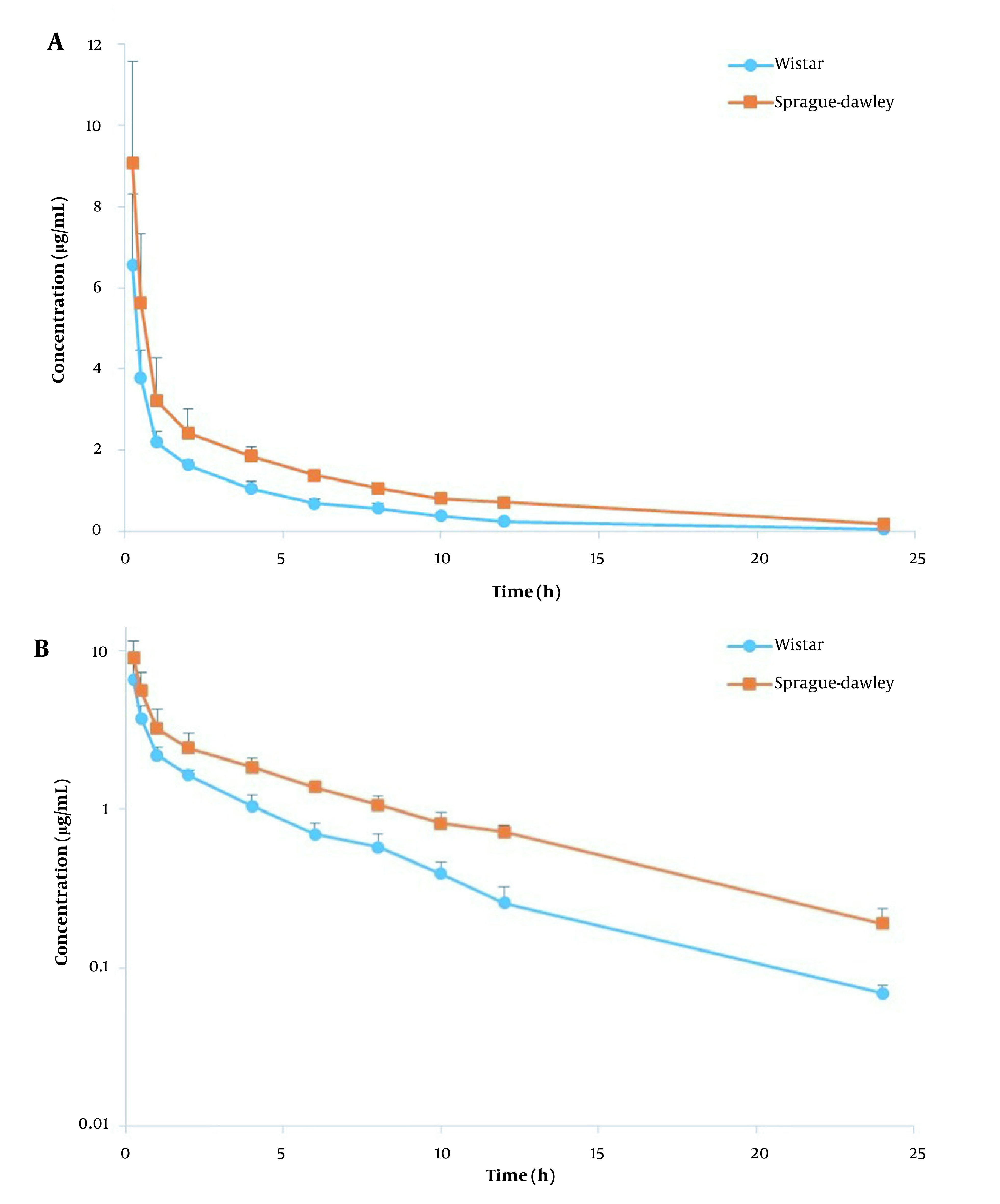
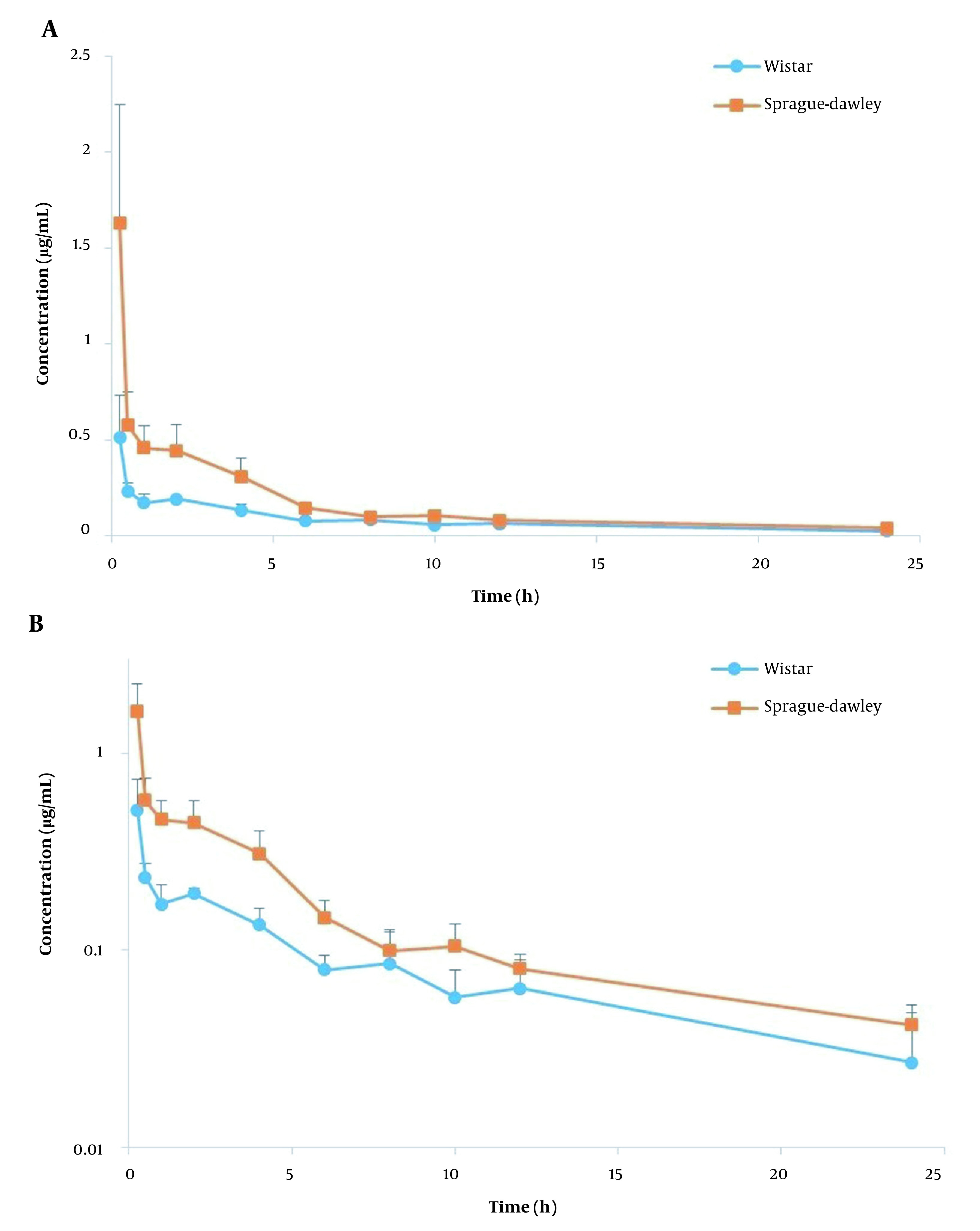
Results: Irrespective of the type of formulation, the AUC0-t and AUC0-∞ values were significantly higher (P < 0.001), and Cl as an important PK parameter was markedly lower (P < 0.001) in SD rats compared to the Wistar strain. For Fungizone, the mean Cl values in SD and Wistar rats were 206.90 and 462.95 mL/h/kg (P < 0.001), respectively. The apparent volume of distribution (Vss) was also lower in SD rats compared to Wistar; however, for AmBisome, the difference in Vss was not statistically significant. Our further investigation suggested that the higher amount of total protein in the SD strain may justify the higher plasma concentrations and lower Cl and Vss of amphotericin B in this strain compared to the Wistar strain.
Conclusions: Overall, following intravenous administration of AmB, there were significant differences in the pharmacokinetic parameters of the drug between two rat strains for both formulations. The obtained data is important for correctly interpreting experimental data from different research groups.
期刊介绍:
Launched in 1987, the International Journal of Modern Physics B covers the most important aspects and the latest developments in Condensed Matter Physics, Statistical Physics, as well as Atomic, Molecular and Optical Physics. A strong emphasis is placed on topics of current interest, such as cold atoms and molecules, new topological materials and phases, and novel low dimensional materials. One unique feature of this journal is its review section which contains articles with permanent research value besides the state-of-the-art research work in the relevant subject areas.





 京公网安备 11010802042870号
京ICP备2023020795号-1
京公网安备 11010802042870号
京ICP备2023020795号-1

 分享
分享
 求助内容:
求助内容: 应助结果提醒方式:
 扫码关注我们
