{"title":"黎巴嫩病人对保健医生的心理态度。","authors":"Fouad Ayoub, Youssef Fares, Jawad Fares","doi":"10.4103/1947-2714.168663","DOIUrl":null,"url":null,"abstract":"<p><strong>Background: </strong>Patients often complain about their doctor's attitude toward them. They describe the interaction that they have with some doctors as quick, cold, discourteous, or hardhearted. Although this does not apply to all Lebanese doctors, it does apply to some.</p><p><strong>Aims: </strong>The purpose of this study was to (1) examine the general perception of satisfaction, trust, and openness that Lebanese patients hold toward the work, office, personal, and social characteristics of their doctors - physician or dentist; and (2) identify the aspects on which a Lebanese health practitioner should focus to improve his/her practice.</p><p><strong>Materials and methods: </strong>A convenient sample of 450 individuals from an area housing nine hospitals and hundreds of private clinics in Greater Beirut were surveyed regarding the qualities of their health practitioners. They were asked to complete a nine-page, 85-item, anonymous, and voluntary questionnaire that dealt with the medical and dental practice in Lebanon. Participants were older than 18 years and mentally competent. None was physicians, dentists, or nurses. The questionnaire was open-ended and initially pretested and piloted among a random sample.</p><p><strong>Results: </strong>Four hundred-fifteen (92%) individuals responded. Participants were from different ages, genders, geographical areas, educational backgrounds, and professions. The doctor traits most preferred by the Lebanese public were found to be: Empathy (90%), professionalism (87%), miscellaneous traits (86%), and academics (81%).</p><p><strong>Conclusion: </strong>The results support the conventional wisdom that the idealized perception of a doctor as a care-giving, compassionate, knowledgeable, well-appearing, and healthy role model still holds true within the Lebanese community.</p>","PeriodicalId":13025,"journal":{"name":"Hormone Research in Paediatrics","volume":"86 1","pages":"452-8"},"PeriodicalIF":2.7000,"publicationDate":"2015-10-01","publicationTypes":"Journal Article","fieldsOfStudy":null,"isOpenAccess":false,"openAccessPdf":"https://www.ncbi.nlm.nih.gov/pmc/articles/PMC4677470/pdf/","citationCount":"0","resultStr":"{\"title\":\"The Psychological Attitude of Patients toward Health Practitioners in Lebanon.\",\"authors\":\"Fouad Ayoub, Youssef Fares, Jawad Fares\",\"doi\":\"10.4103/1947-2714.168663\",\"DOIUrl\":null,\"url\":null,\"abstract\":\"<p><strong>Background: </strong>Patients often complain about their doctor's attitude toward them. They describe the interaction that they have with some doctors as quick, cold, discourteous, or hardhearted. Although this does not apply to all Lebanese doctors, it does apply to some.</p><p><strong>Aims: </strong>The purpose of this study was to (1) examine the general perception of satisfaction, trust, and openness that Lebanese patients hold toward the work, office, personal, and social characteristics of their doctors - physician or dentist; and (2) identify the aspects on which a Lebanese health practitioner should focus to improve his/her practice.</p><p><strong>Materials and methods: </strong>A convenient sample of 450 individuals from an area housing nine hospitals and hundreds of private clinics in Greater Beirut were surveyed regarding the qualities of their health practitioners. They were asked to complete a nine-page, 85-item, anonymous, and voluntary questionnaire that dealt with the medical and dental practice in Lebanon. Participants were older than 18 years and mentally competent. None was physicians, dentists, or nurses. The questionnaire was open-ended and initially pretested and piloted among a random sample.</p><p><strong>Results: </strong>Four hundred-fifteen (92%) individuals responded. Participants were from different ages, genders, geographical areas, educational backgrounds, and professions. The doctor traits most preferred by the Lebanese public were found to be: Empathy (90%), professionalism (87%), miscellaneous traits (86%), and academics (81%).</p><p><strong>Conclusion: </strong>The results support the conventional wisdom that the idealized perception of a doctor as a care-giving, compassionate, knowledgeable, well-appearing, and healthy role model still holds true within the Lebanese community.</p>\",\"PeriodicalId\":13025,\"journal\":{\"name\":\"Hormone Research in Paediatrics\",\"volume\":\"86 1\",\"pages\":\"452-8\"},\"PeriodicalIF\":2.7000,\"publicationDate\":\"2015-10-01\",\"publicationTypes\":\"Journal Article\",\"fieldsOfStudy\":null,\"isOpenAccess\":false,\"openAccessPdf\":\"https://www.ncbi.nlm.nih.gov/pmc/articles/PMC4677470/pdf/\",\"citationCount\":\"0\",\"resultStr\":null,\"platform\":\"Semanticscholar\",\"paperid\":null,\"PeriodicalName\":\"Hormone Research in Paediatrics\",\"FirstCategoryId\":\"1085\",\"ListUrlMain\":\"https://doi.org/10.4103/1947-2714.168663\",\"RegionNum\":3,\"RegionCategory\":\"医学\",\"ArticlePicture\":[],\"TitleCN\":null,\"AbstractTextCN\":null,\"PMCID\":null,\"EPubDate\":\"\",\"PubModel\":\"\",\"JCR\":\"Q3\",\"JCRName\":\"ENDOCRINOLOGY & METABOLISM\",\"Score\":null,\"Total\":0}","platform":"Semanticscholar","paperid":null,"PeriodicalName":"Hormone Research in Paediatrics","FirstCategoryId":"1085","ListUrlMain":"https://doi.org/10.4103/1947-2714.168663","RegionNum":3,"RegionCategory":"医学","ArticlePicture":[],"TitleCN":null,"AbstractTextCN":null,"PMCID":null,"EPubDate":"","PubModel":"","JCR":"Q3","JCRName":"ENDOCRINOLOGY & METABOLISM","Score":null,"Total":0}
The Psychological Attitude of Patients toward Health Practitioners in Lebanon.
Background: Patients often complain about their doctor's attitude toward them. They describe the interaction that they have with some doctors as quick, cold, discourteous, or hardhearted. Although this does not apply to all Lebanese doctors, it does apply to some.
Aims: The purpose of this study was to (1) examine the general perception of satisfaction, trust, and openness that Lebanese patients hold toward the work, office, personal, and social characteristics of their doctors - physician or dentist; and (2) identify the aspects on which a Lebanese health practitioner should focus to improve his/her practice.
Materials and methods: A convenient sample of 450 individuals from an area housing nine hospitals and hundreds of private clinics in Greater Beirut were surveyed regarding the qualities of their health practitioners. They were asked to complete a nine-page, 85-item, anonymous, and voluntary questionnaire that dealt with the medical and dental practice in Lebanon. Participants were older than 18 years and mentally competent. None was physicians, dentists, or nurses. The questionnaire was open-ended and initially pretested and piloted among a random sample.
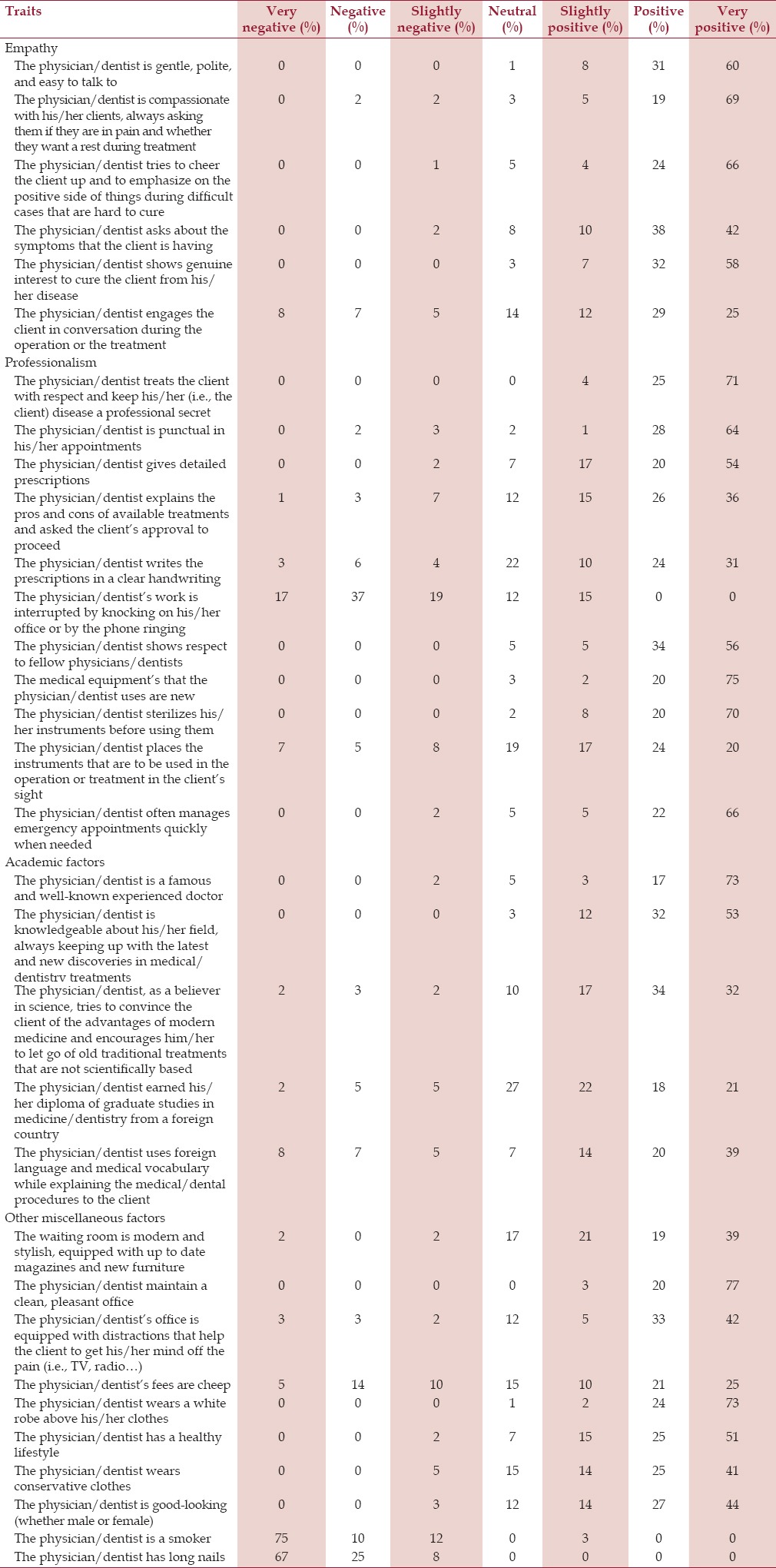
Results: Four hundred-fifteen (92%) individuals responded. Participants were from different ages, genders, geographical areas, educational backgrounds, and professions. The doctor traits most preferred by the Lebanese public were found to be: Empathy (90%), professionalism (87%), miscellaneous traits (86%), and academics (81%).
Conclusion: The results support the conventional wisdom that the idealized perception of a doctor as a care-giving, compassionate, knowledgeable, well-appearing, and healthy role model still holds true within the Lebanese community.
期刊介绍:
The mission of ''Hormone Research in Paediatrics'' is to improve the care of children with endocrine disorders by promoting basic and clinical knowledge. The journal facilitates the dissemination of information through original papers, mini reviews, clinical guidelines and papers on novel insights from clinical practice. Periodic editorials from outstanding paediatric endocrinologists address the main published novelties by critically reviewing the major strengths and weaknesses of the studies.





 京公网安备 11010802042870号
京ICP备2023020795号-1
京公网安备 11010802042870号
京ICP备2023020795号-1

 分享
分享
 求助内容:
求助内容: 应助结果提醒方式:
 扫码关注我们
