Mostafa Abdollahi, Samad Lotfollahzadeh, Mohammad Hossein Nazem Shirazi, Sara Shokrpoor, Farhad Moosakhani, Minoo Partovi Nasr
{"title":"伊朗山羊山羊山羊支原体卡布利肺炎亚种的首次鉴定。","authors":"Mostafa Abdollahi, Samad Lotfollahzadeh, Mohammad Hossein Nazem Shirazi, Sara Shokrpoor, Farhad Moosakhani, Minoo Partovi Nasr","doi":"10.30466/vrf.2022.555079.3496","DOIUrl":null,"url":null,"abstract":"<p><p><i>Mycoplasma</i> <i>capricolum</i> subspecies <i>capripneumoniae</i> (Mccp) is the etiological agent of caprine contagious pleuropneumonia (CCPP) disease. The CCPP is one of the most severe diseases of goats. A herd of 2,000 goats located in the countryside of Tehran city, Iran, was examined for the study in August 2021. In history taking, observation, inspection and clinical examination, high case fatality rate (46.00%) due to respiratory distress and high morbidity of pleuropneumonia (15.00%) syndrome were recorded. Accordingly, ten carcasses of goats were dissected. The epidemiological pattern of the disease, clinical examination findings and the signs of necropsy of dead patients were suspected to CCPP. Four lung samples of necropsied goats were sent to the laboratory for PCR test and in all of them, Mccp was detected and CCPP was also confirmed. The disease was controlled by two measures: (a) the whole herd was first treated with antibiotics (florfenicol and tylosin) and (b) then the Pulmovac-In vaccine was then administered. This study is the first documented report of CCPP occurrence caused by Mccp in Iran and shows the importance of availability of effective vaccines to control and prevention of CCPP.</p>","PeriodicalId":23989,"journal":{"name":"Veterinary Research Forum","volume":"14 2","pages":"109-112"},"PeriodicalIF":1.1000,"publicationDate":"2023-01-01","publicationTypes":"Journal Article","fieldsOfStudy":null,"isOpenAccess":false,"openAccessPdf":"https://ftp.ncbi.nlm.nih.gov/pub/pmc/oa_pdf/3b/6a/vrf-14-109.PMC10003596.pdf","citationCount":"0","resultStr":"{\"title\":\"First identification of <i>Mycoplasma capricolum</i> subspecies <i>capripneumoniae</i> in goats in Iran.\",\"authors\":\"Mostafa Abdollahi, Samad Lotfollahzadeh, Mohammad Hossein Nazem Shirazi, Sara Shokrpoor, Farhad Moosakhani, Minoo Partovi Nasr\",\"doi\":\"10.30466/vrf.2022.555079.3496\",\"DOIUrl\":null,\"url\":null,\"abstract\":\"<p><p><i>Mycoplasma</i> <i>capricolum</i> subspecies <i>capripneumoniae</i> (Mccp) is the etiological agent of caprine contagious pleuropneumonia (CCPP) disease. The CCPP is one of the most severe diseases of goats. A herd of 2,000 goats located in the countryside of Tehran city, Iran, was examined for the study in August 2021. In history taking, observation, inspection and clinical examination, high case fatality rate (46.00%) due to respiratory distress and high morbidity of pleuropneumonia (15.00%) syndrome were recorded. Accordingly, ten carcasses of goats were dissected. The epidemiological pattern of the disease, clinical examination findings and the signs of necropsy of dead patients were suspected to CCPP. Four lung samples of necropsied goats were sent to the laboratory for PCR test and in all of them, Mccp was detected and CCPP was also confirmed. The disease was controlled by two measures: (a) the whole herd was first treated with antibiotics (florfenicol and tylosin) and (b) then the Pulmovac-In vaccine was then administered. This study is the first documented report of CCPP occurrence caused by Mccp in Iran and shows the importance of availability of effective vaccines to control and prevention of CCPP.</p>\",\"PeriodicalId\":23989,\"journal\":{\"name\":\"Veterinary Research Forum\",\"volume\":\"14 2\",\"pages\":\"109-112\"},\"PeriodicalIF\":1.1000,\"publicationDate\":\"2023-01-01\",\"publicationTypes\":\"Journal Article\",\"fieldsOfStudy\":null,\"isOpenAccess\":false,\"openAccessPdf\":\"https://ftp.ncbi.nlm.nih.gov/pub/pmc/oa_pdf/3b/6a/vrf-14-109.PMC10003596.pdf\",\"citationCount\":\"0\",\"resultStr\":null,\"platform\":\"Semanticscholar\",\"paperid\":null,\"PeriodicalName\":\"Veterinary Research Forum\",\"FirstCategoryId\":\"97\",\"ListUrlMain\":\"https://doi.org/10.30466/vrf.2022.555079.3496\",\"RegionNum\":4,\"RegionCategory\":\"农林科学\",\"ArticlePicture\":[],\"TitleCN\":null,\"AbstractTextCN\":null,\"PMCID\":null,\"EPubDate\":\"\",\"PubModel\":\"\",\"JCR\":\"Q3\",\"JCRName\":\"ZOOLOGY\",\"Score\":null,\"Total\":0}","platform":"Semanticscholar","paperid":null,"PeriodicalName":"Veterinary Research Forum","FirstCategoryId":"97","ListUrlMain":"https://doi.org/10.30466/vrf.2022.555079.3496","RegionNum":4,"RegionCategory":"农林科学","ArticlePicture":[],"TitleCN":null,"AbstractTextCN":null,"PMCID":null,"EPubDate":"","PubModel":"","JCR":"Q3","JCRName":"ZOOLOGY","Score":null,"Total":0}
First identification of Mycoplasma capricolum subspecies capripneumoniae in goats in Iran.
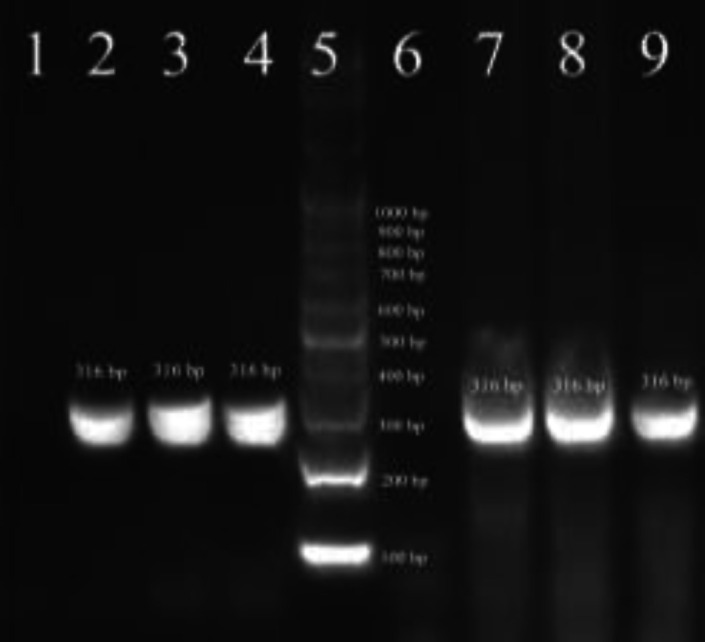
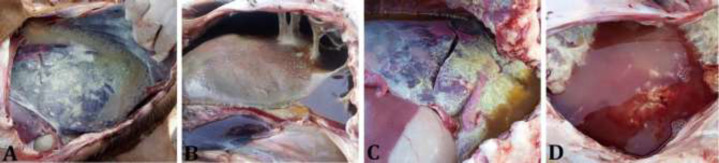
Mycoplasmacapricolum subspecies capripneumoniae (Mccp) is the etiological agent of caprine contagious pleuropneumonia (CCPP) disease. The CCPP is one of the most severe diseases of goats. A herd of 2,000 goats located in the countryside of Tehran city, Iran, was examined for the study in August 2021. In history taking, observation, inspection and clinical examination, high case fatality rate (46.00%) due to respiratory distress and high morbidity of pleuropneumonia (15.00%) syndrome were recorded. Accordingly, ten carcasses of goats were dissected. The epidemiological pattern of the disease, clinical examination findings and the signs of necropsy of dead patients were suspected to CCPP. Four lung samples of necropsied goats were sent to the laboratory for PCR test and in all of them, Mccp was detected and CCPP was also confirmed. The disease was controlled by two measures: (a) the whole herd was first treated with antibiotics (florfenicol and tylosin) and (b) then the Pulmovac-In vaccine was then administered. This study is the first documented report of CCPP occurrence caused by Mccp in Iran and shows the importance of availability of effective vaccines to control and prevention of CCPP.
期刊介绍:
Veterinary Research Forum (VRF) is a quarterly international journal committed to publish worldwide contributions on all aspects of veterinary science and medicine, including anatomy and histology, physiology and pharmacology, anatomic and clinical pathology, parasitology, microbiology, immunology and epidemiology, food hygiene, poultry science, fish and aquaculture, anesthesia and surgery, large and small animal internal medicine, large and small animal reproduction, biotechnology and diagnostic imaging of domestic, companion and farm animals.





 京公网安备 11010802042870号
京ICP备2023020795号-1
京公网安备 11010802042870号
京ICP备2023020795号-1

 分享
分享
 求助内容:
求助内容: 应助结果提醒方式:
 扫码关注我们
