Stefan Perera, Richard Cook, Ker-Ai Lee, Patti Katz, Zahi Touma
{"title":"成人系统性红斑狼疮患者认知功能的个体内变化:一项超过7年的马尔可夫分析","authors":"Stefan Perera, Richard Cook, Ker-Ai Lee, Patti Katz, Zahi Touma","doi":"10.1002/acr2.11529","DOIUrl":null,"url":null,"abstract":"<p><strong>Objective: </strong>Cognitive impairment is prevalent in systemic lupus erythematosus (SLE). There remain gaps in understanding cognition and SLE longitudinally. We studied intraindividual change in cognition in SLE over time.</p><p><strong>Methods: </strong>Data were from the University of California, San Francisco Lupus Outcome Study, which included 1281 adults with SLE. The Hopkins Verbal Learning Test-Revised (HVLT-R) and the Controlled Oral Word Association Test (COWAT) were administered annually over 7 years. A two-state Markov analysis was used to model transition intensities for probabilities of change in cognition. Logistic regression examined the association between clinical variables and cognitive change.</p><p><strong>Results: </strong>Minimal transition between cognitive states was observed in the Markov analysis. Using the COWAT, higher levels of self-reported depression were associated with decreased likelihood of cognitive improvement (Relative Risk [RR]: 0.98; 95% confidence interval [CI]: 0.96-0.99), and higher self-reported disease severity was associated with cognitive decline (RR: 1.05; 95% CI: 1.02-1.09). Using the HVLT-R, increasing age (RR: 1.02; 95% CI: 1.01-1.03) and higher education level (RR: 1.82; 95% CI: 1.28-2.58) were associated with cognitive improvement, and higher self-reported disease severity (RR: 1.02; 95% CI: 1.01-1.03) and depression (RR: 1.05; 95% CI: 1.03-1.07) were associated with cognitive decline.</p><p><strong>Conclusion: </strong>Most individuals with SLE did not transition between states of high (Z score ≥ -1.5) or low (Z score < -1.5) cognition in a Markov analysis over a 7-year assessment period, highlighting a degree of relative stability in cognition over time. Increasing age and higher education levels were associated with greater likelihood of cognitive improvement. Greater self-reported SLE disease severity and depression were associated with cognitive decline.</p>","PeriodicalId":7084,"journal":{"name":"ACR Open Rheumatology","volume":"5 3","pages":"124-131"},"PeriodicalIF":0.0000,"publicationDate":"2023-03-01","publicationTypes":"Journal Article","fieldsOfStudy":null,"isOpenAccess":false,"openAccessPdf":"https://ftp.ncbi.nlm.nih.gov/pub/pmc/oa_pdf/d3/3e/ACR2-5-124.PMC10010484.pdf","citationCount":"0","resultStr":"{\"title\":\"Intraindividual Change in Cognitive Function Among Adults With Systemic Lupus Erythematosus: A Markov Analysis Over 7 Years.\",\"authors\":\"Stefan Perera, Richard Cook, Ker-Ai Lee, Patti Katz, Zahi Touma\",\"doi\":\"10.1002/acr2.11529\",\"DOIUrl\":null,\"url\":null,\"abstract\":\"<p><strong>Objective: </strong>Cognitive impairment is prevalent in systemic lupus erythematosus (SLE). There remain gaps in understanding cognition and SLE longitudinally. We studied intraindividual change in cognition in SLE over time.</p><p><strong>Methods: </strong>Data were from the University of California, San Francisco Lupus Outcome Study, which included 1281 adults with SLE. The Hopkins Verbal Learning Test-Revised (HVLT-R) and the Controlled Oral Word Association Test (COWAT) were administered annually over 7 years. A two-state Markov analysis was used to model transition intensities for probabilities of change in cognition. Logistic regression examined the association between clinical variables and cognitive change.</p><p><strong>Results: </strong>Minimal transition between cognitive states was observed in the Markov analysis. Using the COWAT, higher levels of self-reported depression were associated with decreased likelihood of cognitive improvement (Relative Risk [RR]: 0.98; 95% confidence interval [CI]: 0.96-0.99), and higher self-reported disease severity was associated with cognitive decline (RR: 1.05; 95% CI: 1.02-1.09). Using the HVLT-R, increasing age (RR: 1.02; 95% CI: 1.01-1.03) and higher education level (RR: 1.82; 95% CI: 1.28-2.58) were associated with cognitive improvement, and higher self-reported disease severity (RR: 1.02; 95% CI: 1.01-1.03) and depression (RR: 1.05; 95% CI: 1.03-1.07) were associated with cognitive decline.</p><p><strong>Conclusion: </strong>Most individuals with SLE did not transition between states of high (Z score ≥ -1.5) or low (Z score < -1.5) cognition in a Markov analysis over a 7-year assessment period, highlighting a degree of relative stability in cognition over time. Increasing age and higher education levels were associated with greater likelihood of cognitive improvement. Greater self-reported SLE disease severity and depression were associated with cognitive decline.</p>\",\"PeriodicalId\":7084,\"journal\":{\"name\":\"ACR Open Rheumatology\",\"volume\":\"5 3\",\"pages\":\"124-131\"},\"PeriodicalIF\":0.0000,\"publicationDate\":\"2023-03-01\",\"publicationTypes\":\"Journal Article\",\"fieldsOfStudy\":null,\"isOpenAccess\":false,\"openAccessPdf\":\"https://ftp.ncbi.nlm.nih.gov/pub/pmc/oa_pdf/d3/3e/ACR2-5-124.PMC10010484.pdf\",\"citationCount\":\"0\",\"resultStr\":null,\"platform\":\"Semanticscholar\",\"paperid\":null,\"PeriodicalName\":\"ACR Open Rheumatology\",\"FirstCategoryId\":\"1085\",\"ListUrlMain\":\"https://doi.org/10.1002/acr2.11529\",\"RegionNum\":0,\"RegionCategory\":null,\"ArticlePicture\":[],\"TitleCN\":null,\"AbstractTextCN\":null,\"PMCID\":null,\"EPubDate\":\"2023/1/27 0:00:00\",\"PubModel\":\"Epub\",\"JCR\":\"\",\"JCRName\":\"\",\"Score\":null,\"Total\":0}","platform":"Semanticscholar","paperid":null,"PeriodicalName":"ACR Open Rheumatology","FirstCategoryId":"1085","ListUrlMain":"https://doi.org/10.1002/acr2.11529","RegionNum":0,"RegionCategory":null,"ArticlePicture":[],"TitleCN":null,"AbstractTextCN":null,"PMCID":null,"EPubDate":"2023/1/27 0:00:00","PubModel":"Epub","JCR":"","JCRName":"","Score":null,"Total":0}
Intraindividual Change in Cognitive Function Among Adults With Systemic Lupus Erythematosus: A Markov Analysis Over 7 Years.
Objective: Cognitive impairment is prevalent in systemic lupus erythematosus (SLE). There remain gaps in understanding cognition and SLE longitudinally. We studied intraindividual change in cognition in SLE over time.
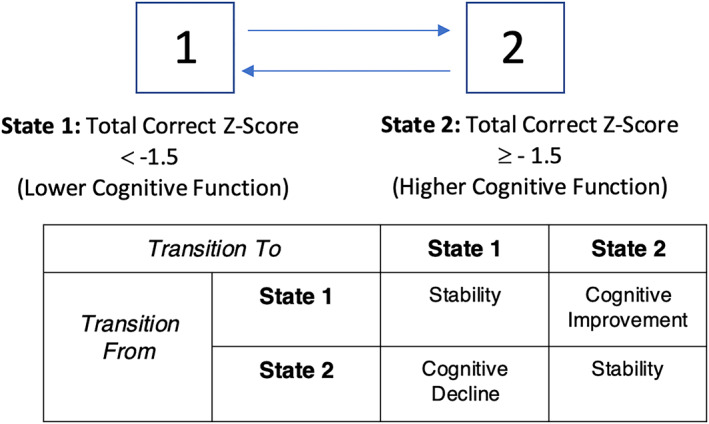
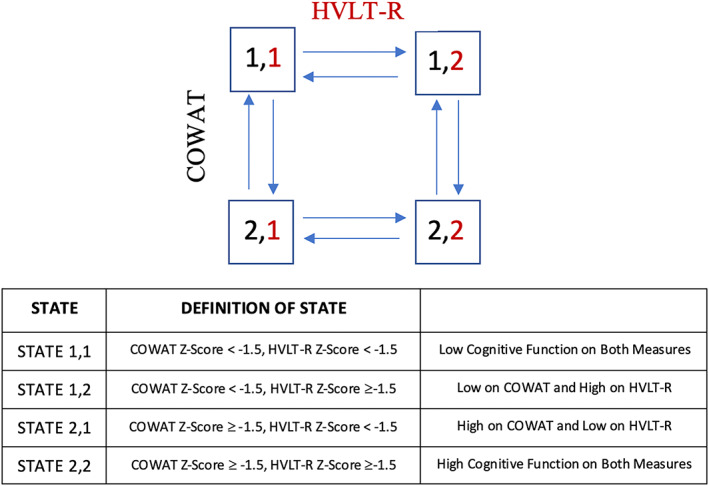
Methods: Data were from the University of California, San Francisco Lupus Outcome Study, which included 1281 adults with SLE. The Hopkins Verbal Learning Test-Revised (HVLT-R) and the Controlled Oral Word Association Test (COWAT) were administered annually over 7 years. A two-state Markov analysis was used to model transition intensities for probabilities of change in cognition. Logistic regression examined the association between clinical variables and cognitive change.
Results: Minimal transition between cognitive states was observed in the Markov analysis. Using the COWAT, higher levels of self-reported depression were associated with decreased likelihood of cognitive improvement (Relative Risk [RR]: 0.98; 95% confidence interval [CI]: 0.96-0.99), and higher self-reported disease severity was associated with cognitive decline (RR: 1.05; 95% CI: 1.02-1.09). Using the HVLT-R, increasing age (RR: 1.02; 95% CI: 1.01-1.03) and higher education level (RR: 1.82; 95% CI: 1.28-2.58) were associated with cognitive improvement, and higher self-reported disease severity (RR: 1.02; 95% CI: 1.01-1.03) and depression (RR: 1.05; 95% CI: 1.03-1.07) were associated with cognitive decline.
Conclusion: Most individuals with SLE did not transition between states of high (Z score ≥ -1.5) or low (Z score < -1.5) cognition in a Markov analysis over a 7-year assessment period, highlighting a degree of relative stability in cognition over time. Increasing age and higher education levels were associated with greater likelihood of cognitive improvement. Greater self-reported SLE disease severity and depression were associated with cognitive decline.




 京公网安备 11010802042870号
京ICP备2023020795号-1
京公网安备 11010802042870号
京ICP备2023020795号-1

 分享
分享

 求助内容:
求助内容: 应助结果提醒方式:
 扫码关注我们
