{"title":"重复经颅磁刺激对长冠状病毒病2019伴疲劳和认知功能障碍的影响","authors":"Nobuyuki Sasaki, Masato Yamatoku, Tomoya Tsuchida, Hiroyuki Sato, Keiichiro Yamaguchi","doi":"10.2490/prm.20230004","DOIUrl":null,"url":null,"abstract":"<p><strong>Objectives: </strong>There is no established treatment for chronic fatigue and various cognitive dysfunctions (brain fog) caused by long coronavirus disease 2019 (COVID-19). We aimed to clarify the effectiveness of repetitive transcranial magnetic stimulation (rTMS) for treating these symptoms.</p><p><strong>Methods: </strong>High-frequency rTMS was applied to occipital and frontal lobes in 12 patients with chronic fatigue and cognitive dysfunction 3 months after severe acute respiratory syndrome coronavirus 2 infection. Before and after ten sessions of rTMS, Brief Fatigue Inventory (BFI), Apathy Scale (AS), and Wechsler Adult Intelligence Scale-fourth edition (WAIS4) were determined and <i>N</i>-isopropyl-<i>p</i>-[<sup>123</sup>I]iodoamphetamine single photon emission computed tomography (SPECT) was performed.</p><p><strong>Results: </strong>Twelve subjects completed ten sessions of rTMS without adverse events. The mean age of the subjects was 44.3 ± 10.7 years, and the mean duration of illness was 202.4 ± 114.5 days. BFI, which was 5.7 ± 2.3 before the intervention, decreased significantly to 1.9 ± 1.8 after the intervention. The AS was significantly decreased after the intervention from 19.2 ± 8.7 to 10.3 ± 7.2. All WAIS4 sub-items were significantly improved after rTMS intervention, and the full-scale intelligence quotient increased from 94.6 ± 10.9 to 104.4 ± 13.0. Hypoperfusion in the bilateral occipital and frontal lobes observed on SPECT improved in extent and severity after ten sessions of rTMS.</p><p><strong>Conclusions: </strong>Although we are still in the early stages of exploring the effects of rTMS, the procedure has the potential for use as a new non-invasive treatment for the symptoms of long COVID.</p>","PeriodicalId":74584,"journal":{"name":"Progress in rehabilitation medicine","volume":"8 ","pages":"20230004"},"PeriodicalIF":1.5000,"publicationDate":"2023-01-01","publicationTypes":"Journal Article","fieldsOfStudy":null,"isOpenAccess":false,"openAccessPdf":"https://ftp.ncbi.nlm.nih.gov/pub/pmc/oa_pdf/95/bf/prm-8-20230004.PMC9968785.pdf","citationCount":"2","resultStr":"{\"title\":\"Effect of Repetitive Transcranial Magnetic Stimulation on Long Coronavirus Disease 2019 with Fatigue and Cognitive Dysfunction.\",\"authors\":\"Nobuyuki Sasaki, Masato Yamatoku, Tomoya Tsuchida, Hiroyuki Sato, Keiichiro Yamaguchi\",\"doi\":\"10.2490/prm.20230004\",\"DOIUrl\":null,\"url\":null,\"abstract\":\"<p><strong>Objectives: </strong>There is no established treatment for chronic fatigue and various cognitive dysfunctions (brain fog) caused by long coronavirus disease 2019 (COVID-19). We aimed to clarify the effectiveness of repetitive transcranial magnetic stimulation (rTMS) for treating these symptoms.</p><p><strong>Methods: </strong>High-frequency rTMS was applied to occipital and frontal lobes in 12 patients with chronic fatigue and cognitive dysfunction 3 months after severe acute respiratory syndrome coronavirus 2 infection. Before and after ten sessions of rTMS, Brief Fatigue Inventory (BFI), Apathy Scale (AS), and Wechsler Adult Intelligence Scale-fourth edition (WAIS4) were determined and <i>N</i>-isopropyl-<i>p</i>-[<sup>123</sup>I]iodoamphetamine single photon emission computed tomography (SPECT) was performed.</p><p><strong>Results: </strong>Twelve subjects completed ten sessions of rTMS without adverse events. The mean age of the subjects was 44.3 ± 10.7 years, and the mean duration of illness was 202.4 ± 114.5 days. BFI, which was 5.7 ± 2.3 before the intervention, decreased significantly to 1.9 ± 1.8 after the intervention. The AS was significantly decreased after the intervention from 19.2 ± 8.7 to 10.3 ± 7.2. All WAIS4 sub-items were significantly improved after rTMS intervention, and the full-scale intelligence quotient increased from 94.6 ± 10.9 to 104.4 ± 13.0. Hypoperfusion in the bilateral occipital and frontal lobes observed on SPECT improved in extent and severity after ten sessions of rTMS.</p><p><strong>Conclusions: </strong>Although we are still in the early stages of exploring the effects of rTMS, the procedure has the potential for use as a new non-invasive treatment for the symptoms of long COVID.</p>\",\"PeriodicalId\":74584,\"journal\":{\"name\":\"Progress in rehabilitation medicine\",\"volume\":\"8 \",\"pages\":\"20230004\"},\"PeriodicalIF\":1.5000,\"publicationDate\":\"2023-01-01\",\"publicationTypes\":\"Journal Article\",\"fieldsOfStudy\":null,\"isOpenAccess\":false,\"openAccessPdf\":\"https://ftp.ncbi.nlm.nih.gov/pub/pmc/oa_pdf/95/bf/prm-8-20230004.PMC9968785.pdf\",\"citationCount\":\"2\",\"resultStr\":null,\"platform\":\"Semanticscholar\",\"paperid\":null,\"PeriodicalName\":\"Progress in rehabilitation medicine\",\"FirstCategoryId\":\"1085\",\"ListUrlMain\":\"https://doi.org/10.2490/prm.20230004\",\"RegionNum\":0,\"RegionCategory\":null,\"ArticlePicture\":[],\"TitleCN\":null,\"AbstractTextCN\":null,\"PMCID\":null,\"EPubDate\":\"\",\"PubModel\":\"\",\"JCR\":\"\",\"JCRName\":\"\",\"Score\":null,\"Total\":0}","platform":"Semanticscholar","paperid":null,"PeriodicalName":"Progress in rehabilitation medicine","FirstCategoryId":"1085","ListUrlMain":"https://doi.org/10.2490/prm.20230004","RegionNum":0,"RegionCategory":null,"ArticlePicture":[],"TitleCN":null,"AbstractTextCN":null,"PMCID":null,"EPubDate":"","PubModel":"","JCR":"","JCRName":"","Score":null,"Total":0}
Effect of Repetitive Transcranial Magnetic Stimulation on Long Coronavirus Disease 2019 with Fatigue and Cognitive Dysfunction.
Objectives: There is no established treatment for chronic fatigue and various cognitive dysfunctions (brain fog) caused by long coronavirus disease 2019 (COVID-19). We aimed to clarify the effectiveness of repetitive transcranial magnetic stimulation (rTMS) for treating these symptoms.
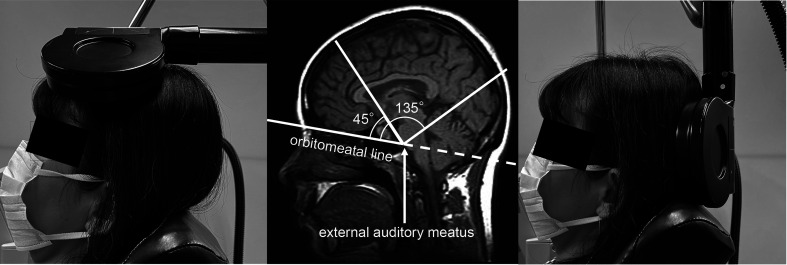
Methods: High-frequency rTMS was applied to occipital and frontal lobes in 12 patients with chronic fatigue and cognitive dysfunction 3 months after severe acute respiratory syndrome coronavirus 2 infection. Before and after ten sessions of rTMS, Brief Fatigue Inventory (BFI), Apathy Scale (AS), and Wechsler Adult Intelligence Scale-fourth edition (WAIS4) were determined and N-isopropyl-p-[123I]iodoamphetamine single photon emission computed tomography (SPECT) was performed.
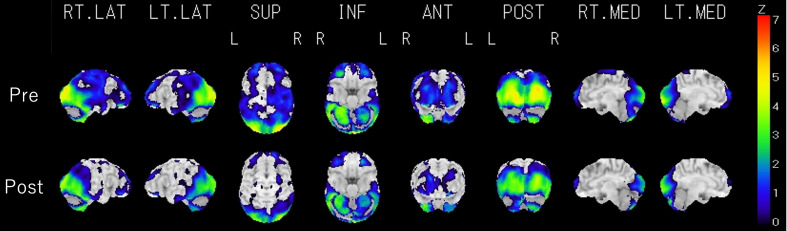
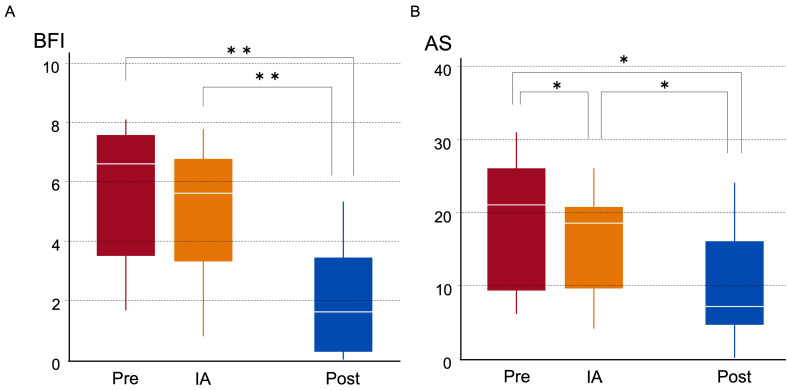
Results: Twelve subjects completed ten sessions of rTMS without adverse events. The mean age of the subjects was 44.3 ± 10.7 years, and the mean duration of illness was 202.4 ± 114.5 days. BFI, which was 5.7 ± 2.3 before the intervention, decreased significantly to 1.9 ± 1.8 after the intervention. The AS was significantly decreased after the intervention from 19.2 ± 8.7 to 10.3 ± 7.2. All WAIS4 sub-items were significantly improved after rTMS intervention, and the full-scale intelligence quotient increased from 94.6 ± 10.9 to 104.4 ± 13.0. Hypoperfusion in the bilateral occipital and frontal lobes observed on SPECT improved in extent and severity after ten sessions of rTMS.
Conclusions: Although we are still in the early stages of exploring the effects of rTMS, the procedure has the potential for use as a new non-invasive treatment for the symptoms of long COVID.




 京公网安备 11010802042870号
京ICP备2023020795号-1
京公网安备 11010802042870号
京ICP备2023020795号-1

 分享
分享

 求助内容:
求助内容: 应助结果提醒方式:
 扫码关注我们
