{"title":"院前抗生素对急诊科败血症患者院内死亡率的影响。","authors":"Rujabhorn Kotnarin, Penpischa Sirinawee, Jirapong Supasaovapak","doi":"10.2147/OAEM.S413791","DOIUrl":null,"url":null,"abstract":"<p><strong>Background: </strong>Sepsis is a life-threatening medical condition that requires early recognition and timely management to improve patient outcomes and reduce mortality rates. Administering antibiotics in the prehospital setting can be effective to reduce the time to antibiotic therapy, which may be crucial for sepsis patients. However, the impact of prehospital antibiotics on mortality in sepsis patients remains uncertain, and the current evidence to support this practice in middle-income countries is particularly limited.</p><p><strong>Methods: </strong>This was a single-center, retrospective-prospective cohort study aimed at determining the impact of prehospital antibiotics on in-hospital mortality rates among adult patients with sepsis. The study included patients who received care from the advanced level of Emergency Medical Service between June 2020 and October 2022 and compared the mortality rates of patients who received prehospital antibiotics with those of their counterparts who did not.</p><p><strong>Results: </strong>In this study, 180 patients with a mean age of 71.6 ± 15.7 years were included, of whom 68.9% experienced respiratory infections. The results demonstrated that the prehospital antibiotic group had a significantly lower in-hospital mortality rate (32.2%) than the non-prehospital antibiotic group (47.8%; p=0.034). After adjusting for confounding factors, the odds ratio was 0.304 (95% CI: 0.11, 0.82; p=0.018), indicating a 69.6% lower incidence of in-hospital mortality in the prehospital antibiotic group. Furthermore, the prehospital antibiotic group received antibiotics significantly earlier (16.0 ± 7.4 minutes) than the non-prehospital group (50.9 ± 29.4 minutes; p<0.001).</p><p><strong>Conclusion: </strong>This study provides evidence to support the administration of antibiotics to sepsis patients in the prehospital setting, as this practice can reduce mortality rates. However, larger, multicenter studies are required to confirm these findings and to further investigate the potential benefits of prehospital antibiotics in improving patient outcomes.</p>","PeriodicalId":74347,"journal":{"name":"","volume":"15 ","pages":"199-206"},"PeriodicalIF":0.0,"publicationDate":"2023-05-26","publicationTypes":"Journal Article","fieldsOfStudy":null,"isOpenAccess":false,"openAccessPdf":"https://ftp.ncbi.nlm.nih.gov/pub/pmc/oa_pdf/47/34/oaem-15-199.PMC10228518.pdf","citationCount":"0","resultStr":"{\"title\":\"Impact of Prehospital Antibiotics on in-Hospital Mortality in Emergency Medical Service Patients with Sepsis.\",\"authors\":\"Rujabhorn Kotnarin, Penpischa Sirinawee, Jirapong Supasaovapak\",\"doi\":\"10.2147/OAEM.S413791\",\"DOIUrl\":null,\"url\":null,\"abstract\":\"<p><strong>Background: </strong>Sepsis is a life-threatening medical condition that requires early recognition and timely management to improve patient outcomes and reduce mortality rates. Administering antibiotics in the prehospital setting can be effective to reduce the time to antibiotic therapy, which may be crucial for sepsis patients. However, the impact of prehospital antibiotics on mortality in sepsis patients remains uncertain, and the current evidence to support this practice in middle-income countries is particularly limited.</p><p><strong>Methods: </strong>This was a single-center, retrospective-prospective cohort study aimed at determining the impact of prehospital antibiotics on in-hospital mortality rates among adult patients with sepsis. The study included patients who received care from the advanced level of Emergency Medical Service between June 2020 and October 2022 and compared the mortality rates of patients who received prehospital antibiotics with those of their counterparts who did not.</p><p><strong>Results: </strong>In this study, 180 patients with a mean age of 71.6 ± 15.7 years were included, of whom 68.9% experienced respiratory infections. The results demonstrated that the prehospital antibiotic group had a significantly lower in-hospital mortality rate (32.2%) than the non-prehospital antibiotic group (47.8%; p=0.034). After adjusting for confounding factors, the odds ratio was 0.304 (95% CI: 0.11, 0.82; p=0.018), indicating a 69.6% lower incidence of in-hospital mortality in the prehospital antibiotic group. Furthermore, the prehospital antibiotic group received antibiotics significantly earlier (16.0 ± 7.4 minutes) than the non-prehospital group (50.9 ± 29.4 minutes; p<0.001).</p><p><strong>Conclusion: </strong>This study provides evidence to support the administration of antibiotics to sepsis patients in the prehospital setting, as this practice can reduce mortality rates. However, larger, multicenter studies are required to confirm these findings and to further investigate the potential benefits of prehospital antibiotics in improving patient outcomes.</p>\",\"PeriodicalId\":74347,\"journal\":{\"name\":\"\",\"volume\":\"15 \",\"pages\":\"199-206\"},\"PeriodicalIF\":0.0,\"publicationDate\":\"2023-05-26\",\"publicationTypes\":\"Journal Article\",\"fieldsOfStudy\":null,\"isOpenAccess\":false,\"openAccessPdf\":\"https://ftp.ncbi.nlm.nih.gov/pub/pmc/oa_pdf/47/34/oaem-15-199.PMC10228518.pdf\",\"citationCount\":\"0\",\"resultStr\":null,\"platform\":\"Semanticscholar\",\"paperid\":null,\"PeriodicalName\":\"\",\"FirstCategoryId\":\"1085\",\"ListUrlMain\":\"https://doi.org/10.2147/OAEM.S413791\",\"RegionNum\":0,\"RegionCategory\":null,\"ArticlePicture\":[],\"TitleCN\":null,\"AbstractTextCN\":null,\"PMCID\":null,\"EPubDate\":\"2023/1/1 0:00:00\",\"PubModel\":\"eCollection\",\"JCR\":\"\",\"JCRName\":\"\",\"Score\":null,\"Total\":0}","platform":"Semanticscholar","paperid":null,"PeriodicalName":"","FirstCategoryId":"1085","ListUrlMain":"https://doi.org/10.2147/OAEM.S413791","RegionNum":0,"RegionCategory":null,"ArticlePicture":[],"TitleCN":null,"AbstractTextCN":null,"PMCID":null,"EPubDate":"2023/1/1 0:00:00","PubModel":"eCollection","JCR":"","JCRName":"","Score":null,"Total":0}
Impact of Prehospital Antibiotics on in-Hospital Mortality in Emergency Medical Service Patients with Sepsis.
Background: Sepsis is a life-threatening medical condition that requires early recognition and timely management to improve patient outcomes and reduce mortality rates. Administering antibiotics in the prehospital setting can be effective to reduce the time to antibiotic therapy, which may be crucial for sepsis patients. However, the impact of prehospital antibiotics on mortality in sepsis patients remains uncertain, and the current evidence to support this practice in middle-income countries is particularly limited.
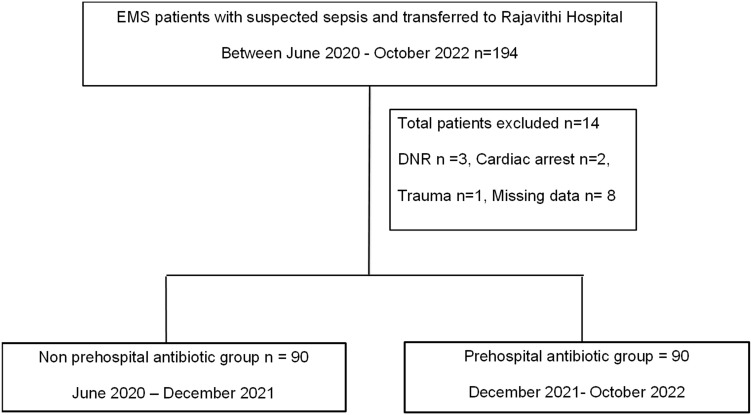
Methods: This was a single-center, retrospective-prospective cohort study aimed at determining the impact of prehospital antibiotics on in-hospital mortality rates among adult patients with sepsis. The study included patients who received care from the advanced level of Emergency Medical Service between June 2020 and October 2022 and compared the mortality rates of patients who received prehospital antibiotics with those of their counterparts who did not.
Results: In this study, 180 patients with a mean age of 71.6 ± 15.7 years were included, of whom 68.9% experienced respiratory infections. The results demonstrated that the prehospital antibiotic group had a significantly lower in-hospital mortality rate (32.2%) than the non-prehospital antibiotic group (47.8%; p=0.034). After adjusting for confounding factors, the odds ratio was 0.304 (95% CI: 0.11, 0.82; p=0.018), indicating a 69.6% lower incidence of in-hospital mortality in the prehospital antibiotic group. Furthermore, the prehospital antibiotic group received antibiotics significantly earlier (16.0 ± 7.4 minutes) than the non-prehospital group (50.9 ± 29.4 minutes; p<0.001).
Conclusion: This study provides evidence to support the administration of antibiotics to sepsis patients in the prehospital setting, as this practice can reduce mortality rates. However, larger, multicenter studies are required to confirm these findings and to further investigate the potential benefits of prehospital antibiotics in improving patient outcomes.



 京公网安备 11010802042870号
京ICP备2023020795号-1
京公网安备 11010802042870号
京ICP备2023020795号-1

 分享
分享
 求助内容:
求助内容: 应助结果提醒方式:
 扫码关注我们
