Daniel López Domínguez, Juan Rodríguez Álvarez-Cienfuegos, Carla Herminia Vera Cáceres
{"title":"低镁血症,可逆性共济失调的罕见病因。","authors":"Daniel López Domínguez, Juan Rodríguez Álvarez-Cienfuegos, Carla Herminia Vera Cáceres","doi":"10.5334/tohm.749","DOIUrl":null,"url":null,"abstract":"<p><strong>Background: </strong>A 61-year-old male patient presented with cerebellar syndrome, which had progressively worsened for 10 days, followed by a tonic-clonic seizure.</p><p><strong>Phenomenology shown: </strong>Blood analysis showed severe hypomagnesemia and a brain MRI showed T2 hyperintensity in the cerebellar hemispheres (Figure 1). Therefore, the final diagnosis was cerebellar syndrome and epileptic seizures secondary to severe hypomagnesemia.</p><p><strong>Educational value: </strong>In cases of subacute onset of ataxia, the possibility of ataxia secondary to hypomagnesemia should be considered, as it can be diagnosed with a basic blood test and there are potentially life-threatening outcomes in the absence of treatment, with a reversible course following early supplementation.</p>","PeriodicalId":75254,"journal":{"name":"","volume":"13 ","pages":"15"},"PeriodicalIF":0.0,"publicationDate":"2023-01-01","publicationTypes":"Journal Article","fieldsOfStudy":null,"isOpenAccess":false,"openAccessPdf":"https://www.ncbi.nlm.nih.gov/pmc/articles/PMC10162194/pdf/","citationCount":"0","resultStr":"{\"title\":\"Hypomagnesemia, a Rare Cause of Reversible Ataxia.\",\"authors\":\"Daniel López Domínguez, Juan Rodríguez Álvarez-Cienfuegos, Carla Herminia Vera Cáceres\",\"doi\":\"10.5334/tohm.749\",\"DOIUrl\":null,\"url\":null,\"abstract\":\"<p><strong>Background: </strong>A 61-year-old male patient presented with cerebellar syndrome, which had progressively worsened for 10 days, followed by a tonic-clonic seizure.</p><p><strong>Phenomenology shown: </strong>Blood analysis showed severe hypomagnesemia and a brain MRI showed T2 hyperintensity in the cerebellar hemispheres (Figure 1). Therefore, the final diagnosis was cerebellar syndrome and epileptic seizures secondary to severe hypomagnesemia.</p><p><strong>Educational value: </strong>In cases of subacute onset of ataxia, the possibility of ataxia secondary to hypomagnesemia should be considered, as it can be diagnosed with a basic blood test and there are potentially life-threatening outcomes in the absence of treatment, with a reversible course following early supplementation.</p>\",\"PeriodicalId\":75254,\"journal\":{\"name\":\"\",\"volume\":\"13 \",\"pages\":\"15\"},\"PeriodicalIF\":0.0,\"publicationDate\":\"2023-01-01\",\"publicationTypes\":\"Journal Article\",\"fieldsOfStudy\":null,\"isOpenAccess\":false,\"openAccessPdf\":\"https://www.ncbi.nlm.nih.gov/pmc/articles/PMC10162194/pdf/\",\"citationCount\":\"0\",\"resultStr\":null,\"platform\":\"Semanticscholar\",\"paperid\":null,\"PeriodicalName\":\"\",\"FirstCategoryId\":\"1085\",\"ListUrlMain\":\"https://doi.org/10.5334/tohm.749\",\"RegionNum\":0,\"RegionCategory\":null,\"ArticlePicture\":[],\"TitleCN\":null,\"AbstractTextCN\":null,\"PMCID\":null,\"EPubDate\":\"\",\"PubModel\":\"\",\"JCR\":\"\",\"JCRName\":\"\",\"Score\":null,\"Total\":0}","platform":"Semanticscholar","paperid":null,"PeriodicalName":"","FirstCategoryId":"1085","ListUrlMain":"https://doi.org/10.5334/tohm.749","RegionNum":0,"RegionCategory":null,"ArticlePicture":[],"TitleCN":null,"AbstractTextCN":null,"PMCID":null,"EPubDate":"","PubModel":"","JCR":"","JCRName":"","Score":null,"Total":0}
Hypomagnesemia, a Rare Cause of Reversible Ataxia.
Background: A 61-year-old male patient presented with cerebellar syndrome, which had progressively worsened for 10 days, followed by a tonic-clonic seizure.
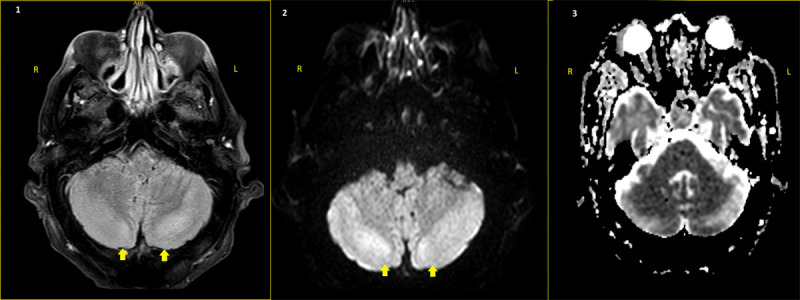
Phenomenology shown: Blood analysis showed severe hypomagnesemia and a brain MRI showed T2 hyperintensity in the cerebellar hemispheres (Figure 1). Therefore, the final diagnosis was cerebellar syndrome and epileptic seizures secondary to severe hypomagnesemia.
Educational value: In cases of subacute onset of ataxia, the possibility of ataxia secondary to hypomagnesemia should be considered, as it can be diagnosed with a basic blood test and there are potentially life-threatening outcomes in the absence of treatment, with a reversible course following early supplementation.



 京公网安备 11010802042870号
京ICP备2023020795号-1
京公网安备 11010802042870号
京ICP备2023020795号-1

 分享
分享
 求助内容:
求助内容: 应助结果提醒方式:
 扫码关注我们
