{"title":"RE&CBT电子监督中首次面对面接触与书面反馈的存在与缺失之比较。","authors":"Ensad Miljkovic","doi":"10.1007/s10942-023-00505-2","DOIUrl":null,"url":null,"abstract":"<p><p>This pilot study aims to analyze the effects of the presence and absence of initial in-person contact and written feedback in RE&CBT e-supervision, comparing it on the Supervisory Working Alliance Inventory, the Supervisor Satisfaction Questionnaire, and the Trainee Disclosure Scale. During a period of six months, five supervisees performed ten e-supervision divided into two groups, a control group that did only the initial meetings in-person and an experimental group in which two supervisees completed whole process online. Additionally, in the first five e-supervision, the supervisor reviewed an entire session with written feedback with an additional meeting for each group. In the last five e-supervision, the supervisor only partially reviewed client sessions during supervision. After ten e-supervision, an individual post-interview was conducted with each participant. This study's primary statistical method for calculating and combining effect sizes was Tarlow Baseline Corrected Tau and Open Meta Analyst software. Both groups scored above average on the first two scales, but the disclosure scale had highly irregular and inconsistent patterns. The combined qualitative and quantitative results suggest that novice therapists generally prefer to have their entire sessions reviewed with written feedback and that a single in-person contact is unlikely to influence e-supervision satisfaction and working alliance. Given that there are no adequately validated e-supervision models, this pilot study used a pilot model named Supported Model of Electronic Supervision (SMeS). This model showed potential, but it needs further testing on a larger sample with more clearly operationalized steps. This study experimentally supports the effectiveness of RE&CBT supervision for the first time.</p><p><strong>Supplementary information: </strong>The online version contains supplementary material available at 10.1007/s10942-023-00505-2.</p>","PeriodicalId":73926,"journal":{"name":"","volume":" ","pages":"1-33"},"PeriodicalIF":0.0,"publicationDate":"2023-04-07","publicationTypes":"Journal Article","fieldsOfStudy":null,"isOpenAccess":false,"openAccessPdf":"https://www.ncbi.nlm.nih.gov/pmc/articles/PMC10080518/pdf/","citationCount":"0","resultStr":"{\"title\":\"Comparing Presence and Absence of Initial In-Person Contact and Written Feedback in RE&CBT E-Supervision.\",\"authors\":\"Ensad Miljkovic\",\"doi\":\"10.1007/s10942-023-00505-2\",\"DOIUrl\":null,\"url\":null,\"abstract\":\"<p><p>This pilot study aims to analyze the effects of the presence and absence of initial in-person contact and written feedback in RE&CBT e-supervision, comparing it on the Supervisory Working Alliance Inventory, the Supervisor Satisfaction Questionnaire, and the Trainee Disclosure Scale. During a period of six months, five supervisees performed ten e-supervision divided into two groups, a control group that did only the initial meetings in-person and an experimental group in which two supervisees completed whole process online. Additionally, in the first five e-supervision, the supervisor reviewed an entire session with written feedback with an additional meeting for each group. In the last five e-supervision, the supervisor only partially reviewed client sessions during supervision. After ten e-supervision, an individual post-interview was conducted with each participant. This study's primary statistical method for calculating and combining effect sizes was Tarlow Baseline Corrected Tau and Open Meta Analyst software. Both groups scored above average on the first two scales, but the disclosure scale had highly irregular and inconsistent patterns. The combined qualitative and quantitative results suggest that novice therapists generally prefer to have their entire sessions reviewed with written feedback and that a single in-person contact is unlikely to influence e-supervision satisfaction and working alliance. Given that there are no adequately validated e-supervision models, this pilot study used a pilot model named Supported Model of Electronic Supervision (SMeS). This model showed potential, but it needs further testing on a larger sample with more clearly operationalized steps. This study experimentally supports the effectiveness of RE&CBT supervision for the first time.</p><p><strong>Supplementary information: </strong>The online version contains supplementary material available at 10.1007/s10942-023-00505-2.</p>\",\"PeriodicalId\":73926,\"journal\":{\"name\":\"\",\"volume\":\" \",\"pages\":\"1-33\"},\"PeriodicalIF\":0.0,\"publicationDate\":\"2023-04-07\",\"publicationTypes\":\"Journal Article\",\"fieldsOfStudy\":null,\"isOpenAccess\":false,\"openAccessPdf\":\"https://www.ncbi.nlm.nih.gov/pmc/articles/PMC10080518/pdf/\",\"citationCount\":\"0\",\"resultStr\":null,\"platform\":\"Semanticscholar\",\"paperid\":null,\"PeriodicalName\":\"\",\"FirstCategoryId\":\"102\",\"ListUrlMain\":\"https://doi.org/10.1007/s10942-023-00505-2\",\"RegionNum\":0,\"RegionCategory\":null,\"ArticlePicture\":[],\"TitleCN\":null,\"AbstractTextCN\":null,\"PMCID\":null,\"EPubDate\":\"\",\"PubModel\":\"\",\"JCR\":\"\",\"JCRName\":\"\",\"Score\":null,\"Total\":0}","platform":"Semanticscholar","paperid":null,"PeriodicalName":"","FirstCategoryId":"102","ListUrlMain":"https://doi.org/10.1007/s10942-023-00505-2","RegionNum":0,"RegionCategory":null,"ArticlePicture":[],"TitleCN":null,"AbstractTextCN":null,"PMCID":null,"EPubDate":"","PubModel":"","JCR":"","JCRName":"","Score":null,"Total":0}
引用次数: 0
摘要
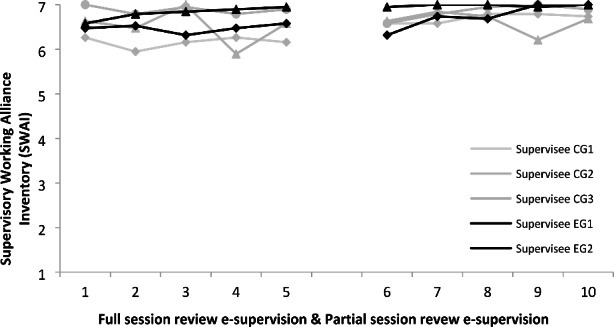
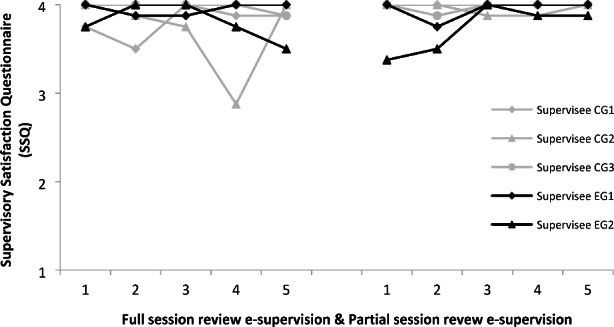
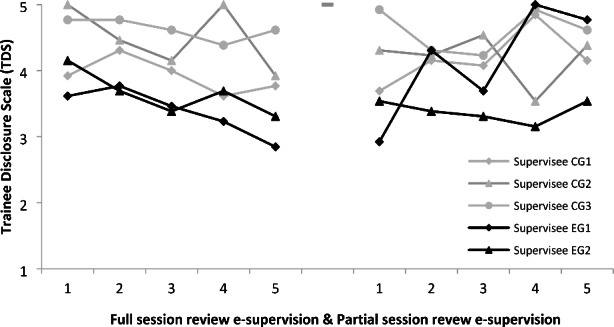
本初步研究旨在分析在RE&CBT电子监督中是否存在初始面对面接触和书面反馈的影响,并比较其在主管工作联盟量表、主管满意度问卷和学员披露量表上的差异。在六个月的时间里,五名被监管者进行了十次电子监管,分为两组,对照组只进行了最初的面对面会议,而实验组则有两名被监管者在线完成了整个过程。此外,在前五次电子监督中,监督者对整个会议进行了书面反馈,并对每个小组进行了额外的会议。在最近5次电子监管中,监管员在监管过程中只对客户会话进行了部分回顾。在10次电子监督之后,对每个参与者进行了单独的后访谈。本研究计算和组合效应量的主要统计方法是Tarlow Baseline Corrected Tau和Open Meta Analyst软件。两组人在前两个量表上的得分都高于平均水平,但披露量表的模式非常不规则和不一致。综合定性和定量结果表明,新手治疗师通常更喜欢用书面反馈来回顾他们的整个疗程,并且一次面对面的接触不太可能影响电子监督的满意度和工作联盟。鉴于没有经过充分验证的电子监管模型,本试点研究使用了一种名为电子监管支持模型(SMeS)的试点模型。该模型显示出了潜力,但需要在更大的样本上进行进一步的测试,并有更明确的操作步骤。本研究首次通过实验验证了RE&CBT监管的有效性。补充信息:在线版本包含补充资料,提供地址为10.1007/s10942-023-00505-2。
Comparing Presence and Absence of Initial In-Person Contact and Written Feedback in RE&CBT E-Supervision.
This pilot study aims to analyze the effects of the presence and absence of initial in-person contact and written feedback in RE&CBT e-supervision, comparing it on the Supervisory Working Alliance Inventory, the Supervisor Satisfaction Questionnaire, and the Trainee Disclosure Scale. During a period of six months, five supervisees performed ten e-supervision divided into two groups, a control group that did only the initial meetings in-person and an experimental group in which two supervisees completed whole process online. Additionally, in the first five e-supervision, the supervisor reviewed an entire session with written feedback with an additional meeting for each group. In the last five e-supervision, the supervisor only partially reviewed client sessions during supervision. After ten e-supervision, an individual post-interview was conducted with each participant. This study's primary statistical method for calculating and combining effect sizes was Tarlow Baseline Corrected Tau and Open Meta Analyst software. Both groups scored above average on the first two scales, but the disclosure scale had highly irregular and inconsistent patterns. The combined qualitative and quantitative results suggest that novice therapists generally prefer to have their entire sessions reviewed with written feedback and that a single in-person contact is unlikely to influence e-supervision satisfaction and working alliance. Given that there are no adequately validated e-supervision models, this pilot study used a pilot model named Supported Model of Electronic Supervision (SMeS). This model showed potential, but it needs further testing on a larger sample with more clearly operationalized steps. This study experimentally supports the effectiveness of RE&CBT supervision for the first time.
Supplementary information: The online version contains supplementary material available at 10.1007/s10942-023-00505-2.



 京公网安备 11010802042870号
京ICP备2023020795号-1
京公网安备 11010802042870号
京ICP备2023020795号-1

 分享
分享
 求助内容:
求助内容: 应助结果提醒方式:
 扫码关注我们
