Knowledge Mushonga, Joachim M Steyn, Wijnand J Swart, Jacquie E van der Waals
{"title":"温室条件下四种旱地作物的植物-土壤反馈反应。","authors":"Knowledge Mushonga, Joachim M Steyn, Wijnand J Swart, Jacquie E van der Waals","doi":"10.1002/pei3.10035","DOIUrl":null,"url":null,"abstract":"<p><p>Plant-soil feedbacks (PSFs) give a mechanistic understanding on how soil properties established by previous plant species go on to influence the performance of the same or different species in monoculture, intercropping or crop rotation systems. We hypothesized that different dryland crops such as <i>Zea mays</i> L., <i>Helianthus annuus</i> L., <i>Phaseolus vulgaris</i> L., and <i>Glycine max</i> L. (Merr.) will have soil legacies that are related to the crop type. We used a two-phase experiment to test plant performance in soils previously cultivated with the same or different plant species under greenhouse conditions. The positive plant growth for all species in their own soil microbiota suggests that mutualists had a greater impact on plant performance than pathogens. The consistent positive soil-feedback results of <i>P. vulgaris</i> were strongly associated with their own beneficial soil microbiota, meaning that the conditioning phase legacy of mutualists and decomposers were more significant than pathogens under monoculture. Despite successful nodulation in sterilized and inoculated soils, <i>G. max</i> unexpectedly showed neutral and insignificant positive plant feedbacks, respectively. <i>Helianthus annuus</i> was superior to other crop species in creating active carbon stocks and an enzymatically active soil for the next crop. Microbial biomass results suggest that raising fungal relative to bacterial biomass can be achieved by increasing the frequency of <i>H. annuus</i> in rotation sequences. However, more studies are necessary to evaluate whether these elevated ratios promote or depress plant performance under field conditions. This study showed that relative to other dryland crops, <i>H. annuus</i> seems to have the potential of increasing fungal to bacterial ratios, raising legacies in active carbon stocks and soil microbial activity that may be crucial to successional planting in dryland systems.</p>","PeriodicalId":74457,"journal":{"name":"Plant-environment interactions (Hoboken, N.J.)","volume":"1 3","pages":"181-195"},"PeriodicalIF":0.0000,"publicationDate":"2020-12-07","publicationTypes":"Journal Article","fieldsOfStudy":null,"isOpenAccess":false,"openAccessPdf":"https://www.ncbi.nlm.nih.gov/pmc/articles/PMC10168064/pdf/","citationCount":"0","resultStr":"{\"title\":\"Plant-soil feedback responses of four dryland crop species under greenhouse conditions.\",\"authors\":\"Knowledge Mushonga, Joachim M Steyn, Wijnand J Swart, Jacquie E van der Waals\",\"doi\":\"10.1002/pei3.10035\",\"DOIUrl\":null,\"url\":null,\"abstract\":\"<p><p>Plant-soil feedbacks (PSFs) give a mechanistic understanding on how soil properties established by previous plant species go on to influence the performance of the same or different species in monoculture, intercropping or crop rotation systems. We hypothesized that different dryland crops such as <i>Zea mays</i> L., <i>Helianthus annuus</i> L., <i>Phaseolus vulgaris</i> L., and <i>Glycine max</i> L. (Merr.) will have soil legacies that are related to the crop type. We used a two-phase experiment to test plant performance in soils previously cultivated with the same or different plant species under greenhouse conditions. The positive plant growth for all species in their own soil microbiota suggests that mutualists had a greater impact on plant performance than pathogens. The consistent positive soil-feedback results of <i>P. vulgaris</i> were strongly associated with their own beneficial soil microbiota, meaning that the conditioning phase legacy of mutualists and decomposers were more significant than pathogens under monoculture. Despite successful nodulation in sterilized and inoculated soils, <i>G. max</i> unexpectedly showed neutral and insignificant positive plant feedbacks, respectively. <i>Helianthus annuus</i> was superior to other crop species in creating active carbon stocks and an enzymatically active soil for the next crop. Microbial biomass results suggest that raising fungal relative to bacterial biomass can be achieved by increasing the frequency of <i>H. annuus</i> in rotation sequences. However, more studies are necessary to evaluate whether these elevated ratios promote or depress plant performance under field conditions. This study showed that relative to other dryland crops, <i>H. annuus</i> seems to have the potential of increasing fungal to bacterial ratios, raising legacies in active carbon stocks and soil microbial activity that may be crucial to successional planting in dryland systems.</p>\",\"PeriodicalId\":74457,\"journal\":{\"name\":\"Plant-environment interactions (Hoboken, N.J.)\",\"volume\":\"1 3\",\"pages\":\"181-195\"},\"PeriodicalIF\":0.0000,\"publicationDate\":\"2020-12-07\",\"publicationTypes\":\"Journal Article\",\"fieldsOfStudy\":null,\"isOpenAccess\":false,\"openAccessPdf\":\"https://www.ncbi.nlm.nih.gov/pmc/articles/PMC10168064/pdf/\",\"citationCount\":\"0\",\"resultStr\":null,\"platform\":\"Semanticscholar\",\"paperid\":null,\"PeriodicalName\":\"Plant-environment interactions (Hoboken, N.J.)\",\"FirstCategoryId\":\"1085\",\"ListUrlMain\":\"https://doi.org/10.1002/pei3.10035\",\"RegionNum\":0,\"RegionCategory\":null,\"ArticlePicture\":[],\"TitleCN\":null,\"AbstractTextCN\":null,\"PMCID\":null,\"EPubDate\":\"2020/12/1 0:00:00\",\"PubModel\":\"eCollection\",\"JCR\":\"Q3\",\"JCRName\":\"Agricultural and Biological Sciences\",\"Score\":null,\"Total\":0}","platform":"Semanticscholar","paperid":null,"PeriodicalName":"Plant-environment interactions (Hoboken, N.J.)","FirstCategoryId":"1085","ListUrlMain":"https://doi.org/10.1002/pei3.10035","RegionNum":0,"RegionCategory":null,"ArticlePicture":[],"TitleCN":null,"AbstractTextCN":null,"PMCID":null,"EPubDate":"2020/12/1 0:00:00","PubModel":"eCollection","JCR":"Q3","JCRName":"Agricultural and Biological Sciences","Score":null,"Total":0}
引用次数: 0
摘要
植物-土壤反馈(PSFs)从机理上揭示了以前的植物物种所形成的土壤特性如何在单一种植、间作或轮作系统中影响相同或不同物种的表现。我们假设,不同的旱地作物,如玉米(Zea mays L.)、芹菜(Helianthus annuus L.)、低等植物(Phaseolus vulgaris L.)和大麦(Glycine max L. (Merr.)),会有与作物类型相关的土壤遗产。我们采用了两阶段实验,在温室条件下测试植物在之前栽培过相同或不同植物物种的土壤中的表现。所有物种在各自的土壤微生物群中都有积极的植物生长,这表明互生菌对植物表现的影响比病原体更大。P.vulgaris始终如一的正土壤反馈结果与其自身的有益土壤微生物群密切相关,这意味着在单一栽培条件下,互助者和分解者的调节阶段遗产比病原体更重要。尽管在灭菌土壤和接种土壤中成功实现了结核,但 G. max 意外地分别表现出中性和不显著的植物正反馈。在为下一茬作物创造活性碳储量和酶活性土壤方面,褐花葵要优于其他作物种类。微生物生物量结果表明,通过增加菠萝蜜在轮作序列中的种植频率,可以提高真菌生物量而不是细菌生物量。不过,有必要进行更多的研究,以评估在田间条件下,这些升高的比率是促进还是抑制了植物的表现。这项研究表明,与其他旱地作物相比,鹅掌楸似乎有可能提高真菌与细菌的比例,增加活性碳储量和土壤微生物活动,这可能对旱地系统中的继代种植至关重要。
Plant-soil feedback responses of four dryland crop species under greenhouse conditions.
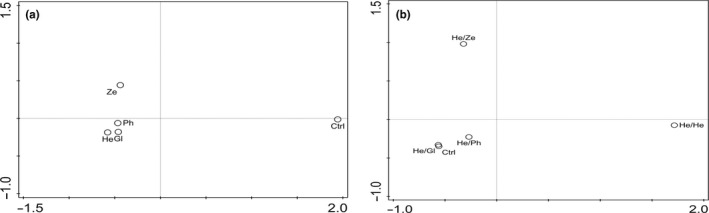
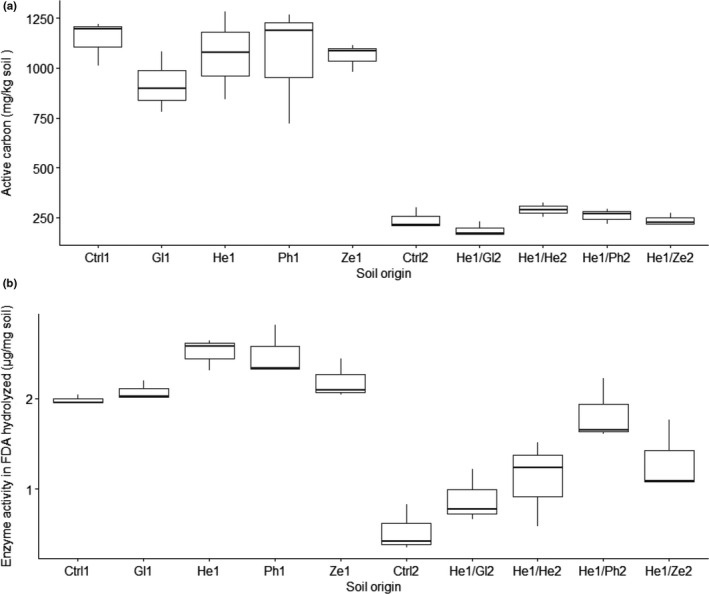
Plant-soil feedbacks (PSFs) give a mechanistic understanding on how soil properties established by previous plant species go on to influence the performance of the same or different species in monoculture, intercropping or crop rotation systems. We hypothesized that different dryland crops such as Zea mays L., Helianthus annuus L., Phaseolus vulgaris L., and Glycine max L. (Merr.) will have soil legacies that are related to the crop type. We used a two-phase experiment to test plant performance in soils previously cultivated with the same or different plant species under greenhouse conditions. The positive plant growth for all species in their own soil microbiota suggests that mutualists had a greater impact on plant performance than pathogens. The consistent positive soil-feedback results of P. vulgaris were strongly associated with their own beneficial soil microbiota, meaning that the conditioning phase legacy of mutualists and decomposers were more significant than pathogens under monoculture. Despite successful nodulation in sterilized and inoculated soils, G. max unexpectedly showed neutral and insignificant positive plant feedbacks, respectively. Helianthus annuus was superior to other crop species in creating active carbon stocks and an enzymatically active soil for the next crop. Microbial biomass results suggest that raising fungal relative to bacterial biomass can be achieved by increasing the frequency of H. annuus in rotation sequences. However, more studies are necessary to evaluate whether these elevated ratios promote or depress plant performance under field conditions. This study showed that relative to other dryland crops, H. annuus seems to have the potential of increasing fungal to bacterial ratios, raising legacies in active carbon stocks and soil microbial activity that may be crucial to successional planting in dryland systems.




 京公网安备 11010802042870号
京ICP备2023020795号-1
京公网安备 11010802042870号
京ICP备2023020795号-1

 分享
分享

 求助内容:
求助内容: 应助结果提醒方式:
 扫码关注我们
