Rimma A. Arynbayeva, Zhanna K. Makhanova, Natalya V. Dmitryuk
{"title":"Forming linguistic-cultural competencies in Kazakhstani students learning Russian as a non-native language","authors":"Rimma A. Arynbayeva, Zhanna K. Makhanova, Natalya V. Dmitryuk","doi":"10.22363/2618-8163-2023-21-3-341-355","DOIUrl":null,"url":null,"abstract":"The formation of linguistic-cultural competence in the process of teaching Russian as a non-native language is becoming a priority in modern linguodidactics, in particular in the educational space of Kazakhstan. The relevance of the study is in the need to form and develop a fully educated secondary linguistic personality in the multilingual environment of modern society. This requires applying anthropocentric principle in teaching Russian as a linguistic-cultural phenomenon. The aim of the study is to form students' linguistic-cultural competence in precepting the features of the Russian picture of the world, traditional values, and mentality of the Russian ethnic group. The material of the study includes associative dictionaries of the Russian and Kazakh languages, the results of associative experiments with schoolchildren, scientific sources on psycholinguistics and cultural linguistics, Kazakh manuals and textbooks on the Russian language (in schools with Russian/Kazakh language of teaching). In the work comparative and associative experiments, pilot survey were used, as well as the methods of structuring (associative semantic gestalt according to the method of Yu.N. Karaulov), linguistic and cultural commentary, modeling situational exercises and analysis of communicative-speech acts. The results of the study illustrate the specificity of students' ethnolinguistic awareness at the associative level. The relevance of linguistic and cultural commentary for widening students' ethno-mental outlook and organising adequate intercultural dialogues is grounded. The effectiveness of associative experiments materials as a means of forming linguistic-cultural competence of students is shown.","PeriodicalId":10,"journal":{"name":"ACS Central Science","volume":"11 1","pages":"0"},"PeriodicalIF":10.4000,"publicationDate":"2023-09-30","publicationTypes":"Journal Article","fieldsOfStudy":null,"isOpenAccess":false,"openAccessPdf":"","citationCount":"1","resultStr":null,"platform":"Semanticscholar","paperid":null,"PeriodicalName":"ACS Central Science","FirstCategoryId":"1085","ListUrlMain":"https://doi.org/10.22363/2618-8163-2023-21-3-341-355","RegionNum":1,"RegionCategory":"化学","ArticlePicture":[],"TitleCN":null,"AbstractTextCN":null,"PMCID":null,"EPubDate":"","PubModel":"","JCR":"Q1","JCRName":"CHEMISTRY, MULTIDISCIPLINARY","Score":null,"Total":0}
引用次数: 1
Abstract
The formation of linguistic-cultural competence in the process of teaching Russian as a non-native language is becoming a priority in modern linguodidactics, in particular in the educational space of Kazakhstan. The relevance of the study is in the need to form and develop a fully educated secondary linguistic personality in the multilingual environment of modern society. This requires applying anthropocentric principle in teaching Russian as a linguistic-cultural phenomenon. The aim of the study is to form students' linguistic-cultural competence in precepting the features of the Russian picture of the world, traditional values, and mentality of the Russian ethnic group. The material of the study includes associative dictionaries of the Russian and Kazakh languages, the results of associative experiments with schoolchildren, scientific sources on psycholinguistics and cultural linguistics, Kazakh manuals and textbooks on the Russian language (in schools with Russian/Kazakh language of teaching). In the work comparative and associative experiments, pilot survey were used, as well as the methods of structuring (associative semantic gestalt according to the method of Yu.N. Karaulov), linguistic and cultural commentary, modeling situational exercises and analysis of communicative-speech acts. The results of the study illustrate the specificity of students' ethnolinguistic awareness at the associative level. The relevance of linguistic and cultural commentary for widening students' ethno-mental outlook and organising adequate intercultural dialogues is grounded. The effectiveness of associative experiments materials as a means of forming linguistic-cultural competence of students is shown.
期刊介绍:
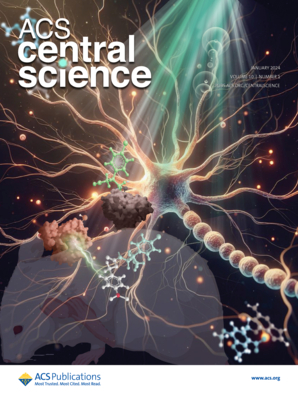
ACS Central Science publishes significant primary reports on research in chemistry and allied fields where chemical approaches are pivotal. As the first fully open-access journal by the American Chemical Society, it covers compelling and important contributions to the broad chemistry and scientific community. "Central science," a term popularized nearly 40 years ago, emphasizes chemistry's central role in connecting physical and life sciences, and fundamental sciences with applied disciplines like medicine and engineering. The journal focuses on exceptional quality articles, addressing advances in fundamental chemistry and interdisciplinary research.




 京公网安备 11010802042870号
京ICP备2023020795号-1
京公网安备 11010802042870号
京ICP备2023020795号-1

 分享
分享
 求助内容:
求助内容: 应助结果提醒方式:
 扫码关注我们
